You don’t have to abandon the process you enjoy

In response to this week’s alarmist articles about film’s allegedly imminent demise, Blake Andrews posted on his blawwg: “I must live in some film bubble timewarp because virtually every photographer I know in Portland still shoots film. My photogroup Lightleak has eight to twelve members depending on what month it is and who shows up, and every one of us is a film shooter.”

If you have asked about this, or paid attention to conversations and posts, you already know that most of the following is reasonable. Nonetheless, this article by Ctein…

…makes long-term planning clearer: http://theonlinephotographer.typepad.com/the_online_photographer/2011/06/film-photography-future.html

Putting Things into Perspective; or, I Second That Emulsion

Associated Press has become the latest entity to ring the death knell for film, citing that manufacture is down from a one-time height of almost a billion rolls a year to only five million (about half of which, apparently, is shot by those of us at BFHS). Two comprehensive and lucid responses put this into perspective:

http://theonlinephotographer.typepad.com/the_online_photographer/2011/06/discontinuous-demand.html

http://blakeandrews.blogspot.com/2011/06/8000-rolls-under-sea.html

Consider that roving paper-cutting profile potraitists were replaced by daguerreotypists (http://cool.conservation-us.org/coolaic/jaic/articles/jaic41-03-001.html); squadrons of hand-colorers were made redundant when color film became practical, followed closely (“closely” in this context meaning within ten or fifteen years) by the failure of some ubiquitous paper emulsions (resulting in a class-action suit brought in several Midwestern states); and that everyone is periodically cautioned to back up files, with the knowledge that many digital archives at risk of corruption in 5-10 years.

As deep background, refer to this:

http://www.npr.org/blogs/krulwich/2011/02/04/133188723/tools-never-die-waddaya-mean-never

Lastly, look at the banner on the Badger web page: https://www.badgergraphic.com/index.html

Multigrade Art 300: The Final Product

The following is gleaned from an e-newsletter (is that a word?) from Tim Rudman. Look him up (timrudman.com) and subscribe, if this kind of information interests you:

There have been a few emulsion adjustments since the pre-launch product, and more information about the product has been made available. The first impression was that the emulsion was a variant of MGWT but in fact it is a “sibling” of MGIV, and is neutral- rather than warm-toned. The base is described as neutral to cool tone, but in fact is very subtly warm if compared to the back, or to MGWT, or a truly white base like Fomatone MG Classic used to be. This gives the emulsion a slightly warm, rather than neutral, look in the higher tones. No pigment is added to the base, which is whiter before coating, but the modified process required to coat this art base seems to add this very slight warmth to it. Side-by-side testing with MGWT shows an almost identical speed, so analyser settings for MGWT will work pretty well. The final product also has very slightly brighter highlights and “better” tonal separation in the upper tones too.

The other pleasant surprise was that it gave rich browns in selenium, which the test sample did not. Fairly strong selenium at 1+5 gave rich chocolate brown, and a clear brown-grey split was easily achieved if desired. Strength for strength the Harman selenium gave richer colour than Kodak selenium.

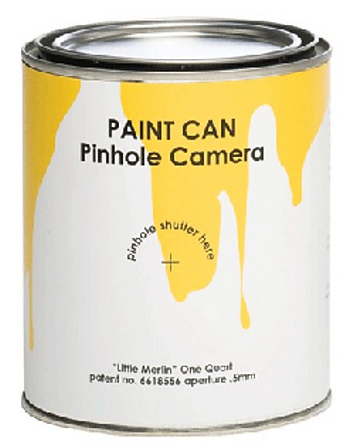
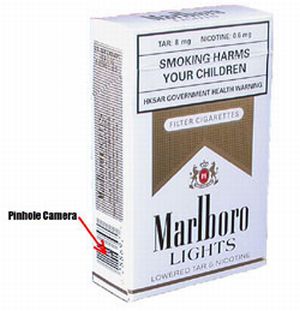
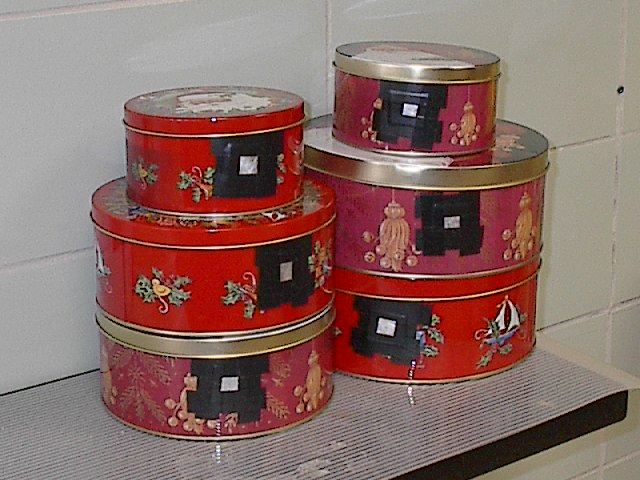
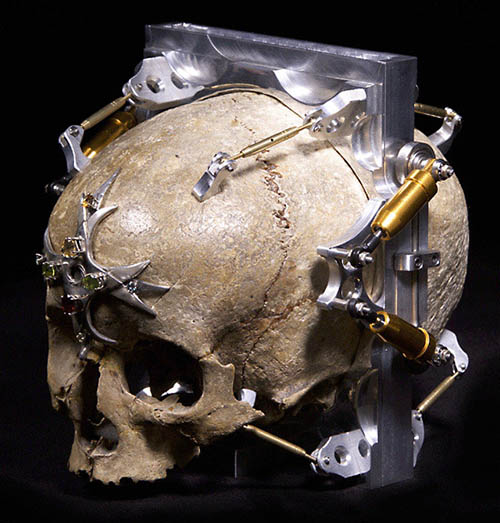
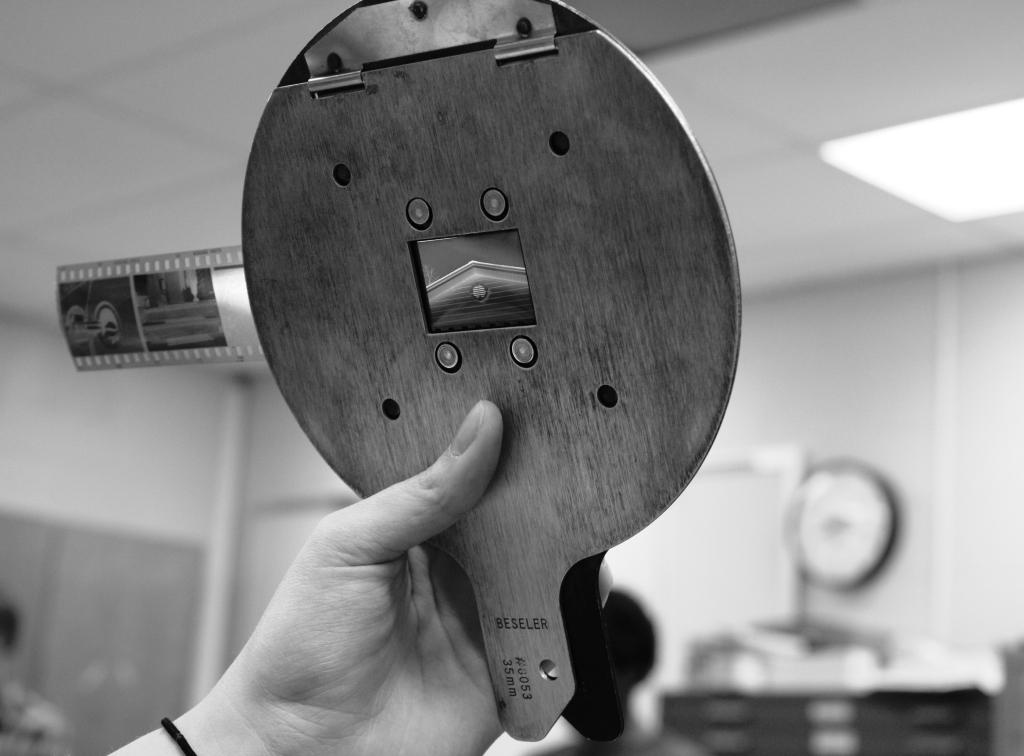
Innovations in Pinhole Camera Design

Chris Keeney http://chriskeeney.com/spamera

Dianne Bos:

This Sunday (both Easters) is Worldwide Pinhole Photography Day!

Update: The Pinhole Tree! Look: http://www.pinhole.org/gallery/artist.cfm?name=Asier_Gogortza

…AND build your own Hasselblad! http://vimeo.com/21702610

“What filter?”

According to Mr. Shore, “The tonal range of a black-and-white print is affected by the type of emulsion the print is made with. The composition of the film emulsion, the chemistry of the film and print developers, and the nature of the light source from which the print is made also determine the way shadows, mid tones, and highlights are described by the print; they determine how many shades of gray the print contains and whether these tones are compressed or separated.”

According to moi, each negative is a matrix, with a range of tones determined by the photographed scene, its quality of light, the film exposure and degree of development. In most cases all one wants to do is to extract as much as possible to the paper so that the image looks… believable.
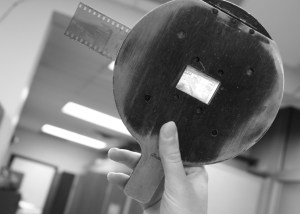
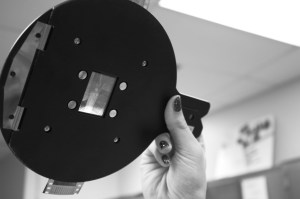
Filters are numbered from 00 to 5, with half-steps in between (‘cept there ain’t no #00 1/2; a blessing in disguise, perhaps). Their colors cause different layers of emulsion on the paper to respond to different degrees. For some reason the #2 (or #2-1/2) filter is considered “normal,” pretty much how the paper responds without a filter, only faster. (The same is true of graded paper, which comes in packages of single grades and does not respond to filters.) When we adjust contrast whilst printing we are attempting to make the image look well. Think of it as counterbalancing the contrast set in the negative with a contrast level in the paper.
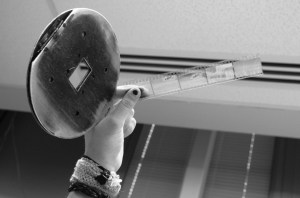
Generally, a negative with an overall extreme range of tones built into the scene (early-morning, raking light, snow in sunlight, silhouettes) will require a lower numbered filter, and a negative with relatively little range (gloomy days, dusk, fluorescent/ill-lit interiors, underexposed or underdeveloped film) needs a higher one.
MGA News

Multigrade Art paper is poised to appear in the States. I’ve converted the prices from pounds sterling to dollars for a pack of ten sheets of 11×14, for comparison’s sake:

Multigrade FB, 20.80=$33.28

MGA, 27.49=$41.98

Caveat emptor.

Here is a detail from a picture of a print, made with glancing light to emphasize the matt surface and its slight texture:

(Please do not salivate on your keyboard.)

OTOH, most (if not all) incarnations of Plus-X are disappearing. It was an excellent family of emulsions, but the Great Yellow Father has deemed it expendable. On, Ilford.

Benson=Beacon

http://vimeo.com/20457518

A Game Changer for Film

…or at least a game, anyway:

http://www.youtube.com/watch?v=rWU3-gA3ueo&feature=player_embedded

(You don’t have to wait until the day after March to watch this.)

George Santayana Weighs In

“Those who do not remember the past are condemned to repeat it.”
Only coincidentally, both these links happen to be to National Public Radio.

http://www.npr.org/blogs/krulwich/2011/02/04/133188723/tools-never-die-waddaya-mean-never

http://www.npr.org/blogs/therecord/2011/03/09/134391895/the-legacy-of-the-cd-innovation-that-ate-itself?ft=1&f=100

A Little LF Levity

I can’t believe I’ve not linked to this until now:

http://www.youtube.com/watch?v=a64iG-A-cRI

  • Calendar

    • December 2025
      S M T W T F S
       123456
      78910111213
      14151617181920
      21222324252627
      28293031  
  • Search