Eggleston Essay Excerpts

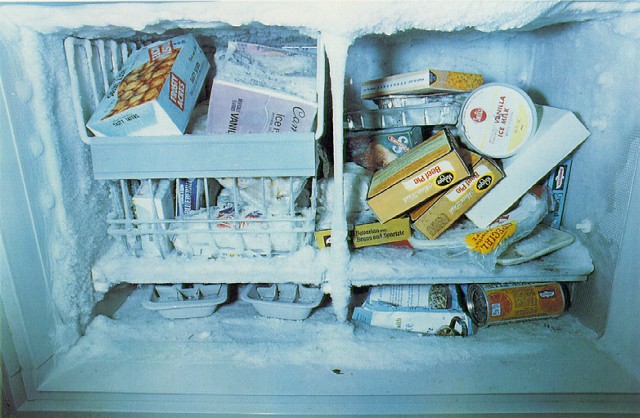
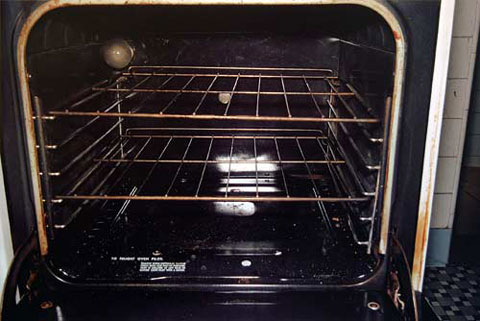
John Szarkowski wrote the essay for “William Eggleston’s Guide,” the catalog for the MoMA show he curated in 1976. (I learned recently that a decent copy may be worth $600.00 now.) Here are parts that don’t directly deal with the pictures in that show, but more with how John Szarkowski thinks of photography. It reads like a credo.
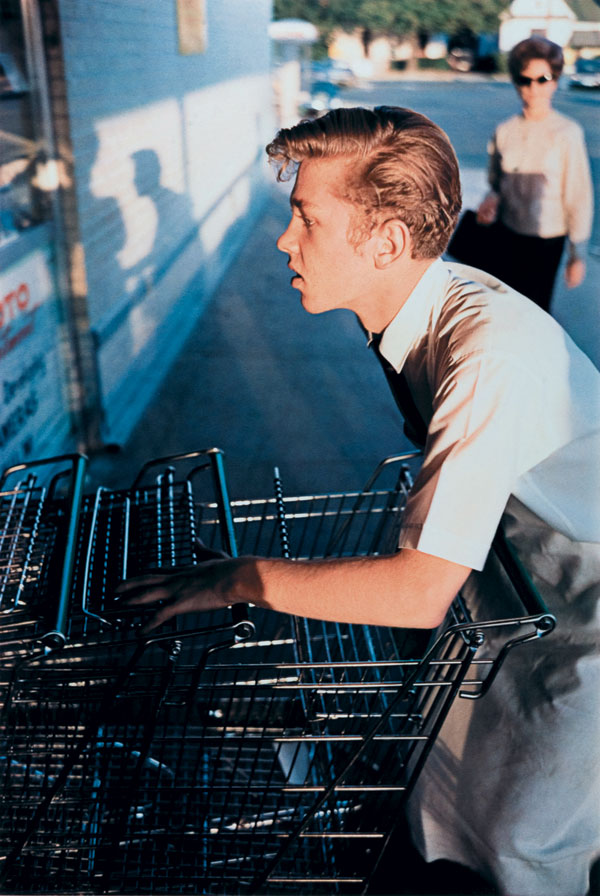
“Photography is a system of visual editing. At bottom, it is a matter of surrounding with a frame a portion of one’s cone of vision, while standing in the right place at the right time. Like chess, or writing, it is a matter of choosing from among given possibilities, but in the case of photography the number of possibilities is not finite but infinite. The world now contains more photographs than bricks, and they are, astonishingly, all different. Even the most servile of photographers has not yet managed to duplicate exactly an earlier work by a great and revered master.

“The reader can demonstrate the point by clicking off a roll with the family Instamatic or Leica without moving from his chair: point the machine at random this way and that, quickly and without thought. When the film is developed every frame will define a subject different from any defined before. To make matters worse, some of the pictures are likely to be marginally interesting. Even the automatic cameras that record the comings and goings in banks describe facts and relationships that surprise mere eye-witnesses.

“It is not easy for the photographer to compete with the clever originality of mindless, mechanized cameras, but the photographer can add intelligence. By means of photography one can in a minute reject as unsatisfactory ninety-nine configurations of facts and elect as right the hundredth. The choice is based on tradition and intuition – knowledge and ego – as it is in any art, but the ease of execution and the richness of the possibilities in photography both serve to put a premium on good intuition. The photographer’s problem is perhaps too complex to be dealt with rationally. This is why photographers prowl with such restless uncertainty about their motif, ignoring many potentially interesting records while they look for something else.
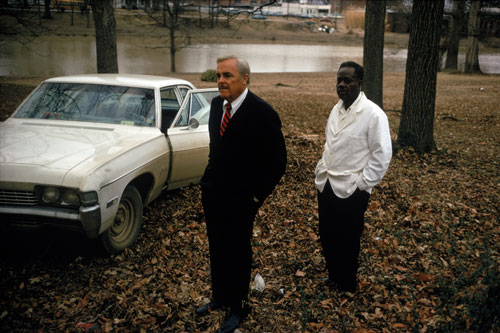

“Form is perhaps the point of art. The goal is not to make something factually impeccable, but seamlessly persuasive. In photography the pursuit of form has taken an unexpected course. In this peculiar art, form and subject are defined simultaneously. Even more than in the traditional arts, the two are inextricably tangled. Indeed, they are probably the same thing. Or, if they are different, one might say that a photograph’s subject is not its starting point but its destination.

“Gifted photographers, learning from the successes of their predecessors, quickly acquire the ability to recognize and anticipate certain aspects of subject matter, situation, perspective, and quality of light that might produce effective pictures. Original photographers enlarge this shared sense of possibilities by discovering new patterns of facts that will serve as metaphors for their intentions. The continuing, cumulative insights of these exceptional artists have formed and reformed photography’s tradition; a new pictorial vocabulary, based on the specific, the fragmentary, the elliptical, the ephemeral, and the provisional. This new tradition has revised our sense of what in the world is meaningful and our understanding of how the meaningful can be described.

“It could be said – it doubtless has been said – that such pictures often bear a clear resemblance to the Kodachrome slides of the ubiquitous amateur next door. It seems to me that this is true, in the same sense that the belles-lettres of a time generally relate in the texture, reference, and rhythm of their language to the prevailing educated vernacular of that time. In broad outline, Jane Austen’s sentences are presumably similar to those of her seven siblings. Similarly, it should not be surprising if the best photography of today is related in iconography and technique to the contemporary standard of vernacular camera work, which is in fact often rich and surprising. The difference between the two is a matter of intelligence, imagination, intensity, precision, and coherence.”
MAM show: Street Seen

I cant’ believe I’ve waited so long to post this:

Street Seen: The Psychological Gesture in American Photography, 1940–1959
January 30, 2010–April 25, 2010

http://www.mam.org/streetseen/

It’s open Tuesday through Sunday, 10:00-5:00, and stays open Thursdays until 8:00. Make a day of it; if you’re there around noon,step outside to watch the building’s wings flourish.

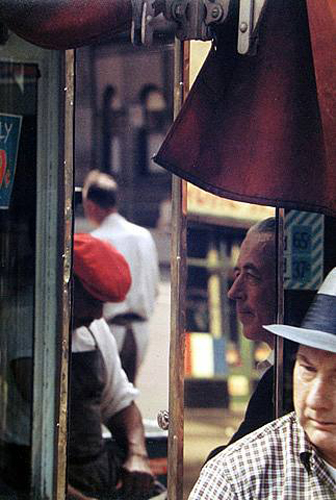
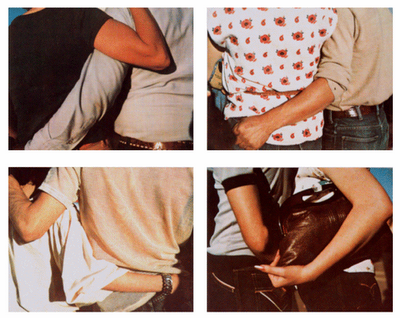
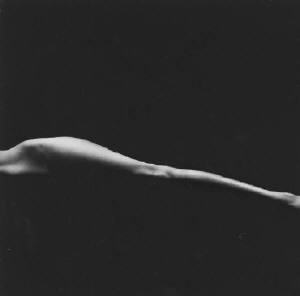
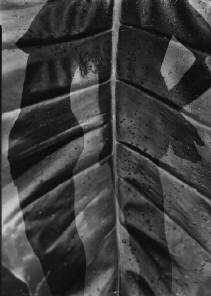
(Above photographs by Saul Leiter, Lisette Model & William Klein.)

Matthew Woodward: Bare Ruined Choirs

Go to the Barrington Area Library right away to see the exhibit of Matthew Woodward’s drawings, because you’ll be revisiting before it all comes down on the 20th. Look around carefully so you don’t miss any of the pieces. There are parallels to the kind of monochromatic printmaking that we do.

The library’s website says:

“Through Woodward’s medium of charcoal and graphite on paper, he highlights interesting motifs found on century old edifices. By selecting architectural details from cornices, doors, and gates, he captures a misty beauty of ghost-like finials and creates hazy, haunting, compelling images.”

In between visits, read John Berger’s essay “The Company Of Drawings” in this month’s Harper’s magazine. Here’s a little quote (which happens to begin with a clear similarity to camerawork:

“Drawing now involves subtracting as much as adding. It involves the paper as much as the forms drawn on it. I use razor blade, pencil, yellow crayon, spit. I can’t hurry.”

AIC Be Free

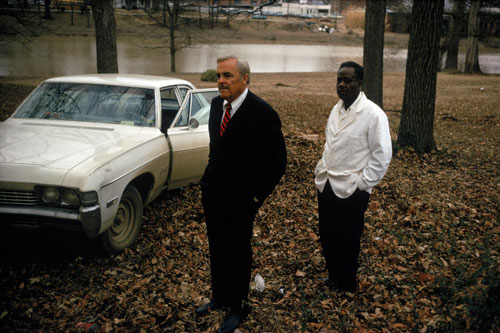
…for all of February! Don’t forget: the major William Eggleston exhibit will be open the last weekend of the month.

Proof


Here is Tod Papageorge’s recent explanation of the relation of photographic picture-making to other creative activities:

“Photography is of course an analytic, not a synthesizing, medium: photographs are commonly produced all-at-once, as light strikes a piece of film. This is unlike the other visual arts, where paintings and related kinds of pictures (including the most rapidly sketched drawing), are built through a process of accretion, stroke by stroke. Writers, too, even the most fluent, parallel these synthesizing procedures as they shape their texts one draft after another, but their practice at least suggests that of photographers, since it involves, in part, an editing process applied to words — and, by extension, to the things that words signify. As W.H. Auden put it, ‘it is both the glory and the shame of poetry that its medium is not its private property, that a poet cannot invent his words,’ an observation also true when applied to photography and the photographer’s inability to invent his “worlds.”

“But where a poet combines, over time (be it minutes or years), the words of a shared language to make a poem, a photographer combines, instantaneously, a jumble of things ‘out there’ (which often share little more than their adjacency) to make a picture. Individual photographs, then, are less like poems than unique ideograms, or picture-complexes that freeze the moment when the objects, air, and dimension framed in a viewfinder are incorporated and fixed together in an unalterable mix by being exposed on film. Because any shift of lens position or subject or light (to say nothing of the camera operator’s concentration) irremediably changes the picture the photographer will make next, his only strategy for clarifying or amending his thinking is to yield it up to making yet another exposure, and, as he does so, to add to an unseen store of images. Unlike the artist or poet, who can revise a given work without accumulating a series of physically distinct versions of that work equal to the number of changes made to it, the photographer builds just such an archive simply by photographing.”

The role of contacts (proofs) in picture-making is substantial; those who are out of film look back on what we do with a hint of nostalgia. Enjoy this summary of the recent exhibit at the Whitney:

http://www.slate.com/id/2236088/slideshow/2236648/fs/0//entry/2236649/

The Contact Sheet, by Steve Crist, is another worthwhile overview:

http://www.ammobooks.com/books/contact/

Lastly, in the era when just about everyone dropped film off at the drugstore, “Photo Finishing” was the term that described enlarged printmaking done commercially after the making of the negatives.

Post Script: The first time I encountered the noun “slide” was as a pre-pube science geek: I built a collection of slides, which are the slivers of glass that support whatever is being viewed through the lens of a microscope. Likely, when illuminated projection of images (on glass) became a medium of presentation, the term was transferred to photography. Now the word has carried over to screens in a PowerPoint presentation.

Devoto Holiday Roundup

Happy holidays to all, from hours-old Isaac to SteveandGinger.

Now, to re-capitulate what’s up in class: some of you are shooting sleep-related pictures (see the earlier post “Perchance” to begin brainstorming) or shooting that project again out of dissatisfaction with your negatives; bully, I say. One or two amongst the AP roster are finishing/continuing with “Layers” and the long-term port-buddy project.

‘Twould be prudent to re-consider the content of earlier posts “JingJingJingJingChingChingChingChing,” “Better Negatives Through Chemistry,” “Build-A-Room,” and “Barbara Crane: Challenging Vision,” especially since that show closes on the 10th, and it’s an excellent opportunity to write a review for Bonus Karma.

Carpe the diem, everyone; carpe the diem.

Barbara Crane: Challenging Vision

Run, don’t walk; call in sick; drive on the shoulder and leave your car running at the curb. Make today your first in a series of visits to the Cultural Center to see the Barbara Crane retrospective. You know the Cultural Center: it’s across from Millennium Park, it has plenty of exhibits and a shop and restrooms and a good-coffee snack shop and space to pitch camp at a small table for noontime live music. (Downside? Nope.) Go.
http://www.mocp.org/collections/permanent/crane_barbara.php tells you more;
http://www.cartermuseum.org/exhibitions/barbara-crane-challenging-vision has a video interview; you can see more work at
http://www.stephendaitergallery.com/dynamic/artist.asp?ArtistID=10 as well.

Recent Work By Sally Mann

We just watched “What Remains” in class; now take a look at Sally’s latest pictures (which feature Larry):

http://jmcolberg.com/weblog/2009/08/sally_mann_proud_flesh.html#more

A Show Of Heads

Get yourself into an exhibition! The submission deadline for this one is August 31, 2009
A SHOW OF HEADS A thematic exhibition based on the portrayal and interpretation of the human head to be held at the Limner Gallery, November 6 – December 5, 2009. Open for entry to all artists working in any media. $2600 in publication awards. On-line entry form at: http://www.slowart.com/prospectus/head.htm by email at: slowart@aol.com, or send SASE to: SlowArt Productions, 123 Warren St, Hudson NY 12534

bksubjective

(Likely NOT judged by They Might Be Giants)

SoFoBoMo, fo’ sho’

28L

National Novel Writing Month, or NaNoWri Mo, is a non-competition, a challenge to oneself, wherein writers work to complete a 175-page, 50,000 word novel in one month. It’s an up-front admission by that organization: “Make no mistake: You will be writing a lot of crap.’ The fo-do version of this is Solo Photo Book Month, wherein workers make a virtual on-line “book” of at least 35 pictures inside 31 days.

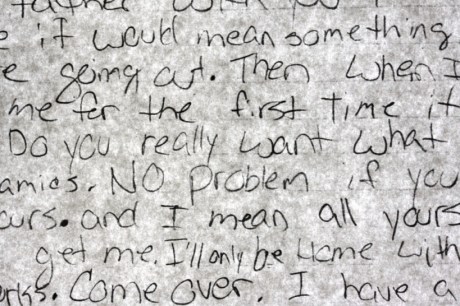
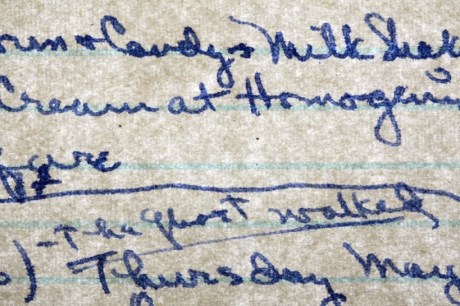
Scraps of paper have been piling up all around me for decades. Since I’ve never had a cigarette, this has not been much of a hazard. Everything seemed to have pictorial potential: notebooks, hand-drawn maps, found notes, anonymous grocery lists (someone has a website of these; hell, that can be said about everything), signs I’ve appropriated (Walker did it too). Keeping in mind the dicta of Garry Winogrand — “Any and all things are photographable” — and of Harold Allen, that what matters is where you put the camera and where you place the edges, I plumbed my archive and plucked pix thereof.

Ray Metzker speaks of working from a set of concerns, and that’s what happened with this little project. In no particular order, there was the texture of the surfaces, the limited (but real) color palette, regard for “horizon” in each image, the writers’ script, their legibility, and the words themselves.

Because I have attained certain level of cyber-capability (just enough), and working under their deadline, the display of the images isn’t what I envisioned (double-page spreads, blank pages as caesurae). If (when) this appears as a hard copy through blurb or whatever, those and other issues will get resolved to some degree. “Writing” is rewriting.

Most of the other 221 completed books employ more traditional / expected / pictorial subject matter, and may be easier to take at first viewing than this subject matter.  Please offer me some feedback on this experiment; thanks.

35R

http://sofobomo.org/2009/books/jdionesotes/content/

  • Calendar

    • December 2025
      S M T W T F S
       123456
      78910111213
      14151617181920
      21222324252627
      28293031  
  • Search