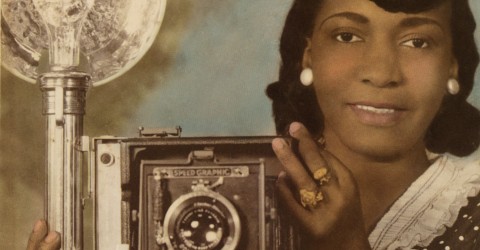
First Day Topics in Advanced Placement

*** The portfolio requirements for Seniors, to the College Board; and for Juniors, whether to the College Board (or to the Art faculty, in-house)
*** Thinking about the Concentration section of the portfolio sooner this year

*** apcentral.collegeboard.com & photodevoto.wordpress.com as vital sources of information and useful fora (“forums”) in which to participate

*** Delectations for our own edification vs. Critiques with the Drawing and 3-D Design classes

*** Field trips

*** Inspiration from cinema

*** Hoodies, the consensus being no changes

*** Flatfile selection and labeling

*** A portrait buddy system, to investigate the problem of photographic and design principles on a regular basis. What might be due each month: three pictures, either as a triptych or independent images. (I think I will/should/must intervene, in order to help people hook up.)

*** Solarization (the Sabatier technique of printing), then generating print-size negatives for cyanotype (blueprint) work.

*** “Pushing” film by rating it higher (essentially underexposing), then overexposing/under-developing medium-speed film (or shooting ISO 25/50 emulsions) for comparison’s sake.
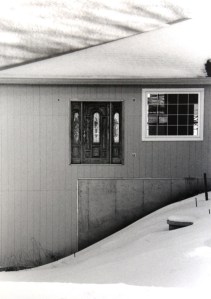
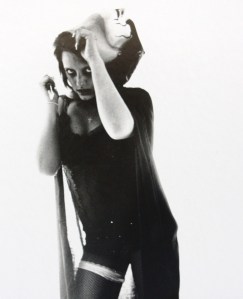
AP Art Show

It’s up, and it’s stunning.


Come see it in the Clair E. Smith Gallery and adjacent hallway cases sometime over the next 10 days or so; a good time would be the evening of the 30th, Thursday, due the likely appearance of the You-Know-Whos.

Plus refreshments. Your comments on the show are more than welcome here.

(The above photographs were made by Stef Tollefsen and Andi Argianas, respectively.)

Commentary for your Concentration Section

http://apcentral.collegeboard.com/apc/members/exam/exam_questions/2134.html
has everything you want to see and know and read about in order to facilitate your own Concentration and its commentary. Your portfolio continues to evolve, and you may find it difficult to get a handle on what’s happening, and how to describe it; things begin in one direction and take unexpected turns as you work. That’s OK, and you’ll notice in the posted commentaries that talking about the journey is a help to the “readers” as they score the Concentration section.

Apply to Advanced Placement

This course is open to highly motivated, self-directed student artists. Sophomores may apply for junior and senior years; juniors who are not currently enrolled in the AP Studio course may apply for senior year. All senior AP Studio students must enroll in a second visual art course.  (AP Art History may qualify as this second course only for those seniors returning to the AP Studio program.)  Students must submit their contact sheets / sketchbooks and a portfolio of 5 to 8 of their best pieces to be reviewed by the BHS visual art faculty.

 Students intending to graduate early are not eligible to apply, due to AP Portfolio submission. All students will be required to submit a portfolio to the College Board in May.

Students choosing this direction may work with a broad range of 2-dimensional media including photography, printmaking, collage, fiber and computer graphics (see the College Board website for an explanation of this portfolio classification: apcentral.collegeboard.com). I get to conduct this section seventh period.

 Faculty review of student work will be held Wednesday, February eleventh. Completed portfolios & applications should be submitted no later than Tuesday, February tenth.


 What is the deal with these fonts? I can’t get what I want to appear. Sheesh…

Prepare for the AP final!

The 2-D AP midterm consists of an assessment of the work accumulated from assigned projects and of the work done independently, any of which might be part of the final portfolio submitted to the College Board in May.


A+:  Exhibition prints are pictures printed on 8×10 paper, (maybe larger); most often printed full-frame; always spotted, sometimes toned; mounted, or ready to mount. We’ll each need enough to edit down to 24-29 by the end of April; how many are ready by mid-January?


B:     Collate all your contact sheets, well-made and labeled; again, the number of rolls and negatives made is key.


C-:   Number or name your prints; identify how each principle or element of design is most prominent in each picture.


Mr. D:    Create or obtain a clean, substantial, seriously dignified  container for your work.


In addition:

1. Which prints do you consider successes from what we have been calling “The Quarter of Finer Grain?”

2. Have you had (or have you not yet had) the pleasure of a personal hallway critique?

3. Have you experienced the exquisite honor of a group critique when we met with the other two sections?


The clearer and more orderly everything is when you hand it over, the better. De-ciphering your oeuvre is beyond the scope of a college-level course. Continue to ask questions for clarification in advance.

Elements & Principles of Design

Here are three different explications of the elements and principles of design for you to peruse.


http://www.educ.kent.edu/community/VLO/design/index.html


http://www.msdsteuben.k12.in.us/jrider/elements_and_principles_of_art.htm


http://www.4-hcurriculum.org/projects/kidspace/E-P.htm

Digital Submission to the College Board

Every student, parent and teacher involved in Advanced Placement courses may register with AP Central to gain access to their labyrinthine and seemingly endless web site. You could begin at apcentral.collegeboard.com, but also for starters, I think this link will work. Read it and ask/comment.

http://apcentral.collegeboard.com/apc/public/exam/exam_questions/199015.html

  • Calendar

    • January 2026
      S M T W T F S
       123
      45678910
      11121314151617
      18192021222324
      25262728293031
  • Search