The Allure of Abandoned Places

 What is this thing, allure? The urge to make… pic-ture.

(Can you sing the above, Sinatra-style?)

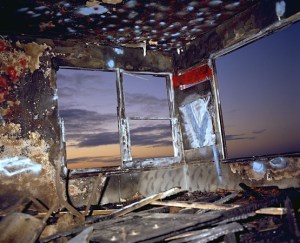
I can still take a walk, or a short drive, and see all the houses I “played” in whilst under construction (the houses, I mean; I suppose moi as well), but abandoned on weekends and in the evenings, and where all the empty overgrown lots were too, in the late ’50s and early ’60s. I wasn’t photographing then, much, but if I were… If I were. Perhaps the appeal is that it looks like raw subject matter, waiting for us to create order out of chaos.

 http://www.cmp.ucr.edu/exhibitions/ocean-view/divola/ demonstrates how John Divola gave form to a deteriorating situation, building a sense of time into the portfolio.

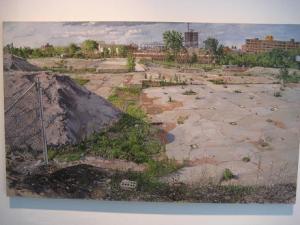
It’s the built-in appearance of the passage of time that pricks our interest to begin with. Here’s a painting currently on display at the Hyde Park Art Center, one of many by Andy Paczos, that may or may not resemble a photographic sensibility to some of us.


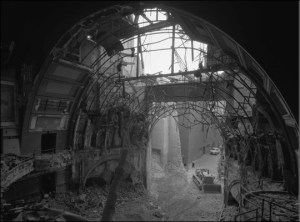
Often the impulse is to record what is disappearing, as in the case of St. Richard Nickel. His documentation of Louis Sullivan’s architecture drove him to make cymbal-crashes such as this, the procenium arch of the Garrick Theatre:

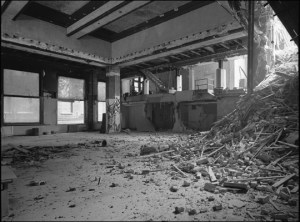
I’m fortunate never to have had an errant nail puncture my sole (how emo of me; how poetic), and I would never recommend that anyone visit places like these for picture-making. I know it goes on, though; asa a cautionary tale, here is where Richard Nickel died, in the trading room of the Stock Exchange.

For those who must, check out this book: http://www.kk.org/cooltools/archives/001279.php

Where do you stand on these locations as subject matter? Have you had, um, adventures in these places? Share, please.

Senior Teach Day

img_0359

He called each class to order on (or before) time, took attendance, assisted with printing, benevolently granted rest room trips… everything except grow a beard. Ryan was D. for our annual Senior Teach Day.

img_0367

img_0365

img_0369

“Something Else,” 10/15/80

These are my notes from Ray K. Metzker’s lecture at Columbia College:

“10/15/80-Ray’s Lecture, ‘Something Else,’ in the horrible new auditorium: Some current perceivable trends are characterized by the electronic media making older, slower processes look outmoded and unwieldy; a constant flow of information turning folks into junkies; need for instant gratification and shortening of attention spans caused by the above. There is a predominance of shallow formalism and nihilistic modernism. One can choose, or not (Ray does) to believe in more – humanism, a spiritual life, whatever –  which informs good work. Talk like this can sound awfully pretentious before showing one’s work, but it’s important to put everything on the line, to test the work and the artist. Ray admits to influences by, or at least a great interest in, Matisse, and sculptor Robert Hudson.”

aNOTHer Transmission from 1988

“Dr. D- As I sit here rereading/relooking at Beaumont Newhall’s History of Photography I am pleasantly reminded that I know how to see. This is a deeply visceral knowledge that can’t be entirely taught and can never be taken away. It is a thing that opens worlds to me that are closed to most. It is a complex skill that came about under your …  Read Moretutelage at the age when I was ready for it/ could learn it/ was bright enough to battle against it. You took intuition and ground it into a way to perceive the world. Twenty years on, after many attempts to bury it alive… it breathes life into my being. Unkillable.

So now, after many years and thousands of photographs, I thank you.

And a word to the cherubs in D’s present care… be steadfast, rebellious and mindful of the Old Man’s words and wisdom… it will serve you well in more ways than you presently know.”

ICCI’s Big Night

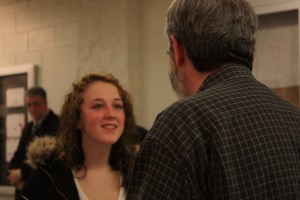
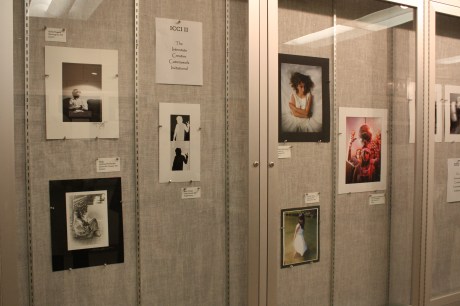
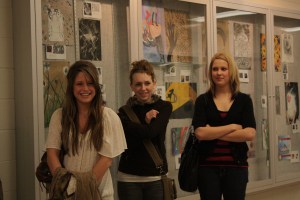
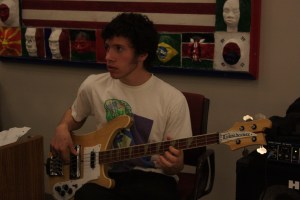
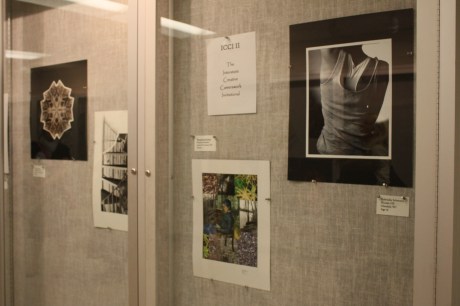
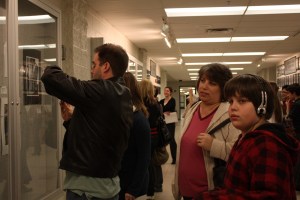
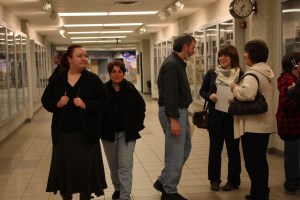
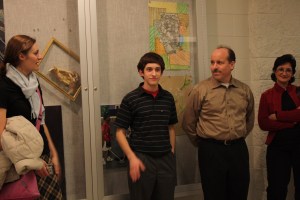
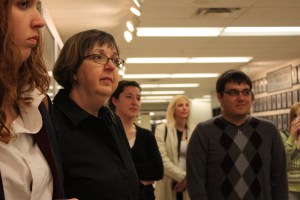
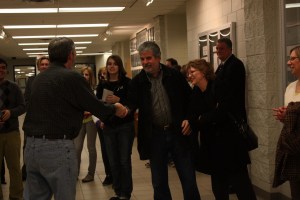
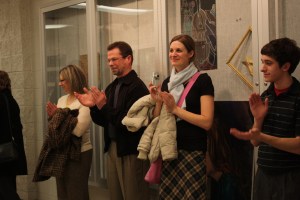
A big night, indeed. Folks from far-flung districts found the school; new friends were made; everyone was interested in everything; lemonade and coffee were served; Alex Costis played bass, swimmingly; certificates were presented and (short) speeches were delivered; folks saw the other two concurrent photography exhibits as well, and nobody went home unhappy. (Oh, and I forgot to plug the blog.)
img_0315

img_0339

img_03161

img_0338

img_0317

img_0358

img_0319

img_0350

img_0354

img_0334

img_03351

img_0345

img_03471

Most pix by Mrs. D.

ICCI II

Everyone is welcome to come to the Interstate Creative Camerawork Invitational’s big reception on the evening of the 5th, Thursday, at 7:00. There will be music, recognitions, (probably) a beverage AND the vaunted HGFOS.* You will also see the assortment of work by the accepted members of next year’s AP class, and featured artist Jim Root in the Clair Smith Gallery. What’s not to like? If you’re on the Fo-Do field trip earlier in the day (cloudy, high 60 F.) in the fresh air, be sure not to sit down, however briefly when you get home, and you’ll be able to make it.
*Hot Guys From Other Schools

They Second This Emulsion


http://www.businessweek.com/ap/financialnews/D96HEULG0.htm
For better or worse, corporate decisions affect cultural welfare.

Commentary for your Concentration Section

http://apcentral.collegeboard.com/apc/members/exam/exam_questions/2134.html
has everything you want to see and know and read about in order to facilitate your own Concentration and its commentary. Your portfolio continues to evolve, and you may find it difficult to get a handle on what’s happening, and how to describe it; things begin in one direction and take unexpected turns as you work. That’s OK, and you’ll notice in the posted commentaries that talking about the journey is a help to the “readers” as they score the Concentration section.

Gamma Infinity

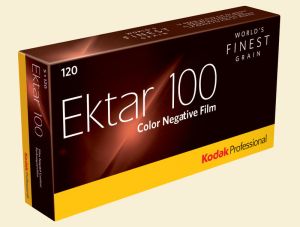
In order to expose film destined to be developed to completion, choose a slow, fine-grained film (such as Ilford Pan F or an Efke or Adox film with a similar ISO), rate it at an exposure index that underexposes it three stops (ISO 25 @ 200, or ISO 50 @ 400), and shoot in the flattest possible daylight.

To develop this severely underexposed film, use a pint (in a double–reel tank with a spacer reel on top) of straight D-76 with an added organic restrainer. Agitation is
***normal for the first ten minutes
(first 60 seconds, then 10 sec./min.);
***then every five minutes for the remainder of the first hour;
***then, thirty seconds every twenty minutes for a total of six to eight hours. Fix in fresh fixer and finish processing as you would normally. The negatives should print easily with “normal” contrast and moderate grain.
For those who have the patience to do this well, the dividends are renderings of fine texture in light that is not normally practical.

Update: It’s working well. The only surprise is that the contrast we’re getting in individual frames is crazy high. People are printing with a 0 or even a 00 filter! It’s either the light in which the film was shot, or my formula for the added restrainer.

Update update: Upon reflection, I have a better theory. Time was, when people returned to wherever they lived from San Francisco, they often purchased a local delicacy at SFO called “sourdough” bread. Of course it’s ubiquitous now, but when the Boudin chain of restaurants expanded from the Bay Area by opening franchises in Chicagoland, they made a big deal of flying the starter dough via United Air Lines.

“Starter dough?” For certain recipes (bread or cassoulet), a particularly distinctive strain is perpetuated by using some of the previous batch to begin a new batch. Stock solutions of film developer used full-strength are not unlike starter dough in that, as each roll of (dry) film may take away maybe 1/2 ounce of liquid, a small amount of replenisher is added to top off the gallon. For popular formulas such as D-76, HC-110 and Microdol-X, there are replenishers available from Kodak. (Xtol is formulated to be its own replenisher.)

Maybe I’ll get to my point now: photographers become attached to their personal batches of re-usable, full-strength developer for the nuances they provide. It’s takes endorphin-releasing to a new level, at least for the photographer herself, but these little things add up to a signature look in the prints. I understand that, among the cult of Harvey’s 777 users, some mature solutions resemble sludge. One case in point is Garry Winogrand, who preferred to process 7 rolls of film with one spacer reel in the top of an eight-reel tank (who can say how he arrived at that refinement?). When he began a batch of film developer, he would first pour it into a tray and run a few sheets of out-dated paper through it “to take the edge off the grain.” Perhaps that’s part of the reason for the seeming energy of our fresh D-76 with restrainer added. Or perhaps I’m confusing light sources with freshness with grain… IDK. You?

One more thought. Because I replaced Anti-Fog #2, the original restrainer for this formula (sold by Kodak in handy tablet form) is not currently available, I use Anti-Fog #1–Benzotriazole. The difference is temporarily lost to the ages, and the information superhighway is littered with rumors and canards. Also currently, I am disinclined to test varying amounts of Benz in order to refine the process.

Transmission from JC, Class of 1988 (via f/book)

JC: As I sit here in awe of this digital machine

The beast stares back at me… and I return to a hidden voice.

The voice says: “Just shoot.”

And so, to you… I shoot, but still wonder…

How the ____ does this thing work?

JD: No way out, no way out: ya hasta read the manual-all three languages.

I ain’t no Luddite (there’s a film-free camera in my house, and the school ponied up for DSLRs for the AP teachers, and my phone… never mind that one), but I got me a 8×10. Simplicity itself, plus logical optical options.

JC: There is something tactile missing from the whole experience. Yes, it’s great that I can see my results immediately. And I never was good at keeping dust out of the film chamber, so it cuts down on having to retouch things… which I can do in Photoshop anyway (I’ll leave that for a separate rant).

Then there is the lack of cumbersome equipment and chemicals, not to mention the even more cumbersome cost associated with those things.

But…

Where are my happy accidents? Where is my reticulation- the Noble Rot of film development? Now it is all just a filter I can impose at intentional will.

What about limits on the number of shots you can take? 24, 36, 48 per roll? And what about manual focus? Why is that so hard? Why can’t I choose what I want to focus on. Where are my F-stops? Where is the sensual poetry of (wo)man and machine, out together capturing moments in time from social space?

I wonder, what would Mr. Evans say about all of this?

JD: He’d probably think of something positive to say; some of his negatives are discolored from the glue in the seam of their
glassine envelopes, and he shot SX-70 for the last couple of years of his life.

I think the key lies in when the decisions are made, at which point in the process. We all grew up with the cameras that could shoot several dozen exposures per roll, from which we edited (or not) when we “got them back.” The cameras without film allow for hundreds of shots, because deleting unwanted pictures is “not a waste,” and corrective functions are seemingly easy for the few keepers. (Again, not everyone deletes: witness this morning’s postings on f/book.) OTOH, with the large format cameras, one loads one’s film a sheet at a time in the dark and unloads it for processing (not that I’m complaining, mind you), so when I see something to shoot, the thought process includes some version of “Hmm, this is a possibility…but it’ll be better around, maybe, four o’clock.” The success rate per exposure is higher (a little, anyway), and as we all know, whether it’s a darkroom or a kitchen or body shop, ya gotta enjoy the process, right?

JC: Okay… but, the machine… the relationship between subject and photographer. I think it’s different when the image is “disposable.” This touches on the relationship between the photographer and the camera too… it’s a triad of photographer, camera and photograph. Here is a little bit about Jean Rouch (moving film… but it works here):

“But what of the “self” of the observer or, in Rouch’s case, the ethnographic filmmaker? here Rouch compares his own “self” with that of the possessed medium. In filming “Les tambours d’avant” Rouch literally attached himself to the ritual and entered a “cine-trance of one filming the trance of another” (Rouch 1989, 348). Cine-trance, however, is entered only by filmmakers who practice cine-verite, who hunt for images in the real world. Cine-trance is, in effect, a kind of profound dialogue between ethnographer and other, leading to a phenomenologically informed and shared anthropology. (Stoller, 1992, 169)”

It’s like when I write… a few months ago I lost my computer to a damaged logic board (I see the irony in that, believe me). I was unable to write. I tried to sit with a pen and paper, but my thought process is so altered from that medium that I literally could not do it. My thoughts move at the same time my fingers do on a keyboard.

Now that I am trying to relearn how to take photographs I struggle with a different set of muscle memories around the technology. I will put my big-girl pants on and read the manual and figure it out, but the process so far as deposited me back in that cold classroom at BHS where I listened to you talk about F-stops, and realized that I would never have the patience it took to master the darkroom. I have been dragging around those 35mm cameras and those memories for 20 years…

And now they have to be replaced, and that makes me a little sad. And old.

That’s all.

  • Calendar

    • May 2026
      S M T W T F S
       12
      3456789
      10111213141516
      17181920212223
      24252627282930
      31  
  • Search