Pinhole Photography

You can make a camera out of a cardboard box easily, in under a half-hour. You’ll need a sturdy box, like a snug-lidded shoebox or an oatmeal box; flat black paint to darken its interior; hmm… maybe I can supply the rest. Watch these:

http://www.youtube.com/watch?v=b4pdY82vjss&feature=related

http://www.youtube.com/watch?v=jeBY18KsaXg

http://www.youtube.com/watch?v=jeBY18KsaXg

http://www.youtube.com/watch?v=jeBY18KsaXg

Choice Camera Choices for Class

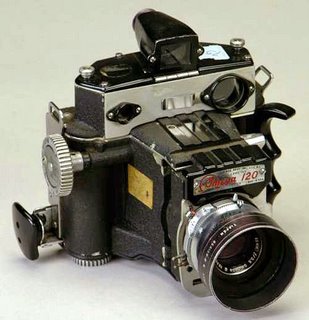
You will prefer a reliable brand of 35mm SLR (single lens reflex) or RF (rangefinder) camera for the course at Barrington Huge School, among which are Canon, Minolta, Nikon, Olympus and Pentax. Only one lens is necessary; a flash attachment is not. Likely hunting grounds these days include Alpine Camera in Des Plaines, craigslist.org, and Cash Converters in Hoffman Estates. Maybe you’ll need new merch from a place such as Batteries Plus; maybe you’ll need a rushed overhaul at a service joint like Digicam in Arlington Heights, or Alpine.

Whatever you do, don’t get this model:

Stock Solutions & Capacities

One of the regular PhDs, “Eli,” writes:

“I purchased 5 gallons of Dektol developer, but it didn’t come with clear directions. How much do I mix for a use of a day? I also have Ilford rapid fixer, 1 liter. I need help/directions for diluting both. I would appreciate your help/input. Thanks!

PS. Where/how can I dispose these chemicals?”

Well, Eli, the standard dilution for Dektol is one part stock solution to two parts water to make a working solution, e.g. 10 ounces Dektol and 20 ounces (tap) water. That can be altered by you in order to affect contrast in the print: 1+4, for example, might help a negative that needs a (mythical) 3 ¼ filter. This developer throws a little sludge in the tray with use, and it’s no problem. The working solution does not last overnight for a second session.

Mix the powder in about 4/5 the eventual volume with around 100 F. water, and finishing the correct measurement with cool water. The stock solution keeps best in brown glass bottles, or opaque plastic away from the light. Kodak’s standard statement regarding storage of liquid developer concentrates is that they keep reliably for six months in full closed containers, and two months in partially-filled containers.

Rapid fixer is commonly diluted 1+7 in room temperature tap water for fixing RC paper. For a long time, I’ve been diluting the Kodak Rapid Fixer in Barrington Huge School darkroom at the stronger 1+3 dilution for a variety of reasons (occasional fiber paper short times to match RC; exhaustion insurance; unreliable fixing habits endemic to adolescence). Count your prints and test strips to ensure good fixing and to avoid overuse of the batch; I recommend 40-50 8x10s per liter for your darkroom (see http://www.emsdiasum.com/microscopy/technical/datasheet/ilford/paperchemicals.pdf to know why). I save the used fixer for regular trips to the IEPA drop-off in Naperville: http://www.epa.state.il.us/land/hazardous-waste/household-haz-waste/hhwc-schedule.html

W. o’ W. from, of all places, a meditation on crosswords

“The environment reinforced an observation once passed on by a musicologist, who explained that chaotic societies tend to give rise to highly organized art. Think of Motown, or bel canto opera. This is how it works.” -Dean Olsher

A (Dubious) Diversion

http://www.unphotographable.com/archives.html

Is this useful, or just candy to you?

Film Speed Testing

If you are having problems with exposure (if a significant percentage of your negatives are either very dense or very thin, or both) it’s time to break your habit of buying and ruining film. Here is a reliable way to determine your own personal exposure index for the film you use, and for the way you expose and develop. Kodak devised a “ring-around” test which is more specific than this version; I have used it and benefited from it, but I think the version I describe here will be enough to tell you what you want to know. Essentially, you shoot the same scene at 3 different film speeds, develop each set at 3 different development times, and pick the best result.

***Use the lens you use most often and use one common shutter speed for all the exposures.

***Make a scene that is in part sunlight and part shade. Assemble a collection of well-known items of differing textures and colors. Place some glass, some wood, and some cloth in the scene. Be sure to get something dark and something light. Place things in the shade and in the sun. Also, place a standard gray card in the scene, in direct sun, and make sure that the card has no reflection, so that it represents neutral gray. Find a person to include in the scene; you can be your own model (use your timer or a long cable release). Take all the photos in a quick succession, so that the light is the same for each photo. If you want to test indoors, you can do that if you must, but you really want to test a natural scene, and come up with the film speed & developer time that looks most like natural light.

***Get some pieces of plain white paper and a broad-tipped marker, and make a set of 3 labels. For example, let’s say we are going to test 400TX film. Make a label that says “400TX”. Another will say “TX800”. Make another that says “TX200”. Make sure that the lettering is large, so you can read them when you make prints.

***On a roll of 24 exposures, set your light meter to a speed of 400 and take a reading from the standard gray card. Let’s say you get an exposure of 1/250 second at f/11. Place the label that says “400TX” in the scene, in a prominent location. Shoot a frame. Now stop down the lens by 1 stop, to f/16, and replace the label with the one which says “TX800”. Shoot a frame. Now open the lens to f/8, and replace the label with the one which reads “TX200”. Shoot another frame. Skip over 7 or 8 frames and repeat the exposures. Once more, skip 7 or 8 frames and finish the roll with a third set of test exposures.

We now have 3 sets of shots: one set for each film speed. We want to cut the film in the dark into 3 strips, and develop one strip of the film from each set for a different length of time. If we are using a developer whose recommended time is 10 minutes at 70 degrees, let’s develop one set for the recommended time of 10 minutes, another set for 8 minutes, and another set for 12 minutes. In the darkroom, make a set of contact prints on multigrade paper with no filter (or Number 2 paper), giving just enough exposure for the clear film edge to be as black as the paper allows. Use fresh chemistry, and develop each sheet for the same time, such as 2 minutes in LPD. Make a contact print, not an enlargement, because you want to eliminate the effect of the enlarger and the enlarger lens. It’s likely that your enlarger has a condenser head (a collimated light beam), meaning that high values could be blocked due to the Callier Effect.

Find the image which feels the most like light, throughout the entire range of tonality. You want the shadows to be dark, but still contain sufficient detail. You want the high values to look clean and white, but still have some texture. You want the model to look like a human. You want white paint in the sun to look like white paint in the sun, not bleached out. Gray clothing should look middle gray. That’s the film speed/developer combination you will use for normal lighting, and expect normal results. You will also find that one of the film speed/developing times looks best for a “minus-one” development time: The shadows will be normal, but the high values will still be one stop too low. Similarly, you will find a combination of film speed and development time that works nicely for “plus-one:” the shadows will look normal, but the high values will be a bit too high, by around 1 stop.

With these times, you can handle many lighting situations that arise: high contrast, and low contrast. If you want to perform more testing, you can determine the best times for N-2, N+2, etc. Be aware that when you under-develop film, you lose some speed in the process. So, to follow our example, you might have to shoot TMY at a speed of 100 when you lower the contrast by 2 stops, IE with N-2 development. In the same way, if you increase the development time enough to expand contrast up to N+2, you may need to shoot TMY at 300 or higher. Everything is… you know… interconnected.

You can use this same technique to compare the results of the same film in different developers, or different films with the same developer. They are not all the same. This is not only true in terms of densitometry and science, but subjectively. Some film/developer combinations are gritty, while others are smooth. Some are harsh, others are silky. Find the ones you like most; you’re the artist.

Bottom line, in a pinch: whatever the manufacturer claims for the film speed, just cut it in half. So if it’s T-Max 400, shoot it at 200. If it’s Ilford FP4+, which is rated 125, try it at 64.

Gioia’s Layers of Parallels

From “Delta Blues” by Ted Gioia:

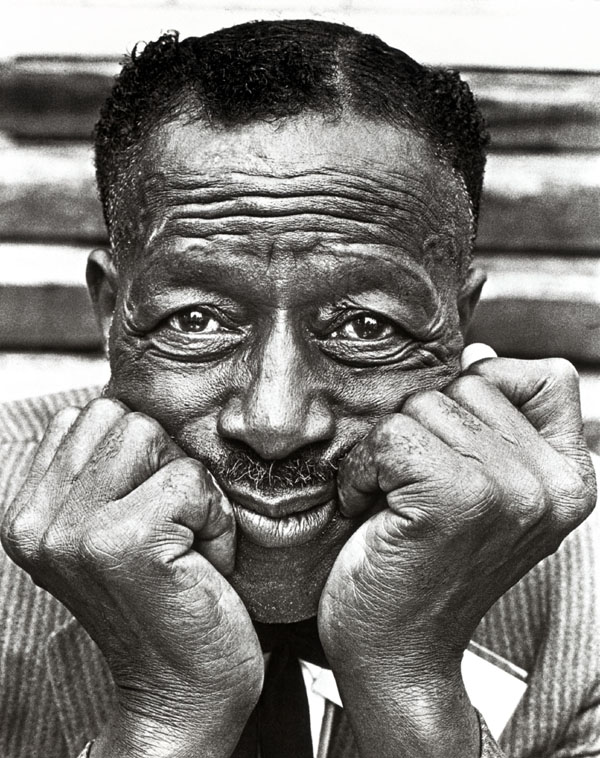
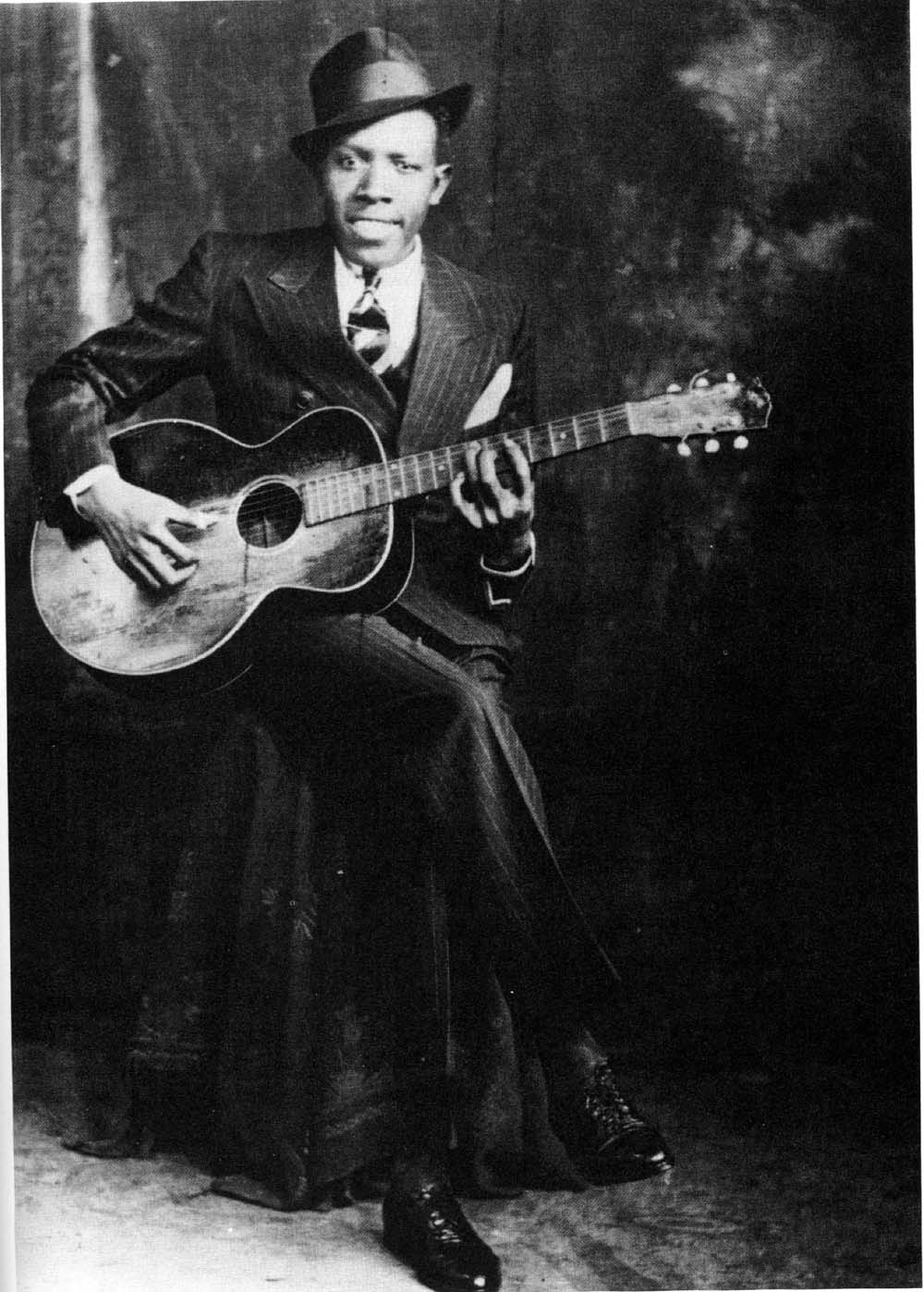
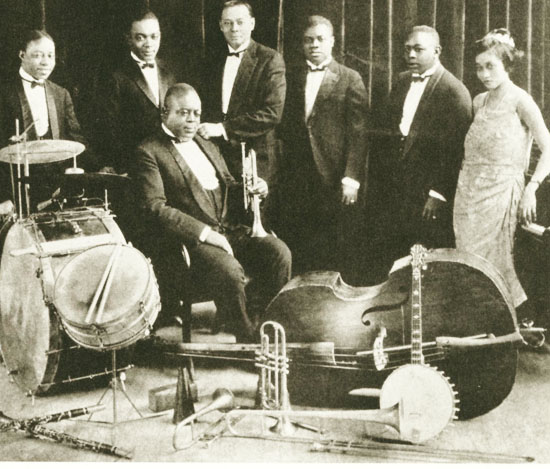
“The earliest Delta blues tradition had been as much about creating sounds as it was about playing notes. The same had once been true of the jazz world, too. In 1923, King Oliver could construct a whole solo just using several notes, relying on his rich tonal palette to give texture and vitality to these simple phrases. But Louis Armstrong came along and played such an endless variety of notes and complicated phrases that the simpler, heartfelt solos of King oliver were seen by many — wrongly, in my opinion — as outmoded and primitive. One encounters a similar transformation in the history of the blues when the baton passes from Son House to Robert Johnson. If you transcribed House’s music on a piece of sheet music, the notes on the page would never do justice to the sound, to House’s mastery with the bottleneck or his hell-raising voce, and you might be tempted to dismiss the artistry involved in its creation. But you would never make this mistake with Robert Johnson’s music. Whether transcribed, played by another guitarist, ot transferred to another instrument, the inventiveness and versatility are unmistakable. True, something may have been lost in this shift from an African focus on sound to a Western preoccupation with notes. But, as with Armstrong, even more was gained. Above all, a folk music found the tools it needed to enter the mainstream of modern music.”

Two First-Person Accounts

Here are two photographers’ records of commercial darkroom work, each with plenty of connected texts. Flip a coin to determine whether to read Mr. Luckett or Mr. Steinbicker first.

http://consumptive.org/adjustments/adjust.business.html and http://consumptive.org/adjustments/adjust.grind.html; also

http://lifeslittleadventures.typepad.com/lifes_little_adventures/2006/05/how_we_did_it.html

W. o’ W. from Ken Rockwell

“I almost never meet anyone who discusses photography. Instead, people discuss camera profiles, Photoshop plugins and HDR regression algorithms, but no hobbyists seem to realize that the only thing that matters is what you see and do before you click the shutter.
The more you’re thinking about gear, the less you can think about the picture.

The less equipment I take, the better pictures I make.

The fewer lenses I bring, the better pictures I bring back.

The less crap I haul with me, the more good pictures I haul back at the end of the trip.”

Requirements trump regrets

On Christmas morning the basement flooded(!). That means the darkroom is not available until the entire space is made new. I had set aside a number of days during the holiday break for shooting, roll film processing, proofing, enlarging and testing of specific procedures; now, all those activities are pretty much pushed back until later in January. A deluge does not contribute to work flow.

Compared to other picture-making, the darkroom “work flow” does not necessarily flow. True, I’ve found a way to print economically, spread out over a few days at a time, but the film developing (a joy in itself [I kid you not]) only makes sense when batched into one or two days.

What if I were to risk mold or spoilage or further water damage by going out to shoot instead of dealing with the mess, because the shooting is more pressing? Insanity. How much am I willing to leave my father and my father-in-law during their holiday visits in order to pursue some or another project? No way. Which parts of my life have to wait so that other parts may resolve themselves, only for me, at some yet-to-be-defined plane of meaning and resonance?

In one English teacher’s recent retirement speech to the rest of the faculty, he expressed what amounted to an apology to his family for the extent to which his career had consumed him and his available time. The tone of that part of his remarks was oddly unsettling (but not unwelcome, since these speeches are usually a tad more cookie-cutter). His wife and son were present; he sounded truly contrite.

Nicholas Nixon made a reference, at his last Chicago appearance at Columbia College, to being less than immersed in his children’s childhoods. It struck the same melancholy note, albeit buoyed by their eventual apparent coming to terms with his lifestyle.

As the Sean Connery character Jim Malone says in “The Untouchables,”  “You see what I’m saying is, what are you prepared to do?”

Update: I started preparing this post on the 26th, and now, (the 29th) NYT published a not-unrelated article in the Science section, written by John Tierney, about a curable human frailty: pleasure procrastination.