Findings

Perhaps you recall how the work of one Vivian Maier is becoming known:

https://photodevoto.wordpress.com/2009/10/16/a-recently-discovered-trove/; well, there’s more.

http://www.explorechicago.org/city/en/things_see_do/event_landing/events/dca_tourism/FindingVivianMaier_ChicagoStreetPhotographer.html

John Szarkowski wrote: ” A photograph may… be private in the sense that there is no designated public access to its meaning, no catalog of its constituent parts, its iconographic and formal resources. Each viewer, including the photographer who made it, must devise for the new picture a personal and provisional place among the other pictures and facts that the viewer knows. It is of course true that all good pictures contain unfinished meanings; only perfect clichés are perfectly complete. Nevertheless, good photographs are often more richly unfinished than other pictures, are wilder, in the sense that they have in them more elements that are not fully understood and domesticated. James Agee, pretending that the photographer was a fisherman and that the truth was a trout, said it was the photographer’s task to bring the fish to net without too much subduing it.”

and now we have this: http://www.newsweek.com/photo/2010/09/15/amazing-garage-sale-photographs.html

P.S. Not to alter the gist of this post, but you can keep up on Vivian Maier at http://vivianmaier.blogspot.com/

Abe & Teddy, together? Who knew?

 If I had been asked as, say, a trivia question whether the lives of Abraham Lincoln and Theodore Roosevelt overlapped, I would not have known. Apparently, here is proof that, at least at one moment, they were within sight of one another.

http://blogs.archives.gov/prologue/?p=2445

Ken, Ray, Joe, Chuck… RIP, Joseph Sterling

This is Joe Sterling’s cover image for Aperture magazine 9:2

…which featured work by the five graduate students of the Institute of Design in 1961: Ken Josephson, Joseph Sterling, Charles Swedlund, Ray K. Metzker, and Joseph Jachna. Each of them had their very best work ahead of them, and are still working — but for Mr. Sterling.

http://www.suntimes.com/news/obituaries/2886740,CST-NWS-xster12.article

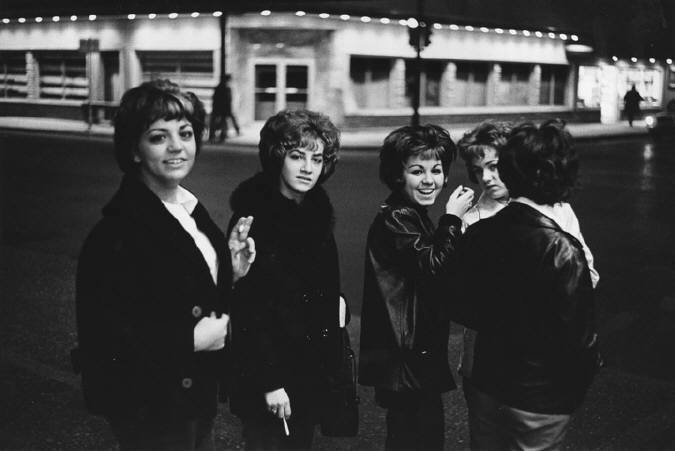
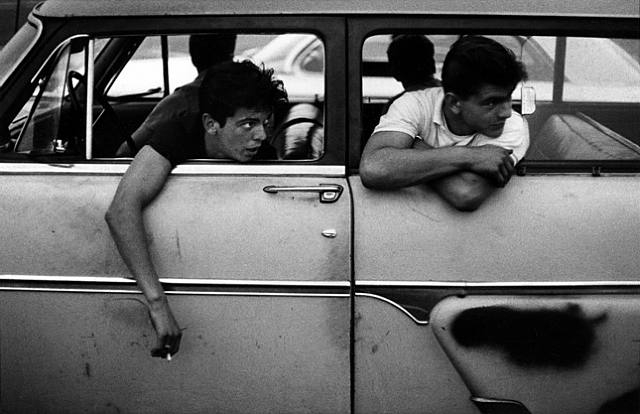
“There is a world of a cowboy against the empty wastebasket, of the Bessemer converters and the cheap Montana hotel, a world that exists — but not for the adolescent. His world must be created — created for the physical and emotional self. Although highly affected by surrounding forces and opinion, the world of the adolescent is totally interlaced within itself and incapable of freeing itself… It whirls, rolls, and engulfs what it is allowed to engulf. Sometimes wavering… wavering… AND THEN opportunity is revealed and must be exploited. Exploitation exists for exploitation itself. A world created, enlarged, and accessible to those already interwoven… but his world will grow, move on and be assimilated.” (Sterling’s text in Aperture)

Lisa Swarbrick: The Leader’s Lens

It’s Bonus Karma time again: show up at the Barrington Area Library this Friday night for a reception for BHS alumna Lisa Swarbrick, and maybe hear about her ethnographic approach to picture-making.

“There’s a kind of power about a camera. You’re carrying some sort of magic that with a click of a button, you have installed a confidence in your subject to let down his or her guard and you have captured something that will never again exist exactly as it did. A photograph is a means to fix a person in time in a certain way.  Yes, at its very base level, an image is a two dimensional object with a glossy finish, but the legacy lives around the image, above and below its surface. A legacy is bigger than an individual, bigger than one idea, bigger than a single photograph, it is durable, it is memorable, it is communicable.”

http://www.barringtonarealibrary.org/community/calendar.aspx

http://www.lisaswarbrickphotography.com/

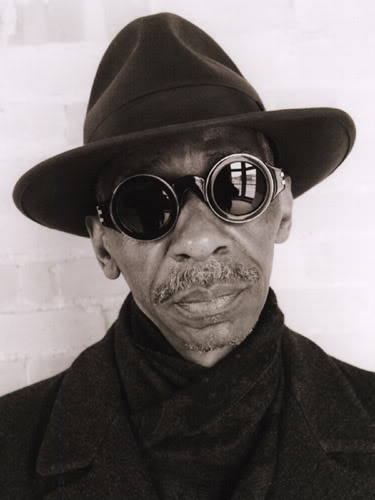
Hang a Roscoe Mitchell

Read this review of Mr. Mitchell’s CD, despite the fact that it cannot prepare you for the music (you gotta scroll down a bit): http://www.nytimes.com/2010/11/09/arts/music/09choice.html?scp=1&sq=roscoe&st=cse

…then watch this more recent collaboration with two other geniuses:

http://www.youtube.com/watch?v=GyuWJEkP780

American Parallels Galore

“Early baseball (i.e. U.S. rounders) was supposed to give batters more opportunities than in cricket, by reducing the role of the pitcher/bowler to that of “feeder.” Yet today’s baseball is a pitcher’s game, while modern cricket is the sport that really gives batters the major role. Baseball and cricket, then, came from very similar backgrounds. They looked a lot like each other, in baseball’s early days. But after 1850 the two games drifted apart, and each assumed its own character and identity. The major difference between early rounders and cricket in North America was that the bowler/pitcher had no role in getting the batter out; the batter could only be “run out” or “caught.” Gradually, the rules were also changed to give back the ‘feeder’ or ‘pitcher’ more of a role in getting batters out: they were allowed to pitch as they wished, not how the striker wanted him to (as in rounders). Cricket became a longer and more leisurely game as batters (batsmen) began to dominate the sport, and wanted more time to display their individual skills. Baseball, on the other hand, became shorter and more abbreviated. Pitchers assumed an active rather than passive role, then came to dominate the sport.”

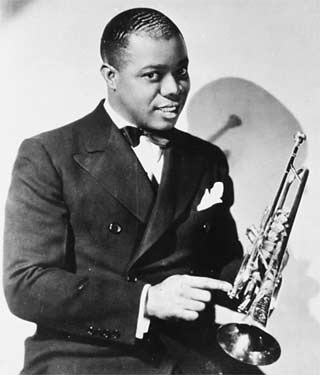
“In the minds of most people, at the heart of jazz is the improvised solo.  Critical attention is almost invariably devoted to the analysis of solos by the great jazz musicians. Discussions of ensemble work are rare indeed in jazz literature.  So much is the improvised solo seen as the essence of the music that listeners feel cheated when they discover that a solo is not the sudden outpouring of an open heart but has been memorized and repeated night after night, or even written out and played from sheet music.

“Jazz, as American art music situated in modernity, minus the solo, ceases to exist in any form worthy of critical analysis.  The improvised solo is the essence of jazz.

“There are specific historical bases for a marked rise in individualism within America and subsequently within America’s music.  An analysis of the first recordings of jazz music indicates the absence of the solo.  The first quarter of the 20th century yielded only an ensemble form of early jazz.  (James Lincoln) Collier designates this as a function of European or white influence, ‘the Victorian nineteenth century was the great age of the massive ensemble… it was the time of the large marching band,’ and describes the occasional solo in music as ‘the spice in the stew,’ whereas ‘the meat and potatoes was the ensemble; the larger, the better.’

 “What changed?  Again, Collier has the answer:        

‘What happened, I think, was that by the middle of the decade, the new spirit of modernism, with its crying-up of freedom, emotionalism, and expressiveness, had escaped bohemian and artistic circles and was rushing into the mainstream.  The call was no longer for community, but for individualism.'”

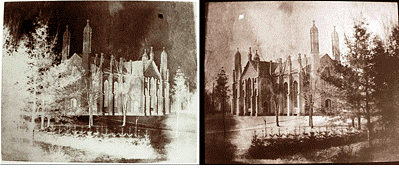
“On the face of it a one-step system, like Daguerre’s, would seem preferable to a two-step system, and there is no evidence to suggest that Talbot would have devised the negative-positive system if a one-step system had suggested itself first. The principle of (more or less) endless reproducibility later came to be thought of as central to the very meaning of photography, but it was not a central issue to the generation that invented photography. It was their grander and less utilitarian goal to capture a field of energy on a screen.

“Nevertheless, once Talbot had demonstrated his simple, brilliant idea, it was obvious to anyone that one negative could yield an infinite number of prints—or at least more than the world would conceivably want. The idea of publishing photographs, in books or as loose prints, followed soon behind.”  -“Photography Until Now”

RIP Geoffrey Crawley

This is the obituary that matters; the one that ought to prompt sainthood:

http://www.amateurphotographer.co.uk/news/Renowned_photography_scientist_Geoffrey_Crawley_dies_news_303286.html

THIS one, however, is how the world will probably remember him:

http://www.nytimes.com/2010/11/07/world/europe/07crawley.html?hpw

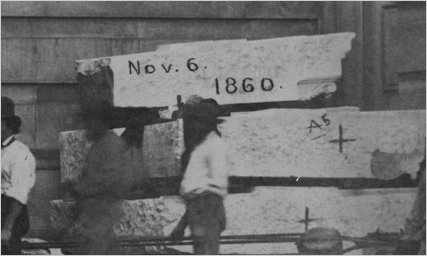
Record everything now; think about it later.

http://opinionator.blogs.nytimes.com/2010/11/05/a-lincoln-photograph-and-a-mystery/

Go out and… do it.

Texas goes iconic. (At least it isn’t Che.)

http://www.mysanantonio.com/news/state/suit_centers_on_silhouette_cowboy_106424843.html

Maybe they found it on fbook.

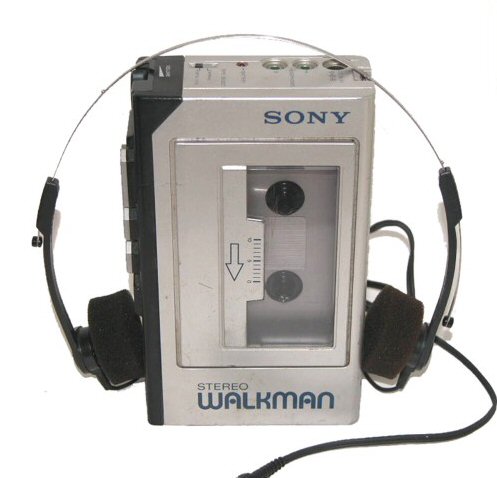
Walkman Ambles Into The Sunset

http://mashable.com/2010/10/24/sony-walkman-rip/