Legacy Gear


“Ralph Gibson uses Andreas Feininger’s tray, Abe Frajndlich uses Minor White’s, and John Coplans’ tray is used by Amanda Means. The tradition of darkroom printing carries on, regardless of the arguments surrounding it and its supposed demise.”

http://www.slate.com/blogs/behold/2012/10/22/john_cyr_documents_famous_photographers_developer_trays.html

I inherited an armload of items from Mrs. D.’s uncle, and I have a precious one-of-a-kind film drying…device… from Eileen Weber. On occasion, when donations to the Huge School darkroom arrive, we see fit to bequeath sundry pieces to diehard devotos who’ll give ’em a good home.

Richard Learoyd used a 19th century lens loaned to him from a portrait camera in Thomas Joshua Cooper’s office at the Glasgow School of Art.

http://blakeandrews.blogspot.com/#!/2012/11/camera-as-artifact.html
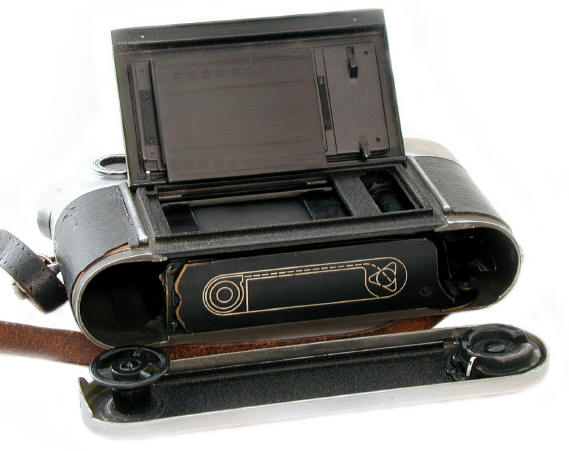
Garry Winogrand’s Leica. http://www.cameraquest.com/LeicaM4G.htm

Somebody has Joel Peter Witkin’s enlarger. http://www.photoeye.com/auctions/citation.cfm?id=1
What I Learned Last Weekend

1. A middle-aged self-proclaimed “Lesbo Commie” tends to fidget during a panel discussion.

2. An unanticipated thunderstorm need not nix street shooting in a city of broad shoulders.

3. One can unwittingly become like unto an employee whilst dining at a family-friendly neighborhood joint.

4. Not every academic authority is willing to dismiss a connection between Storyville and klezmer.

Contact me for details.

Basics

…from The Bad Plus’s Ethan Iverson.

“During the last five weeks in Europe, many jazz piano students came up to me after the gig  and asked advice. To one and all I officially say: play some ragtime, play some stride. Read copious amounts of Joplin, James P., Teddy, and whoever else you can find. You won’t regret it. It’s an advanced and swinging interpretation of Bach’s major-minor tonal system. Down with “jazz harmony” out of a theory book, long live “harmony.” None of those cats knew what a chord scale was…”

In photography, our equivalents might be, after choosing what to photograph (and where, and when), deciding where to stand and where to place the edges (cf. Harold Allen). Select for yourself whom to take as role models, and how to produce interpretations of the tonal scale to suit your needs. 


(Much more Iverson at http://dothemath.typepad.com/)

W. o’ W.: Tom Griggs

“We are in some sort of photographic Golden Age – the number of photographers today and the quality of images produced, as shown in this exhibition, is unprecedented, even if finding truly new and fresh ideas and territory to explore is increasingly a limited proposition as the medium enters adulthood. I’d just as soon do away with individual names, contests, and the fetishism of certain work. What does it serve beyond the market and egos?”

Lesson Plans For Hall “Duty”


Sit, on furniture designed for students, at a designated spot in the hall. Do not attempt to concentrate on anything, or to make effective use of the inadequate work surface provided.

Graciously open the door to admit employees from the Republic of Special Services who went out for “fun food” and have no keys to the locked outer door (but who choose not to enter through the unlocked doors).

Compile a concise list of the many things you could be doing instead, that have more to do with skills you acquired as part of your own education, as well as with the reasons you chose to work here.

From time to time, wave to the surveillance cameras.

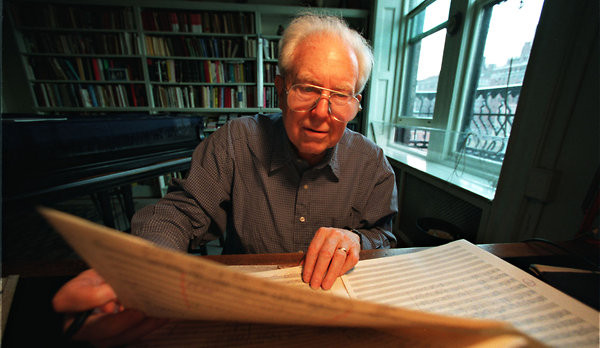
Elliott Carter, 1908-2012

“As a young man, I harbored the populist idea of writing for the public,” he once explained to an interviewer who asked him why he had chosen to write such difficult music. “I learned that the public didn’t care. So I decided to write for myself. Since then, people have gotten interested.”

“There are many kinds of art. Some kinds are hard to understand for some people, and easy to understand for others. But if the works are very good, then finally a lot of people will understand them. And it seems to me that if a work has something remarkable to say, then someone who wants to whistle it will find something in it to whistle. But these things are very subjective.”

“Meaning is mushy. Meaning falls apart.”

http://lareviewofbooks.org/article.php?type=&id=1040&fulltext=1&media=

Excuse me: digital humanities? Somehow not unrelated: as Howard Hampton put it in, mid-paragraph (and the Times placed it, at the top of the column), this Sentence Of The Week: “The random gush of information and observation starts to coalesce into patterns; the leapfrogging backward and forward in time is gradually shaped into history, or at least becomes dried handprints in the warped concrete of memory.”

Our Expanding Campus

The Heart Department has been reinventing and renovating its webbed pages for your delectation, adding “slide shows” of engaging work from this year and the previous two years. Nothing is in its final form, and selections will probably change as time goes by.

http://www.barrington220.org/Page/10991

http://www.barrington220.org/Page/11013

http://www.barrington220.org/Page/11021

For some reason, that last display seems a little too… I dunno… caffeinated? I’m sure we’ll find a way to slow it down.

Getting “Credit” Doesn’t Mean Much

“Part and parcel with requests for free images premised on budgetary constraints is often the promise of providing ‘credit’ and ‘exposure,’ in the form or a watermark, link, or perhaps even a specific mention, as a form of compensation in lieu of commercial remuneration.

There are two major problems with this.

First, getting credit isn’t compensation. We did, after all, create the images concerned, so credit is automatic. It is not something that we hope a third party will be kind enough to grant us.

Second, credit doesn’t pay bills. As we hopefully made clear above, we work hard to make the money required to reinvest in our photographic equipment and to cover related business expenses. On top of that, we need to make enough to pay for basic necessities like food, housing, transportation, etc.

In short, receiving credit for an image we created is a given, not compensation, and credit is not a substitute for payment.”

http://photoprofessionals.wordpress.com/

Also: http://rising.blackstar.com/photographers-excuses.html

SAIC (Don’t Attempt To Sound It Out)

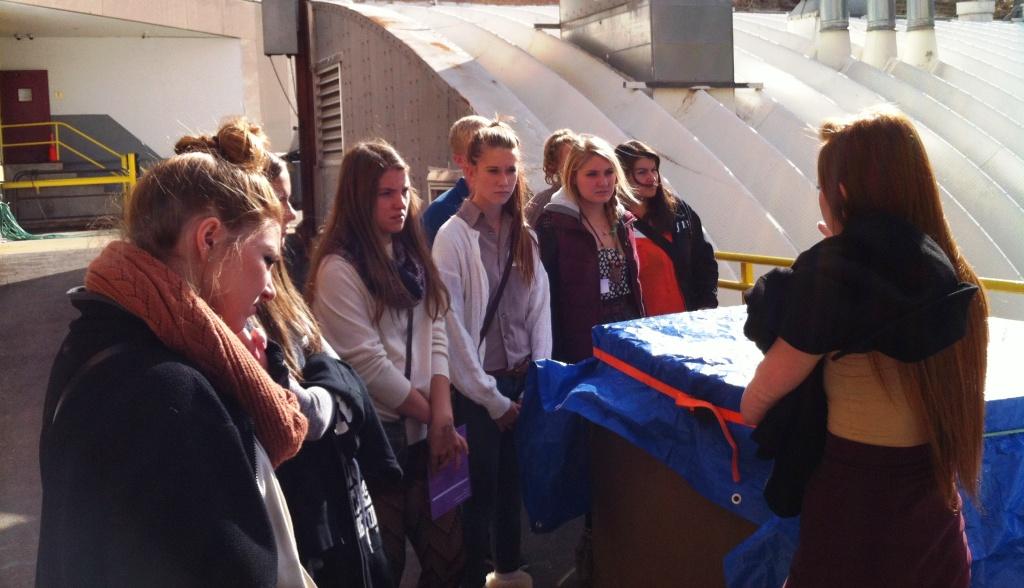
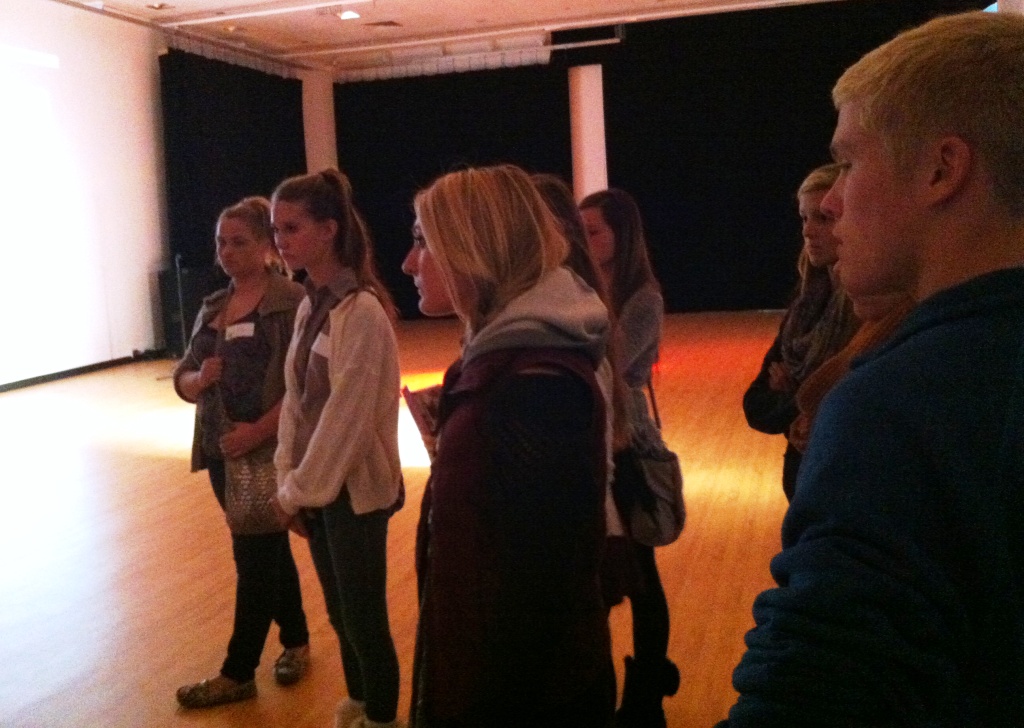
We toured the no-grades, DIY-major art school downtown last Tuesday. As you can see, we stood a lot, gazing at things. For the most part, we stayed hungry; then there was time to visit the ‘Tute.

*Images courtesy of Ms. Mizanin.

** Ask a participant about witnessing the head-on collision on the ride back.