The Height of Something. I Mean, Really.

Feel free to pick your own perspective on the wrong-headedness of this marketing strategy.

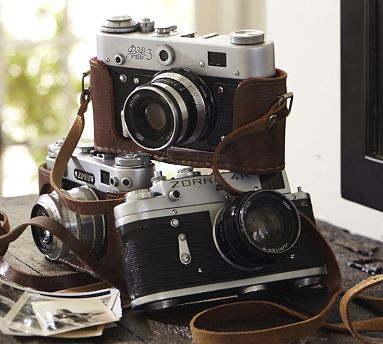
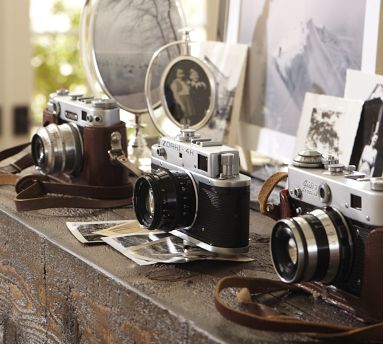
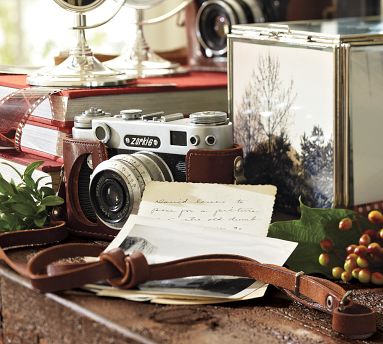
“With compact bodies and simple functionality, classic 35 mm cameras paved the way for both amateur photographers and professional photojournalists everywhere. The first was prototyped in Germany in 1913 and went into production as the Leica in 1924. Our collection of found cameras, crafted by a variety of mid-century German and Russian manufacturers, has become vintage icons, making them perfect for display. Each one is unique; let us choose for you.”

Mo’ Better Negatives

At our facility in the Wonderful World of Photography* we develop our film in Kodak’s XTOL, mostly. Kodak recommends a dilution of one part developer to three parts water for greatest sharpness and a slight boost in speed, to guard against underexposure.

Would you be willing to compute water temperature relative to developer concentrate temperature if the amounts were six ounces and two ounces? I don’t think so. I do it all the time, in my darkroom below the surface of the earth, by setting the metal container of working solution in a tray of hot water (cool water in summer) and stirring until the temperature reaches its goal. But we found that, if we dissolve what should make five liters in ten liters of water, it keeps just fine at that dilution for the length of time it needs to survive before being used up. (Most of us are not aware that the batch from which we work is already half-diluted.) Since it’s already 1:1, no rocket science is required to dilute once more, again 1:1, and arriving at a temperature for the water is easy to do in one’s head. Voila: 75 degrees Fahrenheit.

Kodak also recommends that a minimum of 100 ml be used for every 80 square inches of film. That’s roughly three ounces. Most of us get perfectly usable results in an eight-ounce tank, and that means that we’re relying on two ounces of XTOL, not three.

On occasion (in lieu of extreme developing times; for unique films; in efforts to compensate for major exposure errors) we recommend using the intermediate dilution directly from the available batch, in which cases we generally resort to the sliding scale for correct developing times in room temperature developer.

Here’s my suggestion, available only online: process your single roll of film in a two-reel tank, leaving the top “spacer” reel empty, thereby using at least (more, actually) 100 ml of stock solution developer. Use eight ounces of water and eight ounces of the cut XTOL, then splash out a half-ounce and use only 15-1/2 ozs. of solution in the tanks we have, in order to allow for air space so that the (gentle) agitation will work. It’s not a waste, nor is it false economy; many workers use twice that amount per roll (one roll in about a quart of working solution). When you do this, you need never say anything; simply give an exaggerated wink, and we’ll know what you’re up to.


* aka BHS

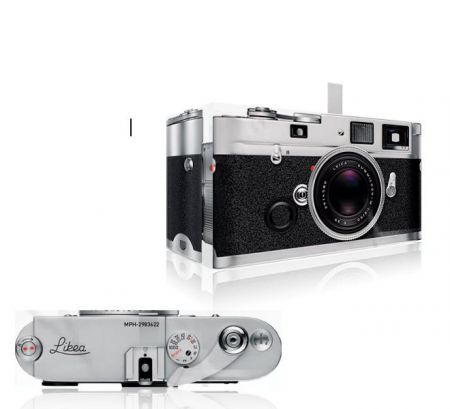
Only twenty bucks for a 35mm camera, and you still have to punch your own pinhole.

http://likea-camera.com/index.html

It’s a pinhole camera; it’s cardboard; it takes 400TX. But ya gotta make yer own “lens,” fer Pete’s sake.

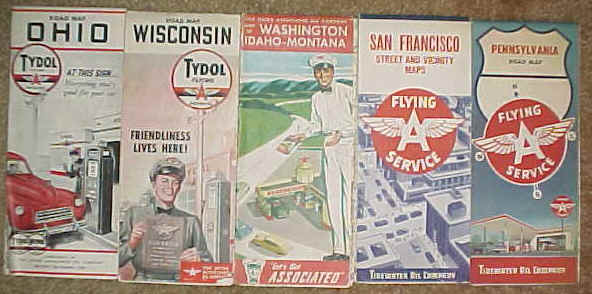
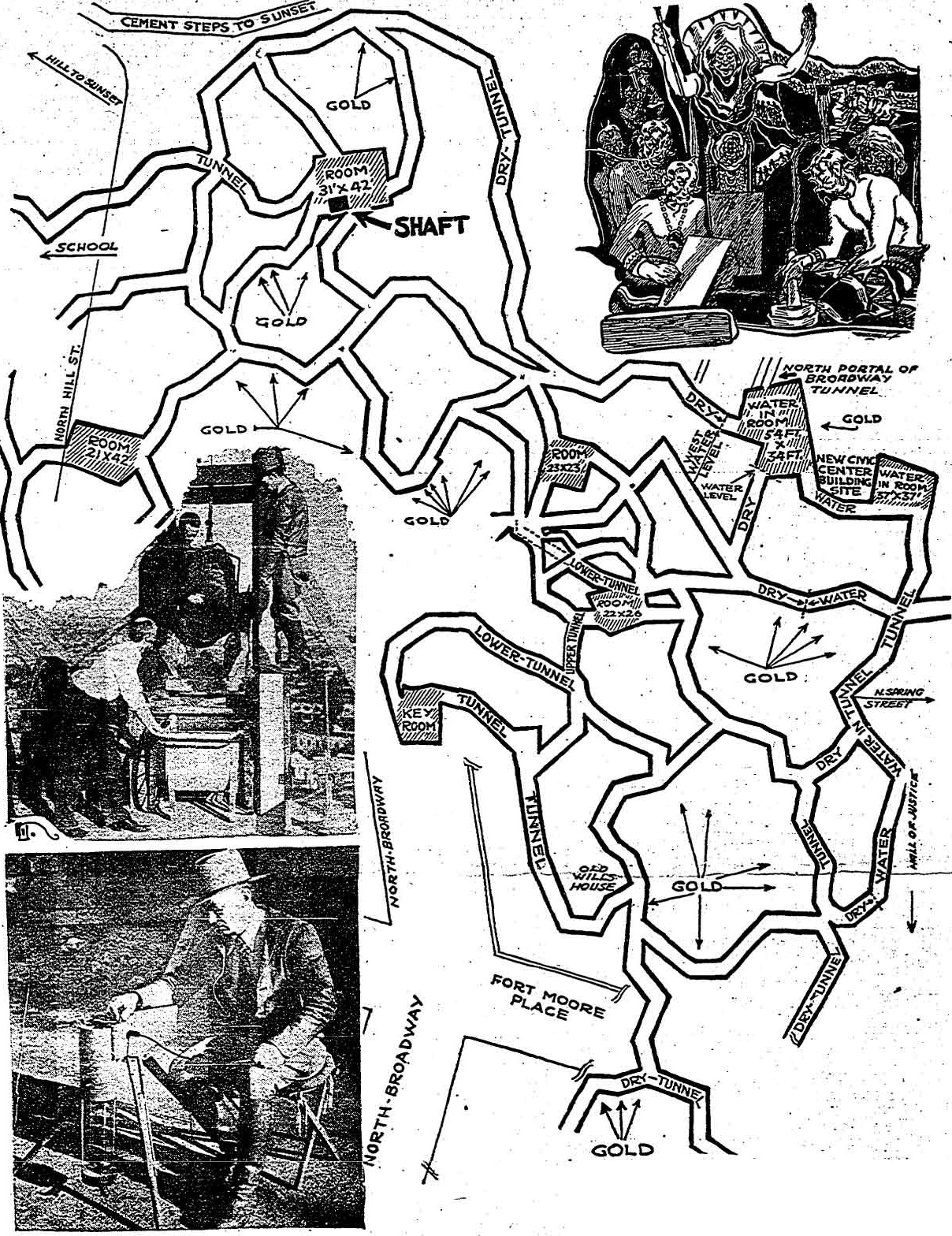
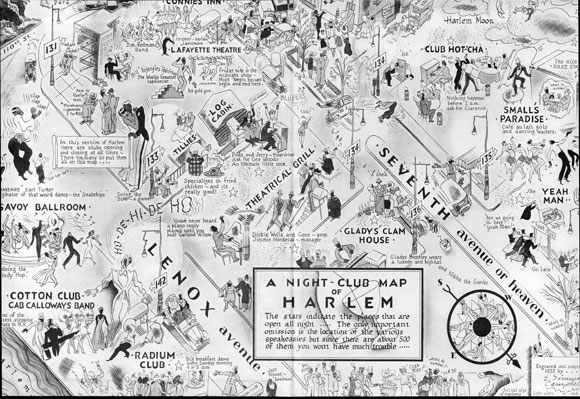
Really old maps are often the best maps

“Maps and paintings were like walled cities: the subject was contained and complete; the idea formed its own frame… the idea of the picture was likely to extend to the picture’s very edges. One might say that the picture was formed by the edges. One might say that the picture was formed by the edges. Medieval painting can be thought of as an art of assemblage, but the Renaissance painter could no longer freely dispose the component parts of his picture to form a perfect, self-enclosed system. He could, in principle, only change the relationship among the three elements that formed his picture-designing system: the vantage point, the imaginary window, and the (real or imagined) motif. His picture was now a segment of a continuum, part of a larger whole, and the fact gave new authority to the picture’s edges – the means by which the world was edited.” -John Szarkowski, “Photography Until Now”

http://www.telegraph.co.uk/news/worldnews/europe/spain/5978900/Worlds-oldest-map-Spanish-cave-has-landscape-from-14000-years-ago.html

Subscribe & Link

You can subscribe to this blawwg by clicking on “Subscribe,” above.

If you have a similar (or dissimalar) blog, especially if I have linked to you already, you may similarly link to this one, s.v.p.

“I don’t know WHAT I am!”

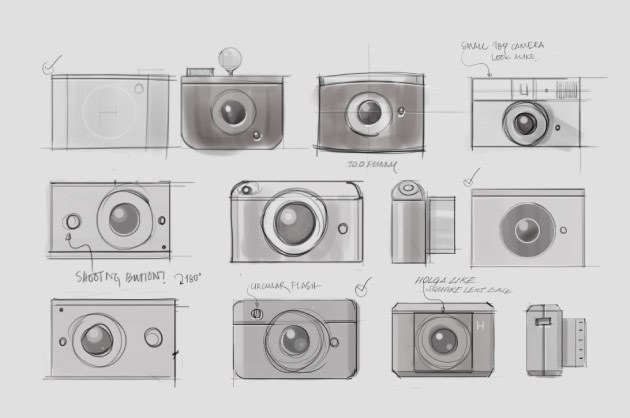
http://www.saikatbiswas.com/web/Projects/Holga_D.htm

I’m pretty much at a loss for words. The only appealing improvement is the option that accommodates the 15% of us.

A Massive Exhibit from Sotheby’s and Polaroid

Watch this little promotional video, then consider a road trip to New York next weekend:

http://tinyurl.com/22pfq5p


An opportunity to see work of this scope may not occur again in a lifetime. (The fact that the Type 55 film used by St. Ansel for a trio of different-size prints was in fact Kodak’s Panatomic-X in a Polaroid product does not in any way diminish Adams’s achievement.)

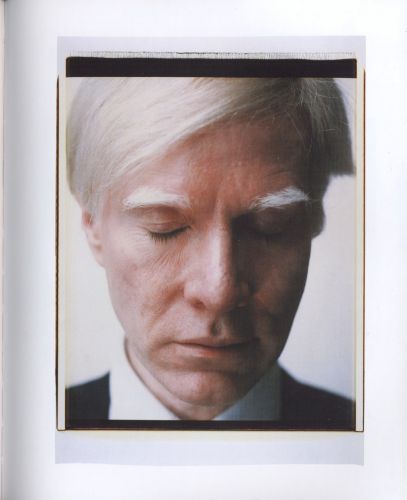
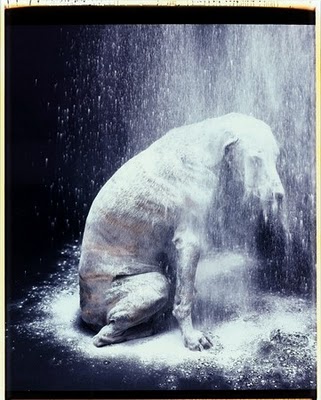
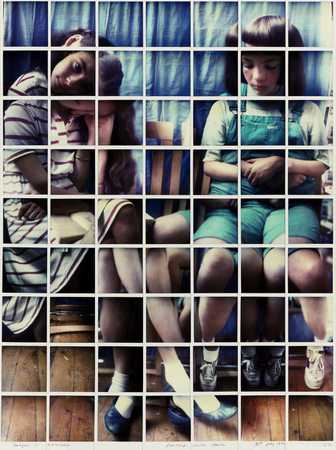
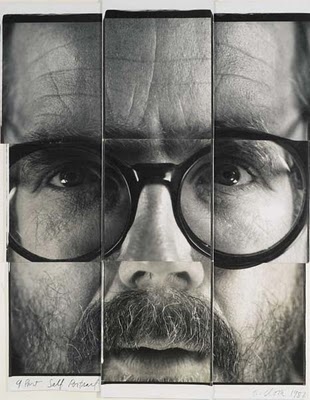
The 63-print mosaic is SX-70 prints, spat out from a hand-held camera (as is the Warhol self-portrait at the top; the nine unique prints that make Chuck Close’s self-portrait are each 20×24 inches, as are the Wegman Weimeraners.

UPDATE: Even though this was a court-ordered dispersal of collateral, it comprised only 1% of Polaroid’s collection.

Vertiginous

At http://www.360atlas.com/demo.html, a real White Guy shows how he made our planet his own, and is selling a DVD (not unlike Mark Klett’s free, more engaging, site “Third View”- see link at right) of his panoramic pictures made with a Globuscope, designed by the aptly-named Globus brothers (yes, that’s their real name; you realize, of course, that I’m in no position to make fun of names). At http://globuscope.com/ you’ll see that the odds of acquiring a Globuscope are daunting. Fear not, especially if you prefer toys over quality: http://www.lomography.com/magazine/news/2010/06/09/spinner-360?utm_source=www&utm_medium=teaserPhotos&utm_campaign=spinner360

When I Hear Summer, I Hear Albumen. In Pittsburgh.

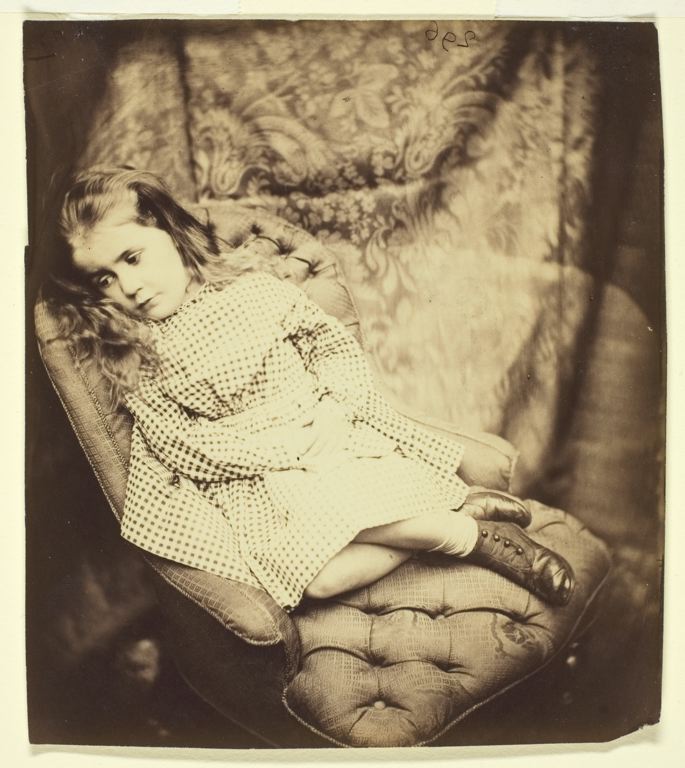
Albumen prints were the dominant photographic process for the latter half of the 19th century. They survive to this day, and they are beautiful.

You can learn how to make your own in the City of Bridges during the weekend before the All-Star break.

http://www.f295.org/site/?page_id=573

“Positive” Paper

We print from a negative and the print is positive, right?

We print from a color negative and the print is positive; we print from a color positive (a “slide”) and the print is still positive.

If we use b/w paper in a pinhole camera, we get a (contrasty) negative print; most often, we contact-print that paper negative, in order to generate a positive print.

Paper designed to make a (positive) print from a (positive) color slide, placed in a pinhole camera, would make a unique positive print, right?

OK, now dig this: http://harmantechnologynews.com/2IQ-4GVU-77VU59V96/cr.aspx

… and this: http://www.ilfordphoto.com/Webfiles/2010421151622042.pdf

… and this: http://www.freestylephoto.biz/22252-Fotokemika-Efke-BandW-Positive-Paper-RC-Matt-5×7-25-sheets