Regarding Our Intelligence

Here is a substantial excerpt from Mr. Mayhew’s Honors course “Writing Jazz” blog:

“Intelligence, in any field, is driven by the desire to discover the inner logic of things, how things work from the inside out. Education, even at the highest levels, tends to emphasize the acquisition of knowledge, but erudition is not intelligence.

“If you take an approach to learning that is oriented toward discovering how things work, you will acquire a lot of erudition along the way, but, more importantly, you will develop real intelligence, which I define as the capacity to draw connections within and between complex systems.

“In some sense the knowledge (erudition) is the easy part. For example, if you asked me analyze the rhythmic interactions between Paul Chambers, Philly Joe Jones, and Red Garland in the Miles Davis quintet rhythm section, it would be very difficult. It would require a lot of close listening and analysis… Jazz provides a good opportunity to exercise this kind of intelligence because of its complexity and subtlety. Since jazz is already a complex musical style, and takes place as one part of a complex culture, then interpreting its place within culture involves relating two complex systems to each other.

“Now I think you’ll say that to this you have to be very, very intelligent… I would put it another way: the way to become intelligent is to do things like this. This shouldn’t really be a wholly new approach for you. I think good students figure this out for themselves eventually. Sometimes very intelligent students, however, don’t really get it. They still think of education mostly as acquiring knowledge and doing well in classes rather than trying to figure out the secret logic of things.”
(Who was it who referred to revealing the hidden structure of things? Metzker? Naw. G. Spencer Brown? Nope. It’ll come to me… Anyway, the point is — one of the points is — that we get smarter through the doing. We don’t need to know what or how before we start out on something, but rather at the middle or the end (ideally; no guarantee, of course). Ah, it popped into my head: the hidden structure quote might be from Emmet Gowin, in the video we have and will likely watch in class soon.)

Matthew Woodward: Bare Ruined Choirs

Go to the Barrington Area Library right away to see the exhibit of Matthew Woodward’s drawings, because you’ll be revisiting before it all comes down on the 20th. Look around carefully so you don’t miss any of the pieces. There are parallels to the kind of monochromatic printmaking that we do.

The library’s website says:

“Through Woodward’s medium of charcoal and graphite on paper, he highlights interesting motifs found on century old edifices. By selecting architectural details from cornices, doors, and gates, he captures a misty beauty of ghost-like finials and creates hazy, haunting, compelling images.”

In between visits, read John Berger’s essay “The Company Of Drawings” in this month’s Harper’s magazine. Here’s a little quote (which happens to begin with a clear similarity to camerawork:

“Drawing now involves subtracting as much as adding. It involves the paper as much as the forms drawn on it. I use razor blade, pencil, yellow crayon, spit. I can’t hurry.”

W. o’ W. from, of all places, a meditation on crosswords

“The environment reinforced an observation once passed on by a musicologist, who explained that chaotic societies tend to give rise to highly organized art. Think of Motown, or bel canto opera. This is how it works.” -Dean Olsher

Gioia’s Layers of Parallels

From “Delta Blues” by Ted Gioia:

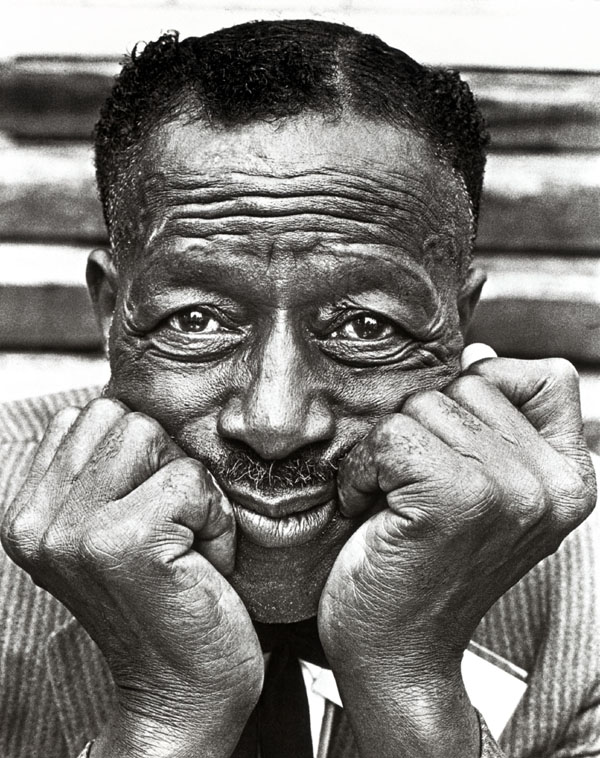
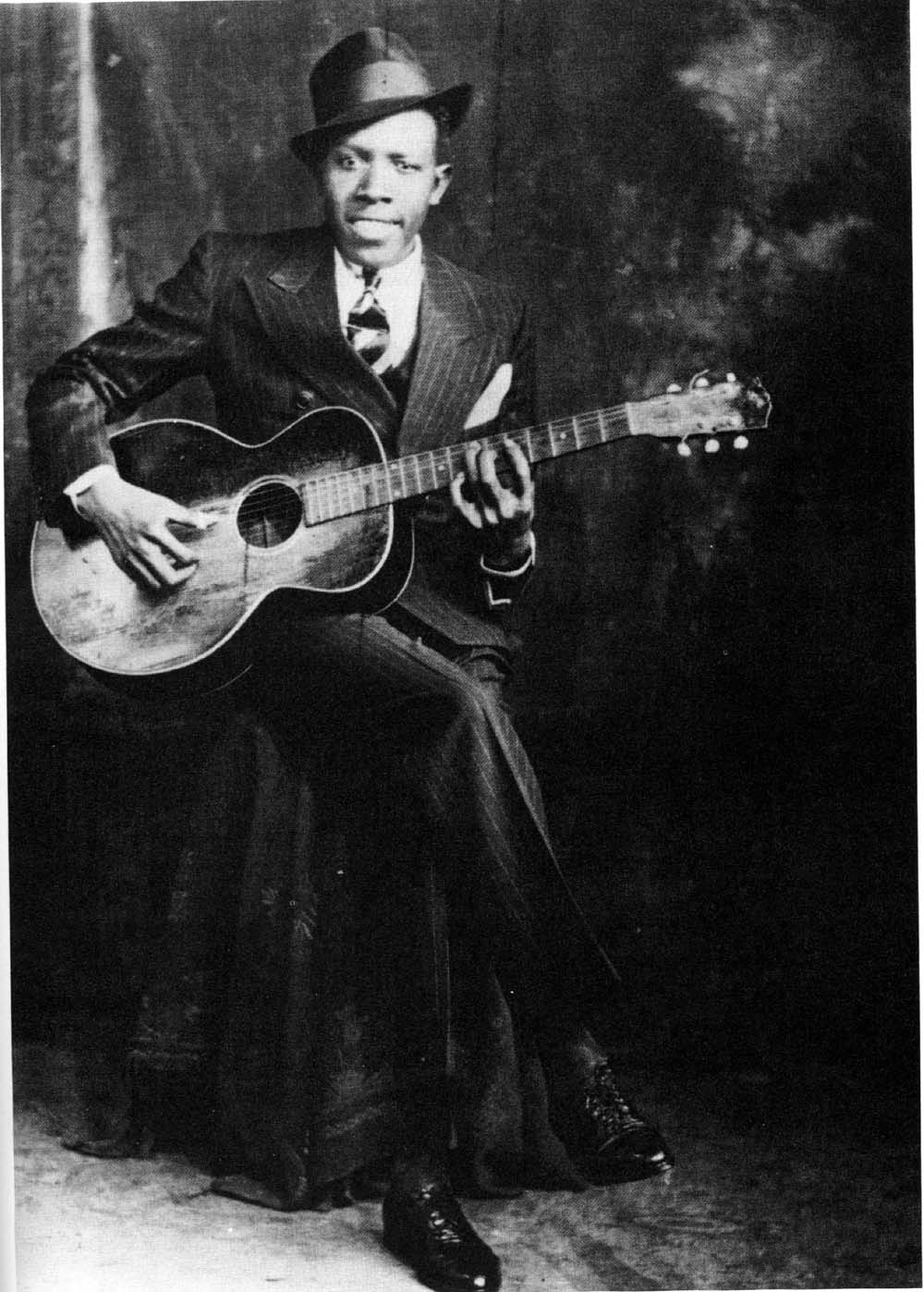
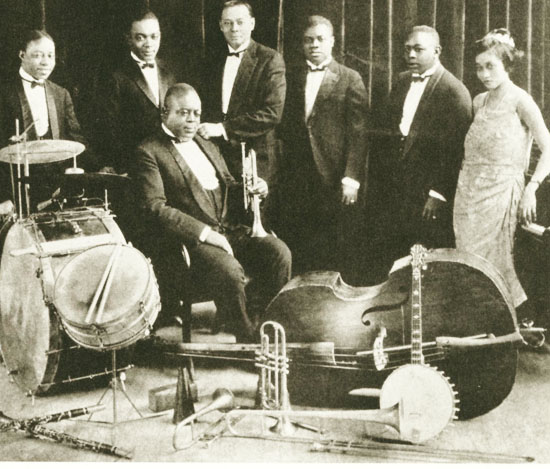
“The earliest Delta blues tradition had been as much about creating sounds as it was about playing notes. The same had once been true of the jazz world, too. In 1923, King Oliver could construct a whole solo just using several notes, relying on his rich tonal palette to give texture and vitality to these simple phrases. But Louis Armstrong came along and played such an endless variety of notes and complicated phrases that the simpler, heartfelt solos of King oliver were seen by many — wrongly, in my opinion — as outmoded and primitive. One encounters a similar transformation in the history of the blues when the baton passes from Son House to Robert Johnson. If you transcribed House’s music on a piece of sheet music, the notes on the page would never do justice to the sound, to House’s mastery with the bottleneck or his hell-raising voce, and you might be tempted to dismiss the artistry involved in its creation. But you would never make this mistake with Robert Johnson’s music. Whether transcribed, played by another guitarist, ot transferred to another instrument, the inventiveness and versatility are unmistakable. True, something may have been lost in this shift from an African focus on sound to a Western preoccupation with notes. But, as with Armstrong, even more was gained. Above all, a folk music found the tools it needed to enter the mainstream of modern music.”

W. o’ W. from Daniel Barenboim

From “Music Quickens Time:”

“In life outside music, ambiguity is not necessarily a positive attribute — it is often a sign of indecision and, in politics, a lack of firm direction — but in the world of sound, ambiguity becomes a virtue in that it offers many different possibilities from which to proceed. Sound has the ability to make a link between all elements, so that no element is exclusively negative or positive… Feeling is an expression of the struggle for balance, and it cannot be allowed independence from thought. As Spinoza shows us, joy and its variants lead us to a greater functioning perfaction; sorrow and its related affects are unhealthy and should therefore be avoided. In music, though, joy and sorrow exist simultaneously and therefore allow us to feel a sense of harmony. Music is always contrapuntal, involving an interplay of independent voices, in te philosophical sense of the word. Even when it is linear, there are always opposing elements coexisting, occasionally even in conflict with each other. Music accepts comments from one voice to the other at all times and tolerates subversive accompaniments as a necessary antipode to leading voices. Conflict, denial and commitment coexist at all times in music.”

Parallels in the Essays of Annie Gosfield


Annie Gosfield is a Modern composer who has written a number of pieces which, for the most part, relate well to photographic practice without substituting too many nouns or verbs. Here are some of her pearls:

Take your work seriously, but don’t take yourself too seriously.

Details count.

Don’t fear rejection.

Don’t assume you know what’s accessible to the audience and what isn’t.

If you chose to study composition, spend your time in school studying what you can’t learn in a club or a garage.

Make sure you’re always doing some work that is yours and yours alone — not composed for the approval of teachers or colleagues.

Never discount the power of the library.

http://opinionator.blogs.nytimes.com/2007/03/20/composer-house-arrest/

Listen for yourself: http://www.anniegosfield.com/

Powhida’s Metaphor

…for the art world as high school:

“In terms of the hierarchy, high school is a great metaphor because of the cliques that exist.  The art world is already divided into unknowns, emerging, established, mid-career, international artists, and according to what graduate program you went to, who you’re friends with and your social pedigree.  It’s more like a high-school cafeteria.  

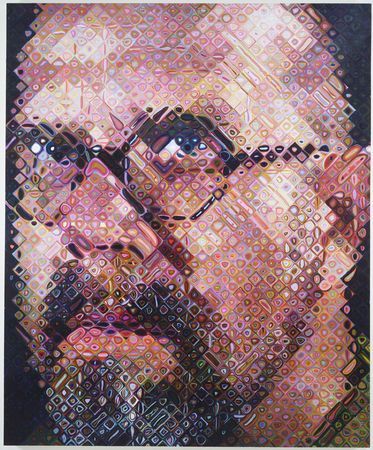
It’s not only freshman, sophomores, juniors, and seniors; it’s also who are the administrators, the teachers, the custodians…who is the principal?  Someone like Chuck Close seems like the principal of the art world.  Giving his lessons and support to certain people.”

http://bombsite.powweb.com/?p=6458

Uncertainty and the Tonic

“Long distance information, give me Memphis, Tennessee” is sung over what is called a dominant chord; the pull of that chord is eventually resolved by the tonic chord. The tonic represents the key in which Mr. Berry’s tune is written; the tonic is the place at which the harmonic progression is at rest. But in this tune, you spend most of your listening or playing time on the dominant chord; in each of the four 19-bar verses, not until measure 16 do you experience the resolution of the tonic, and this provides a sense of structure (in the first verse, that’s at the word “wall” in the line “and he wrote it on the wall”).

In Hynde’s “My City Was Gone” the harmony alternates between two chords that, by their placement, at first seem to imply a tonic/subdominant relationship, but at some point becomes less definite and can be alternately heard as either dominant or tonic. I don’t think that’s the intention, but there it is, like a visual pattern that confounds your sense of depth perception, allowing it to jump forward in your vision. Even more slippery are some tunes by Stills, whose three-chord harmonies further blur the identity of the tonic (intentionally or not) by emphasizing equally the I-IV-V, tonic-subdominant-dominant chords, which appear in many blues compositions. (These perceptions are subjective, and I realize that not everyone will hear the same things, and translating the effects into text is akin to the dis/connect of synesthesia.) Dave Holland has performed some compositions with his big band that seem to sit on the dominant instead of the tonic, in the manner of flamenco. There’s an ominous sense of suspense.

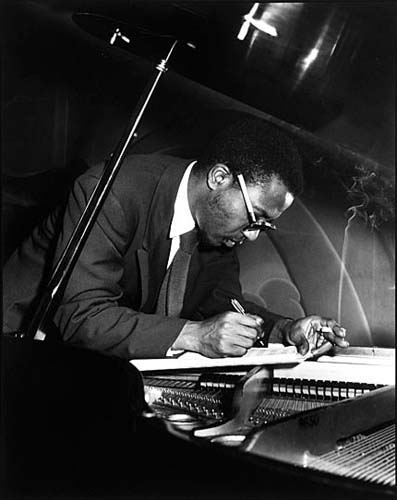
The initial appeal of jazz, for me, was the sophisticated dialect of the language of harmony that I heard on Thelonious’s “Solo Monk” in a listening booth at Marshal Field and Company, downtown. In addition, Monk occasionally finds a faux tonic and presents it as a satisfying resolution in an “inappropriate” place/juncture, as in the bridge of “Everything Happens To Me.” (What?) Taking that strategy even further, Henry Threadgill has composed pieces in which every chord has the gravitas of the tonic, as though the piece repeatedly modulates to a new key — a version of what Mr. Stills did with three simple triads, although not I-IV-V.

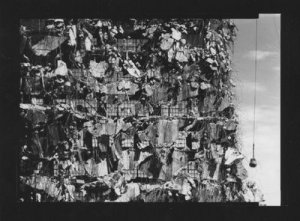
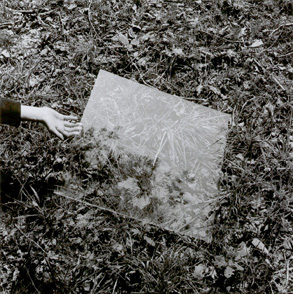
I think there are similar strategies in creative camerawork. Ray K. Metzker and Barbara Crane and Ken Josephson seem to have absorbed Aaron Siskind’s conceit of removing the nominal subject from its real-world context just enough to emphasize that the picture is a new object, made by the artist, not merely recording the world, capable of representing an individual’s sensibility.

What do you think? Are there other parallels that make sense to you, that help you to consider or relate ideas of picture-making?

Update: Believe me, I know it’s nuts to talk about music theory without examples. Perhaps the easiest reference to the chords mentioned above is to think of “Louie, Louie,” but that’s not precise enough. Check this video for its first half http://www.youtube.com/watch?v=0I49c0TSkHs&feature=PlayList&p=B8E5BE625DCDA049&playnext=1&playnext_from=PL&index=15 and especially the dyslexic moment; or check out http://www.youtube.com/watch?v=-SS2XEGGRkA

Another Parallel

080429-Wolfe

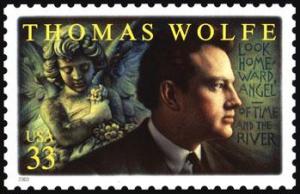
“…I did not know that for a man who wants to continue with the creative life, to keep on growing and developing, this cheerful idea of happy establishment, of continuing now as one has started, is nothing but a delusion and a snare. I did not know that if a man really has in him the desire and the capacity to create, the power of further growth and further development, there can be no such thing as an easy road. I did not know that so far from having found out about writing, I had really found almost nothing … I made a first and simple utterance; but I did not know that each succeeding one would not only be … more difficult than the last, but would be completely different, that with each new effort would come new desperation, the new, and old, sense of having to begin from the beginning all over again; of being face to face again with the old naked facts of self and work; of realizing again that there is no help anywhere save the help and strength that one can find within himself.”

-Thomas Wolfe, speaking at Purdue, 1929

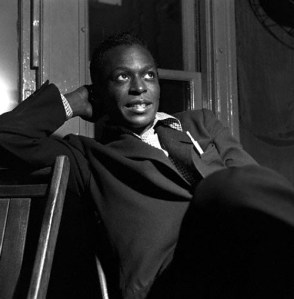
I realize that many of you do not feel this way, and in fact regard this statement as something of a bummer. Wolfe was 37 when he delivered this talk, entitled “Writing and Living.” He’s talking about dealing with the continual Now – not so different from Garry Winogrand, who would look through the viewfinder (yes, he did that) and, if he recognized the picture he was about to take, would stop himself (“Why take it?”) and would do something to change it (as opposed to the origins of creative activity described so well by Emmet Gowin in the same PBS Bill Moyers program). At some point we’ll look at this from the perspective of the career of Miles Davis, who summed it up thus (do your best hoarse whisper here): “Ev’rybody got to change.”

Q2001196

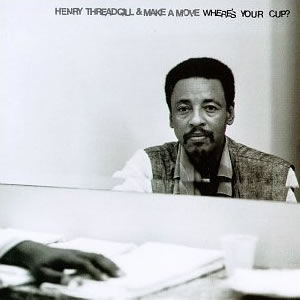
And now a media “blitz” (at least the jazz version of same) for Mr. Henry Threadgill includes this quote in an interview: “What I’m ultimately talking about is shedding systematic thinking,” he said. “You have to change. For me, it’s death otherwise. To stop seeking, to stop moving, is death.”

Henry+Threadgill++Make+a+Move+31D8DGWSARL_SS500_

Where do your picture-making activities fall on this spectrum? How much do you find yourself making the same picture again and again, and in what way? If you do, how do you justify it to yourself?

  • Calendar

    • December 2025
      S M T W T F S
       123456
      78910111213
      14151617181920
      21222324252627
      28293031  
  • Search