Somewhere in the Spectrum of Styles

I picked this up the other day; you can decide for yourself if this will be useful as a role model [we’re reluctant to include any images (all typography guaranteed verbatim)]:

“As a Passionate Artist and Capturer of Images, _ _ _ has raised the ‘Act of Seeing’ to the highest level of acuteness and discrimination. With his unique vision, compassion and mastery of Light, he is able to bring out the inner beauty of a person, place or experience and create an Expression of Light and Love!”

If you must, contact us for a link. Or an explanation of Oxford commas.

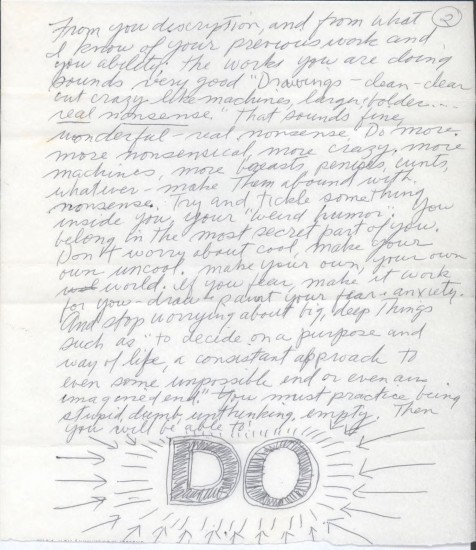
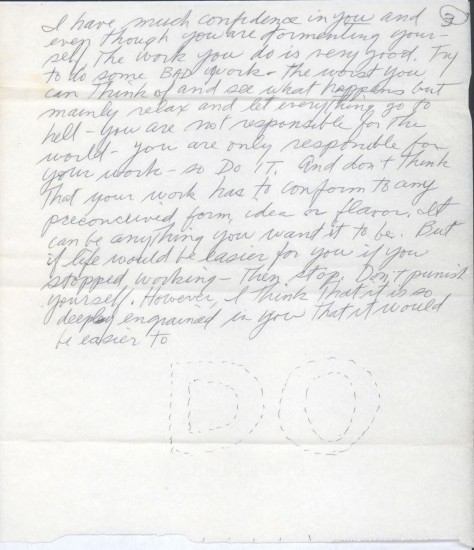
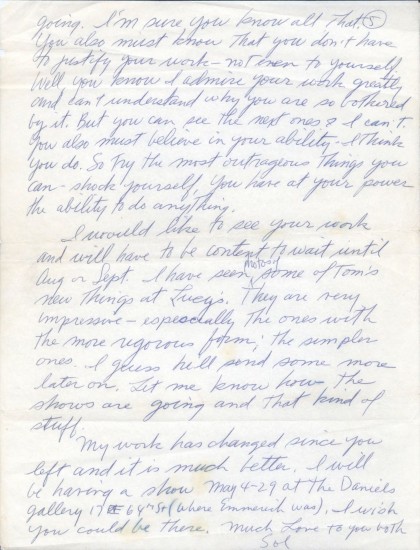
“Dear Eva: Just Do.”

Sol LeWitt’s encouraging epistle to Eva Hesse in 1965. LeWitt was 36 at the time; Hesse was 28, and was to live for only six more years.

Street Work

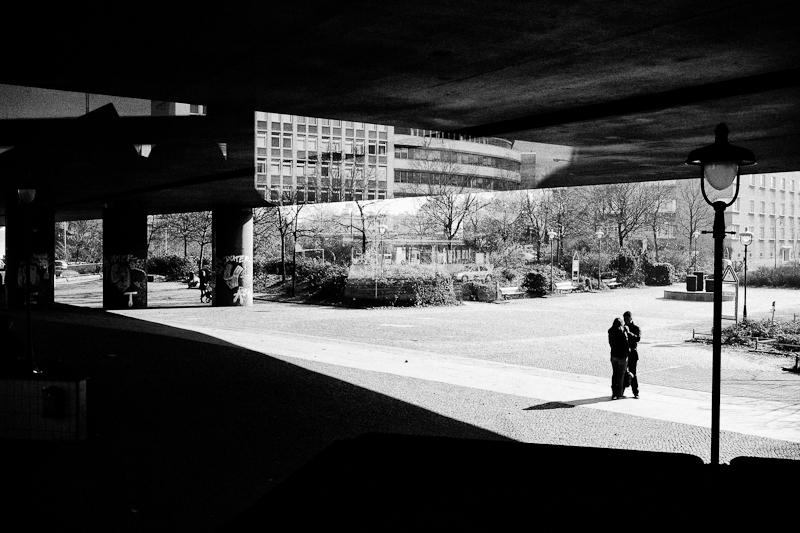
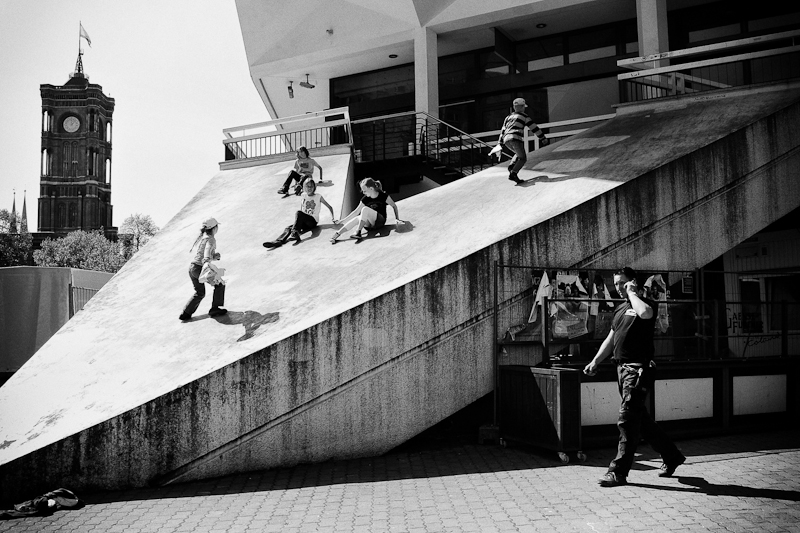
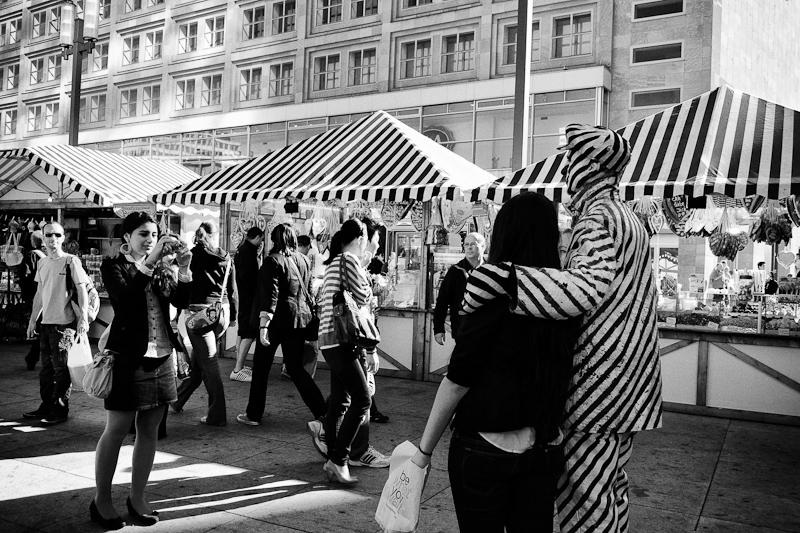
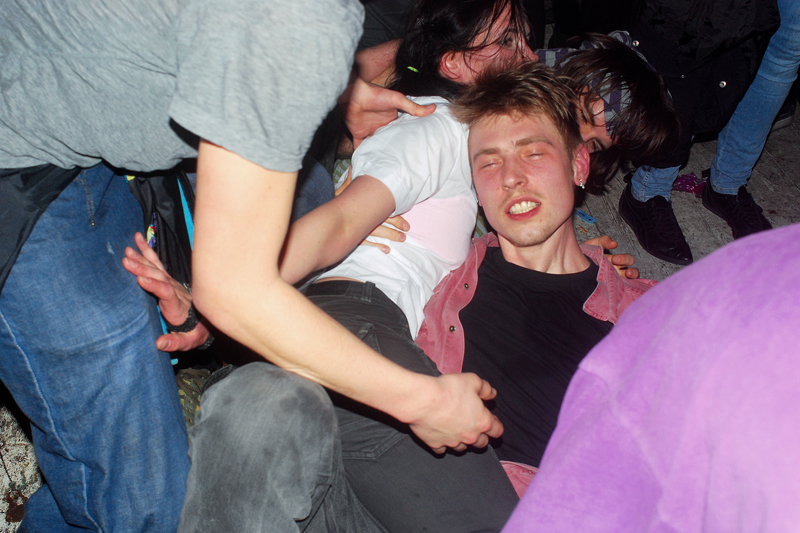
We’re approaching the summative portion of the academic year; here’s a lovely gathering of one photographer’s work over the last calendar year. She says: “Hello, I’m Klara, I live in Berlin, I love shooting the streets and I carry a camera with me all the time. After having neglected film for a long time, I’ve recently fallen in love with film and the smell of fixer again.”

“I love to capture people and their interactions and I do not want to hurt anybody by taking their picture. I have great respect for my subjects, still, if you recognize yourself in one of my photos and you don’t want it to be published, let me know and I will take it down. If you recognize yourself and you do like what you see, let me know I will send you a digital file or a print.”

Look at much more of her work at http://klarayoon.wordpress.com/2011/12/26/my-year-in-street-photography/

Keep Going Back

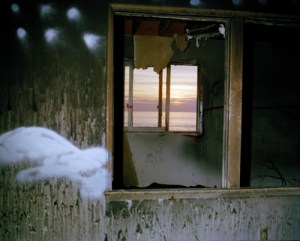
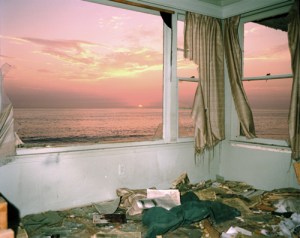
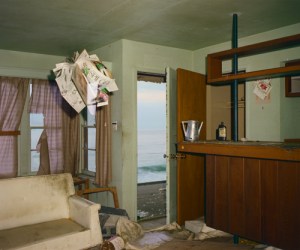
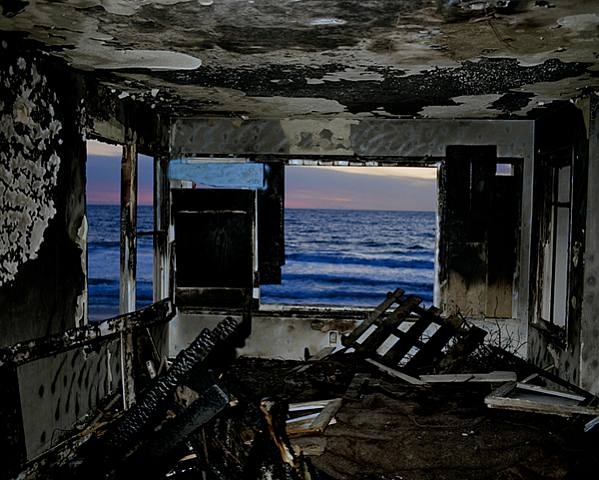
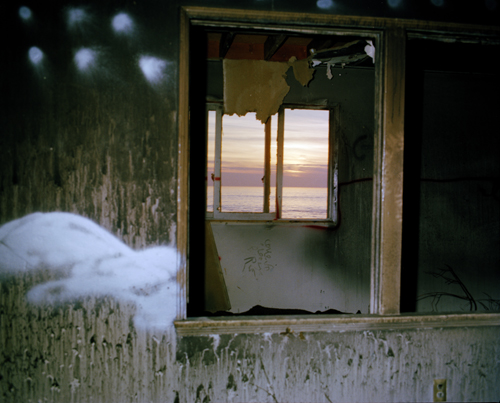
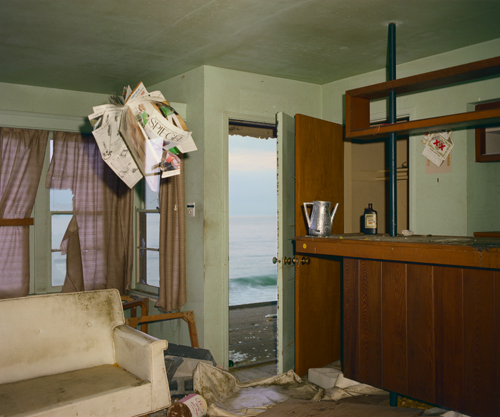
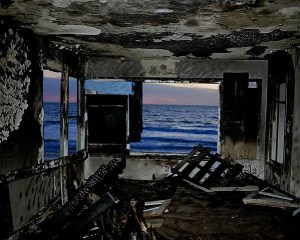
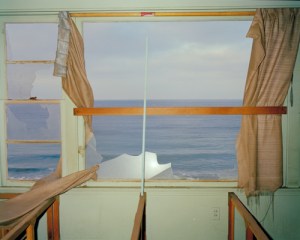
About his series Zuma, John Divola wrote:

These photographs are not meant to be documents of painting, or sculpture, or even of environmental works… No element is of greatest importance. I am most satisfied when the line between evidence of my actions and what is already there is not distinct. These photographs are the product of my involvement with an evolving situation. The house evolving in a primarily linear way toward its ultimate disintegration, the ocean and light evolving and changing in a cyclical and regenerative manner. These photographs are not so much about this process as they are remnants from it. My participation was not so much one of intellectual consideration as one of visceral involvement.
Here are excerpts from a dialog with Dinah Portner:

Q. Do you think of photography as a concrete way of dealing with ideas?

A. No, it’s not that they are ideas, per se. I see art as a dialogue about experiences and the way you experience things. And primarily, what I am dealing with is visual experience.

Q. So the dialogue is between you and the environment?

A. No, the dialogue is between me and whoever sees my pictures.

Q. How much does chance play a part in what you’re doing?

A. Well, a great part. And, as a matter of fact, the more I can get in there that is un-preconceived by myself and still make it work, the better I like it. The greater degree to which reality exerts itself and lesser degree to which I exert myself, the better as far as I’m concerned.

As far as I’m concerned, there is no separation between art and photography. Photography is a sub-category of a broader category which is art. Sculpture has a long history, but just because somebody was using sheet metal for nothing but repairing automobiles, until one point when somebody started to use sheet metal to make sculptures, doesn’t make too much difference.

Q. But, in a sense, photography has a completely different vision, because it is not object oriented as much and it becomes a window for something else.

A. Well, that’s one thing it is. It is an object. It is an illusionistic depth. And, I guess the number one realm in which photography seems to function is that it has a claimed authenticity. The light bounces off the subject and passes through the lens and burns the negative. And the light passes through the negative and makes the print. So the print is linked to the event by a chain of physical causalities. It’s like a piece of reality, rather than purely a document.
Why jpegs Don’t Always Suffice

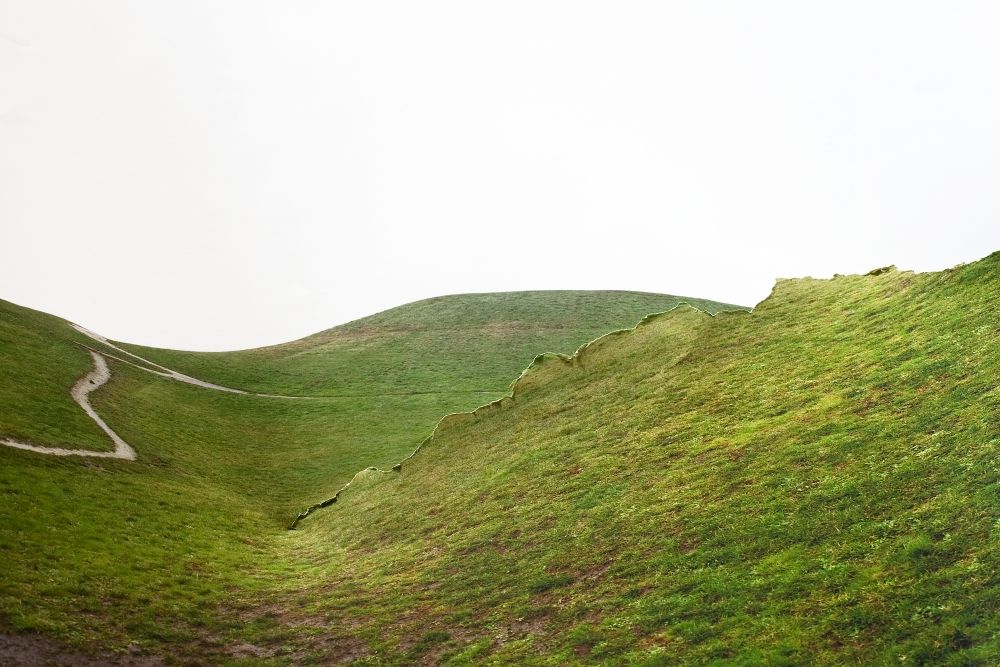
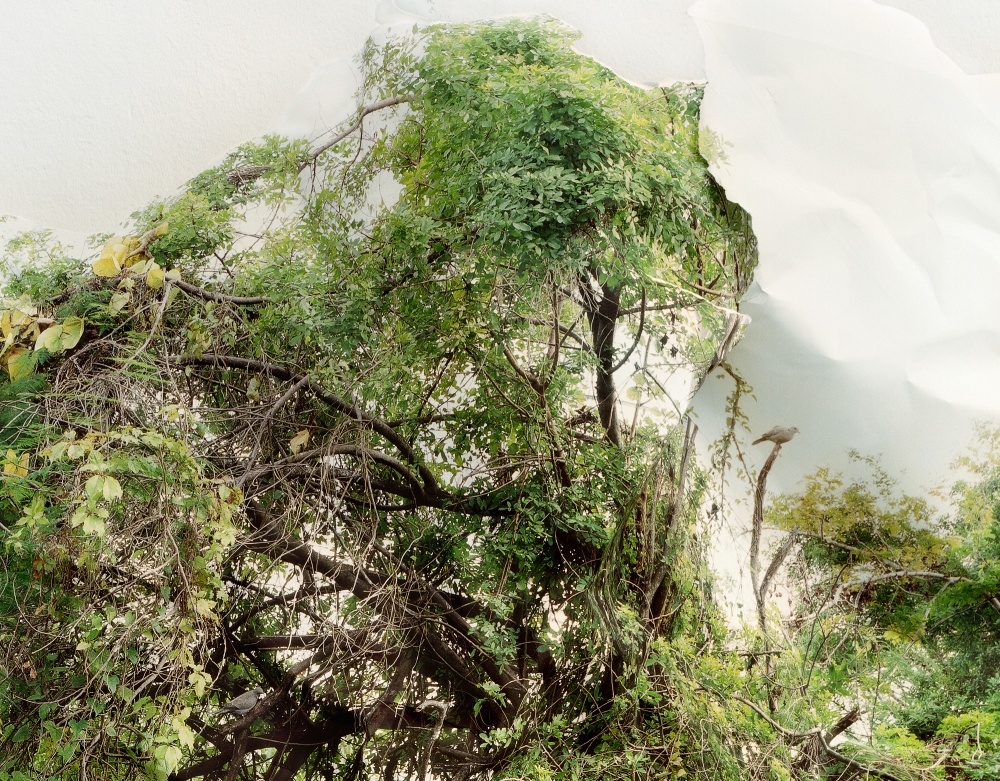
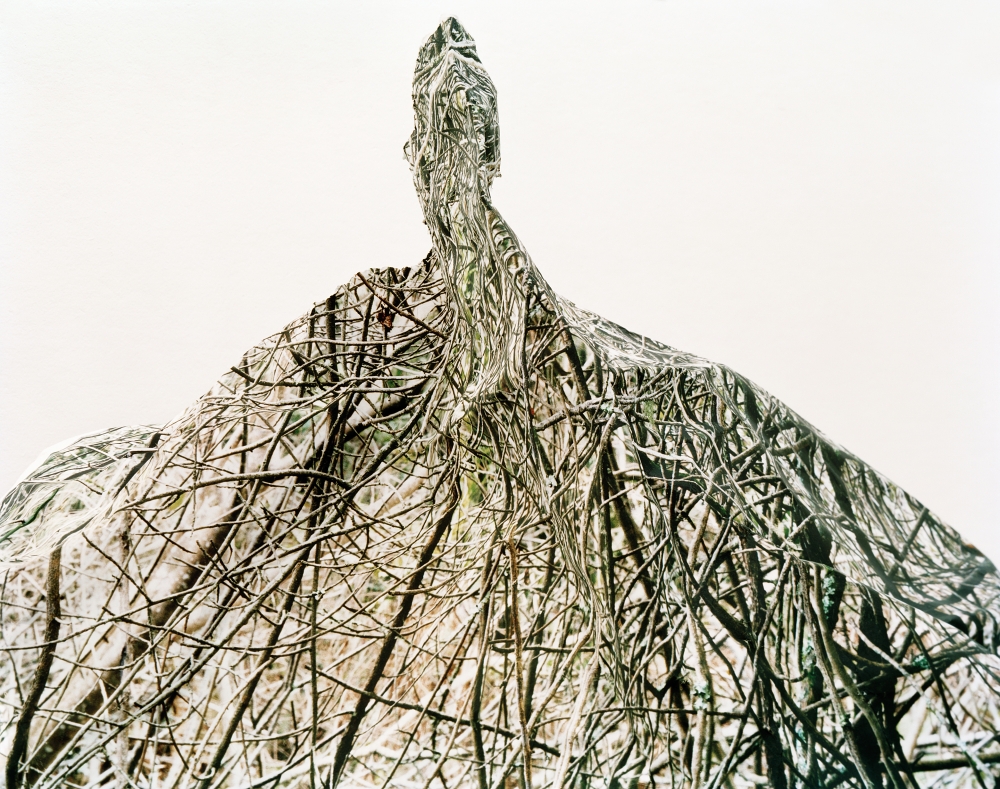
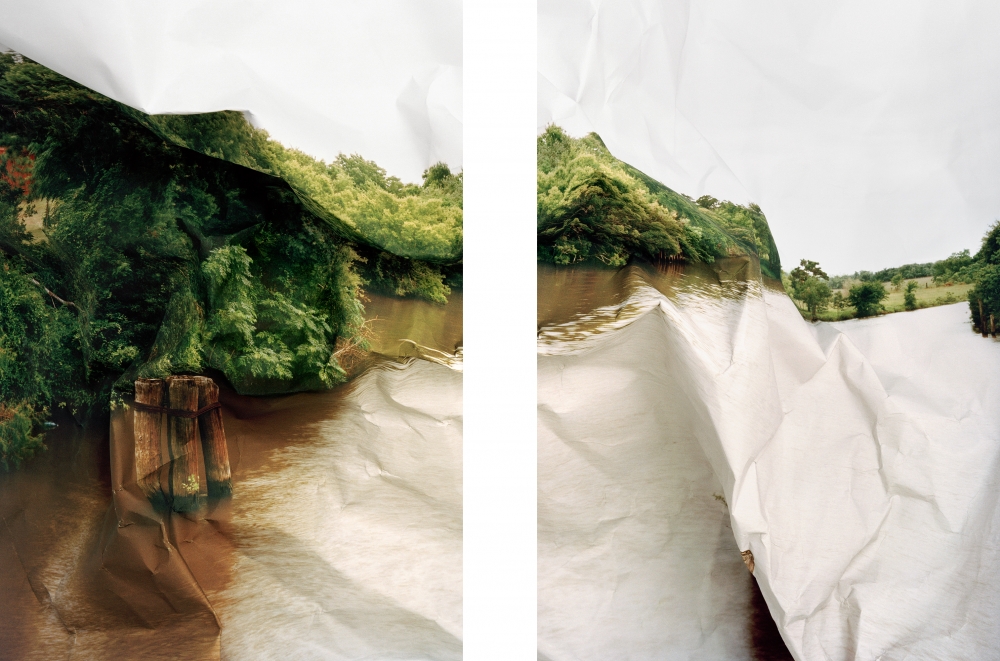
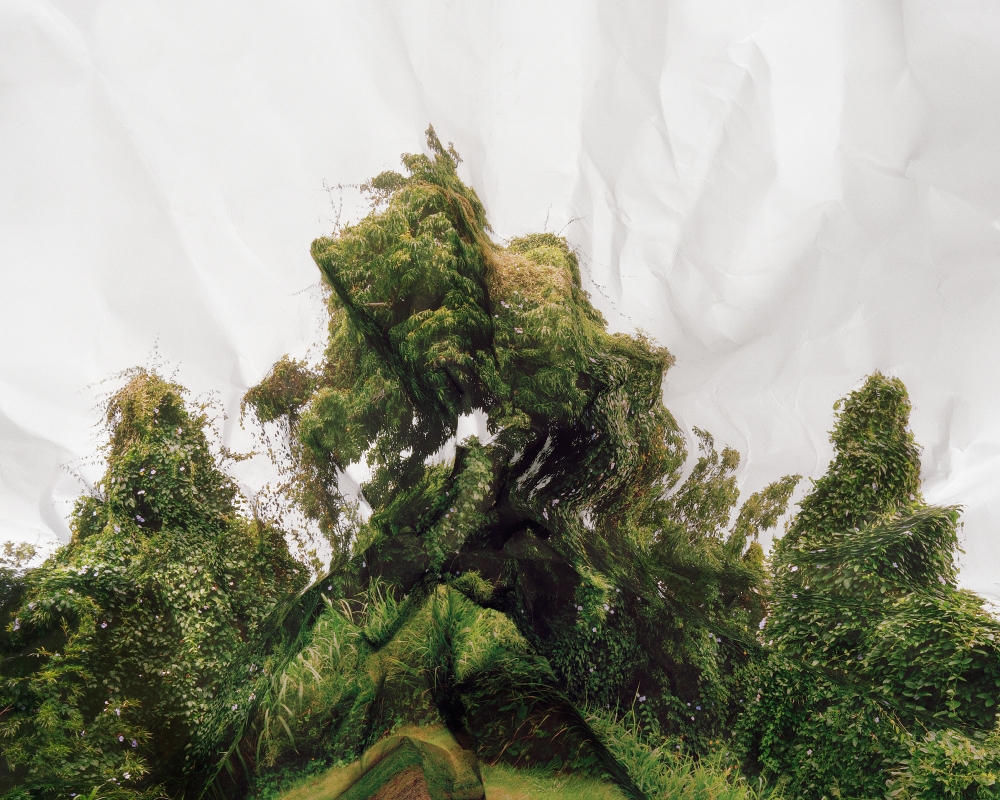
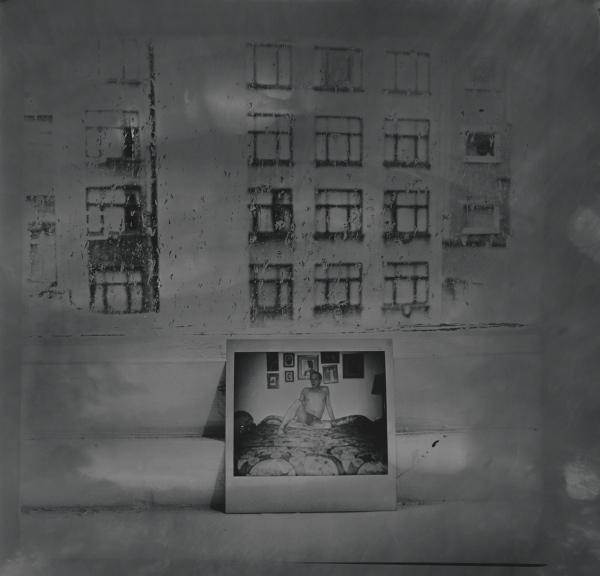
Of late, a few artists in the World of the Glowing Hoodies have been making pictures that will present a (welcome) challenge when the time comes to upload them to the College Board. They (the physical images) remind us that form is at least as important as content (cf. Winogrand), if not moreso to the point of total dominance (cf. Groover).

Here is a statement from Laura Plageman that addresses an aspect of this in her series Response:

“In this series I am responding to photographs both as representations and tangible objects. Through physically altering enlarged prints and then re-photographing the results, I create works that oscillate between image and object, photography and sculpture, landscape and still life. While they may appear illusory, the resulting pictures are documents of actual events and are thus as authentic as the original representational images contained within.

“My process unfolds through observation and experimentation – I let the image and its materiality dictate its direction. Playing with paper and with light in unplanned and organic ways, I look for new ways to perceive the space, form, and context of my subjects. In some works, large pieces of the original image are torn out while in others, smaller parts are more subtly altered. I use a large format view camera throughout my process so I can control perspective and record as much detail as possible. Whether focused on a ripped paper edge or a nesting bird, I hope to reach a place where picture elements interact and merge in unpredictable and expressive ways.”

Even more pertinent to the current AP work is this caveat regarding the posting of work by Dirk Braekman:

“We would like to inform the visitor that this website is merely a documentary tool. Please keep in mind that the rendering of the original prints on a digital platform is only approximate and involves considerable loss of quality, contrast and depth when shown on most computer monitors. With their very specific tactile values, textures and the (mostly) large formats, the original photographs are thus extremely difficult to reproduce. It goes without saying that only seeing them in reality can do them justice.”


W. o’ W.: Gyorgi Ligeti

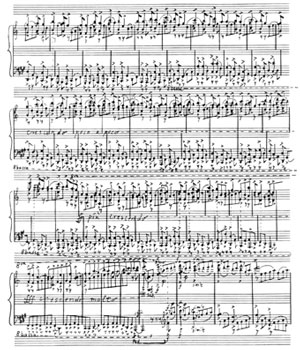
Ligeti wrote: I lay my ten fingers on the keyboard and imagine music. My fingers copy this mental image as I press the keys, but this copy is very inexact: a feedback emerges between ideas and tactile/motor execution. This feedback loop repeats itself many times, enriched by provisional sketches:  a mill wheel turns between my inner ear, my fingers and the marks on the paper.  The result sounds completely different from my intial conceptions:  the anatomical reality of my hands and the configuration of the piano keyboard have transformed my imaginary constructs.

http://www.youtube.com/watch?v=JPa4XAhSYhE&safety_mode=true&persist_safety_mode=1&safe=active

Ligeti said: “The music from the ‘Sonata form’ tradition, the big symphonic enterprises: all of this belongs to the German tradition, which was the strongest tradition in the 19th century. But even then, Paris was a cultural capital. Of course, Debussy had undertaken a decisive revolution in the beginning of the 20th century. But jazz arrived (and, before it, ragtime, Scott Joplin) and imposed a combination  of influences – it is not African, nor Irish nor French, not even American – it’s everything all together, the first musical expression to be multicultural. Shortly after there is a popular dimension in jazz, notably with Armstrong.  I find this very interesting because it is spontaneously creative, distant to today’s commercial phenomenons that are designing popular culture. At the turn of the 30’s, jazz was a unique and spontaneous explosion, the most beautiful stylistic expression of the century. I don’t know if it is still possible that an art of this importance can continue to develop because marketing now instantly grabs new musical forms from the street.”

Anna Clyne

“My passion is collaborating with innovative and risk-taking musicians, film-makers, visual artists and, in particular, choreographers. Creating new works through a fluid artistic dialogue has consistently fuelled my art-form from new perspectives and has maintained a fresh and exciting creative environment. Inspired by visual images and physical movement, my intention is to create music that complements and interacts with other art-forms, and that impacts performers & audiences alike.”

http://youtu.be/V-3rT_b8nL0

Read Mr. Margasek’s report: http://www.chicagoreader.com/chicago/anna-clyne-mead-composer-residence-cso-muti-night-ferry/Content?oid=5587726

More: http://www.youtube.com/watch?v=JemXDJxzADk and http://www.youtube.com/watch?v=JGovFsr11Jw

Regina’s Statement

I am not a street photographer. I am not a photographer. I am a little girl pointing her finger at things and saying “Look at that!”. Sometimes almost questioning, wanting to unravel the mysteries of life, sometimes admiring those mysteries so much I hope they will never be explained.

The camera helps me look with fresh eyes and enables me to show other people the world as I see it: a bit crazy, sometimes a bit hard, but always something beautiful hidden in there, too. The world is a wonderful place…

What happens outside the frame, or before or after the shutter opens and then quickly closes: If you were not there you will never know. A new context is created in which a story is told that is as much real as it is fantasy, as much hard as it is poetic, as much obvious as it is obscure.

My work is not surreal, it’s just reality itself that is so magical. Whether you’re standing on a mountain top or in your local super market, you can take pictures as straight forward as possible and the magic will still shine though…

See/read more of Regina van der Kloet’s work: http://www.burnmyeye.org/rvanderkloet/bio/#

Artist’s Statement: Natalie Krick

A good one. Concise, literate, just enough.

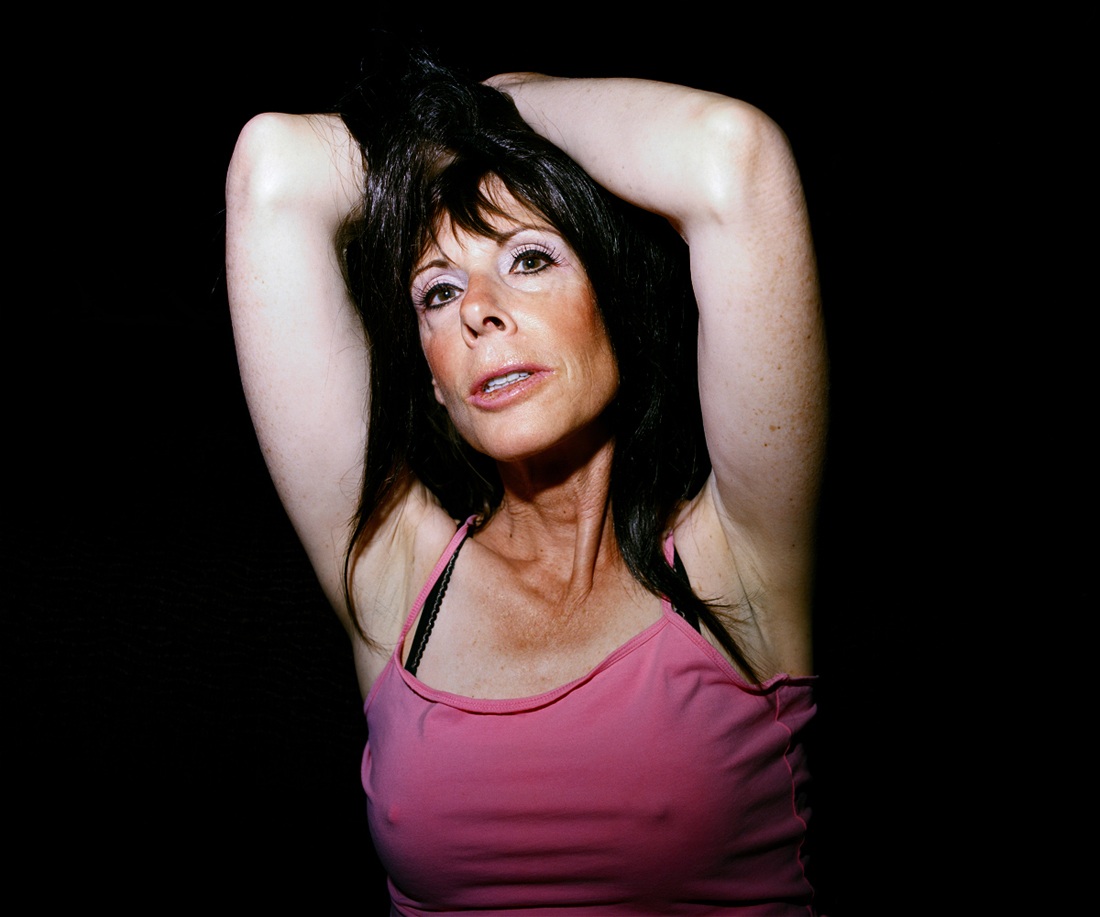
“This work revels in the gap between idealized images of glamour and the failure to create a flawless feminine appearance. I am interested in deconstructing traditional ways women are decorated, posed and photographed. Through repetition and exaggeration of gesture and color these photographs emphasize the clichés used to visualize female sexuality. I want to complicate the pleasure of looking by creating a tension between attraction, aversion, intimacy and artifice.

“The women depicted in my photographs are styled to exaggerate the artifice of cosmetics and the flawed distortion of prescribed beauty. Their poses reference traditions depicted in soft-core pornography, the pin-up, celebrity portraiture and fashion photography. Perceived as both alluring and garish, the use of glossy saturated color and the harsh revealing light encourages scrutiny. The flaws on the body and the act of styling disrupt the construction of the façade and reveal the corporality of the body.”

Extremes on a spectrum of artists’ statements

Which of the following statements is more specific, more elucidating?

John Kilar: “These images represent the juxtaposition of the timeless and majestic elegance of nature’s sensory-surpassing miracles with the entangled and growing tensions of our time in culturally reconnecting with the shift away from the human condition of love.

In developing my visual perspective, I’ve discerned the fleeting significance from the invariable through emphasizing the growing collective disdain for the socially underdeveloped that has come to define our generation and crystallized over the last decade.

Through highlighting this generational discontent in honing its cultural responsibility of deconstructing traditional understanding of social roles against the unrefined purity of the emotionally captivating cycles of nature, my work serves as a middle ground to visually level and gauge the social progress of man by means of extremities occurring in class stratification.

In giving careful attention to the mediating filters that propagates socially-constructed irreverence, I aim to address the necessity of breaking down the symbolic paradigms of understanding to revisit the overlooked empathy for humanity and its greater accountability to each other.

Mark Bradford: “I want to engage a social, political conversation about the contemporary world that I live in or my relationship to it, and at the same time I want to abstract it.”

(Perhaps this will come in handy for you at some point in the not-too-distant future: http://www.pixmaven.com/phrase_generator.html)

(Or this: http://www.artybollocks.com/)

Actually, here is a very cogent statement by Connie Imboden, not unrelated to a “Commentary” for a College Board portfolio:

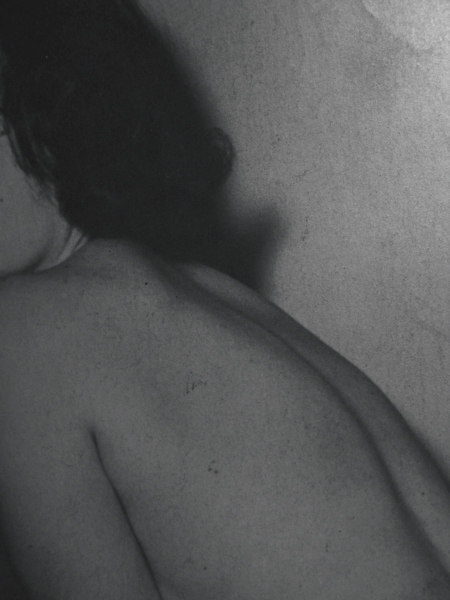
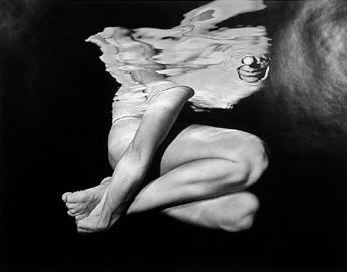
“These images are seen through the camera, they are not manipulated in the darkroom or computer. I am often amazed at the shapes and forms that have appeared in my work. My intention has always been to explore the body, not to alter it. I want to find the camera angle from which the forms can be the most that they can be – whatever that is. If it is a grace to the limbs, then I want the angle from which that grace becomes the absolute most it can be at that moment. And so it leads me on, to explore angles, space, reflections, and light. I strive to make forms make sense visually and trust that the metaphor, the poetry, will follow.”

  • Calendar

    • January 2026
      S M T W T F S
       123
      45678910
      11121314151617
      18192021222324
      25262728293031
  • Search