Reciprocity Failure

1/30 second @ f4 is the same amount of light reaching the film as ½ @ f16 is, but not necessarily the same as 2 seconds @ f32: it turns out that equivalent exposure, reciprocity, is reliable only between 1/10,000 and ½ second. Usually. Since most of us won’t be dealing with the ultra-fast times, let’s become aware of the longer ones.

http://home.earthlink.net/~kitathome/LunarLight/moonlight_gallery/technique/reciprocity.htm is a good place to look at this because it provides a chart of some recommended corrections. This will come into play for some of us as the weather improves and the daylight extends further into the evening, and low-light exposures become a real possibility.

Another factor in all this is that, for many films, the ideal situation also involves modifying (usually shortening) the developing time to as well, to a calculable degree, and that the film that sidesteps this modification best is Acros 100.

Reciprocity Success

I don’t know the correct protocol for links in the world of blawwgs, but may I suggest that if I linked to your website, you might consider linking to me as well? Or, even, if I have yet to link to you, feel free to link to this place anyway. Communication is key; the more, the merrier. Thanks.

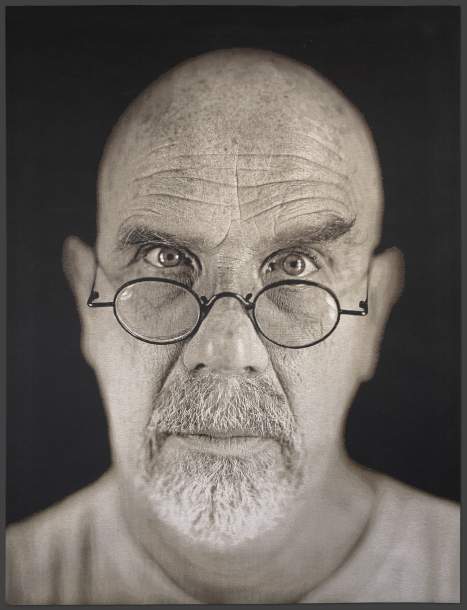
W. o’ W.: Chuck Close

“The thing that interests me about photography, and why it’s different from all other media, is that it’s the only medium in which there is even the possibility of an accidental masterpiece. You cannot make an accidental masterpiece if you’re a painter or a sculptor. It’s just not going to happen. Something will be wrong.

“This is simultaneously photography’s great advantage and its Achilles heel: it is the easiest medium in which to be competent. Anybody can be a marginally capable photographer, but it takes a lot to learn to become even a competent painter. Now, having said that, I think while photography is the easiest medium in which to be competent, it is probably the hardest one in which to develop an idiosyncratic personal vision. It’s the hardest medium in which to separate yourself from all those other people who are doing reasonably good stuff and to find a personal voice, your own vision, and to make something that is truly, memorably yours and not someone else’s. A recognized signature style of photography is an incredibly difficult thing to achieve.

“It always amazes me that just when I think that there’s nothing left to do in photography and that all permutations and possibilities have been exhausted, someone comes along and puts the medium to a new use, and makes it his or her own, yanks it out of this kind of amateur status, and makes it as profound and moving and as formally interesting as any other medium. It’s like pushing something heavy uphill. Photography’s not an easy medium. It is, finally, perhaps the hardest of them all.”

Self-Reflexivity

(Photograph by Paul Strand)

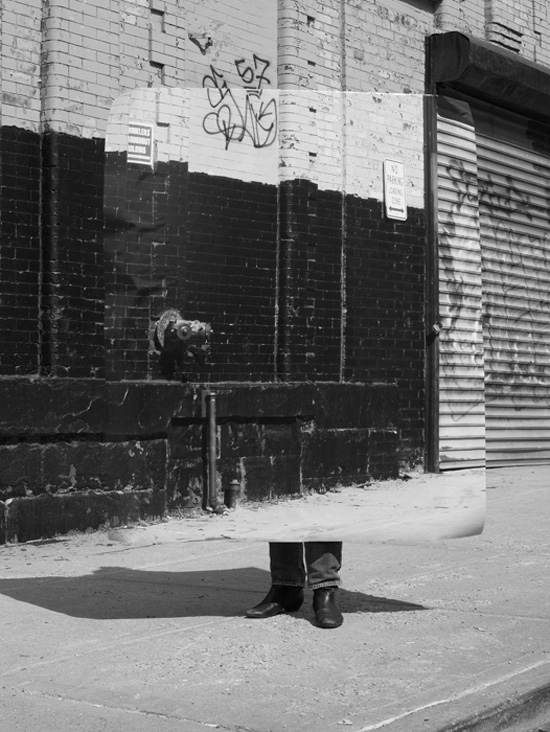
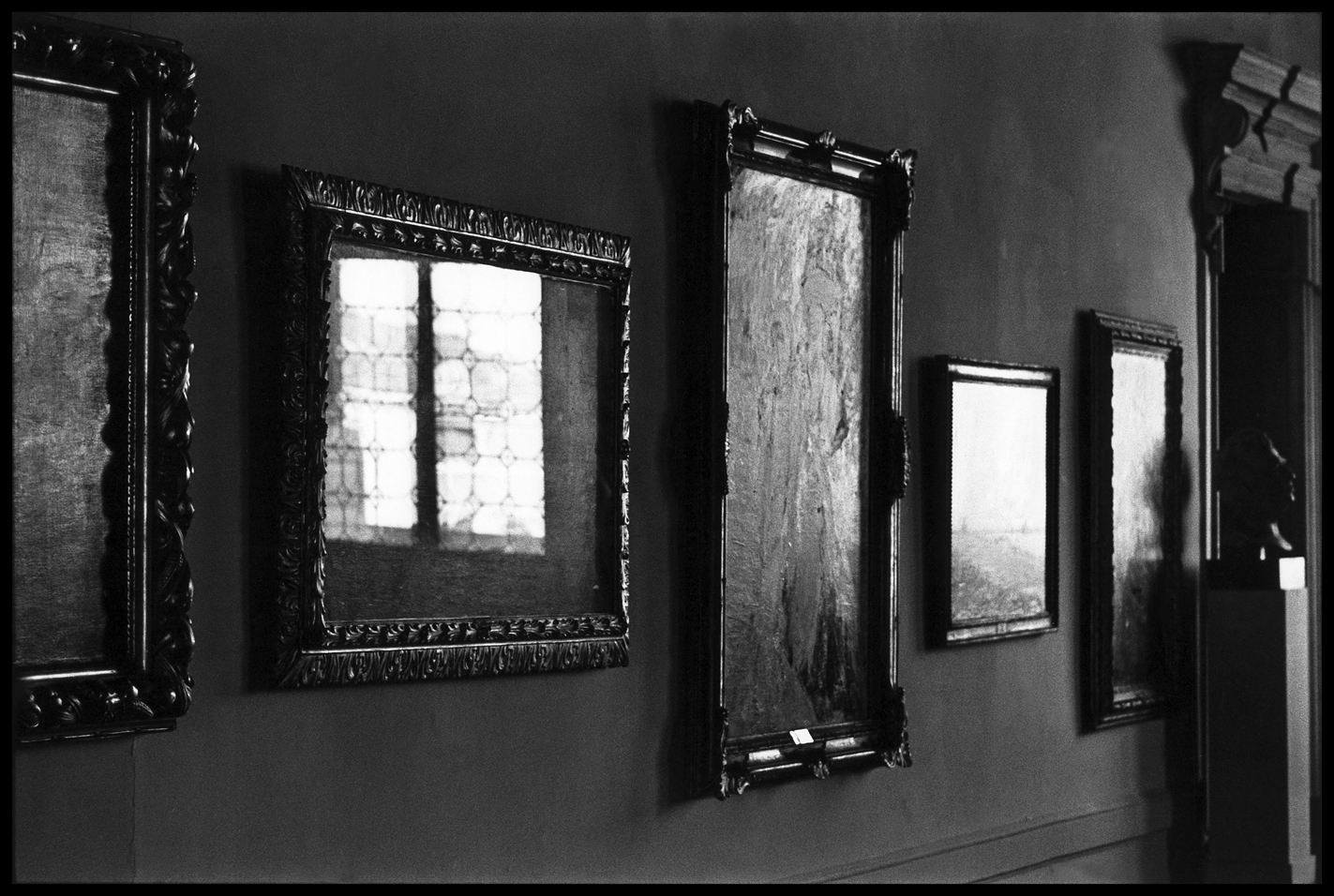
How do pictures refer to themselves? How can photographs be about photography and the nature of camera vision? Would such images be dependent upon subject matter, or would they be process-oriented, or does it have mostly to do with optics? I suspect that each of you will come up with different solutions for this prompt. Try a couple of approaches to see what happens.

http://www.youtube.com/watch?v=s3XnYOF_CQw&feature=related

(Photograph by Fred Lebain)

Gibson’s Opinions

“Digital is a great way of transferring information, but digital imaging systems are not photography, because photography has to do with the alchemy of light on film. Photography creates new information that wasn’t there before, whereas digital transfers information that is in front of you. Like the telephone can transfer my words to your ear.

“With telephones and digital cameras, there are probably more images made in one day than in the whole history of “analog” photography. But name one masterpiece of digital photography—do you know one offhand? It is actually not the same medium. It is like the difference between cinema and video… they are different, and coexist.”

Make Your Own Film!

I learned today that Fuji is discontinuing some of its products, including two of my favorite color films: T64, which provided the AP photographers with excellent slides for many years, and their ISO 800 negative roll film. This guy’s contraption is one solution to any shortage of film stock, I guess, but he aims to replicate Kodachrome, of all things! Our thoughts and prayers are with him.

http://www.flickr.com/photos/dark_orange/2042501949/in/set-72157603226919391/

W. o’ W.: Arno Minkkinen

“Harry Callahan, my teacher at RISD, always used to tell us that once you make the first good ones, you rarely make them any better. Another way to examine that is this: if you’re always showing people only your latest work, have you fully matured as an artist? When your latest work is as good as your earlier work, growth is no longer an issue, and expansion takes over. We have this insatiable need to improve, to be better, to be the best. Just doing things well may be a more reasonable course, especially in photography.”

APEvents

Monday, March 15: an expanded critique during 7th & 8th in the Black Box Theatre

Thursday, April 8: the 4th quarter Photography field trip (rain date 4/13)

Friday, April 9: “5 Actual Works” critique, also in the Black Box

Thursday, April 15: a field trip to galleries with next year’s class members

Monday, April 19: the AP Concentration show in the gallery and front hall showcases

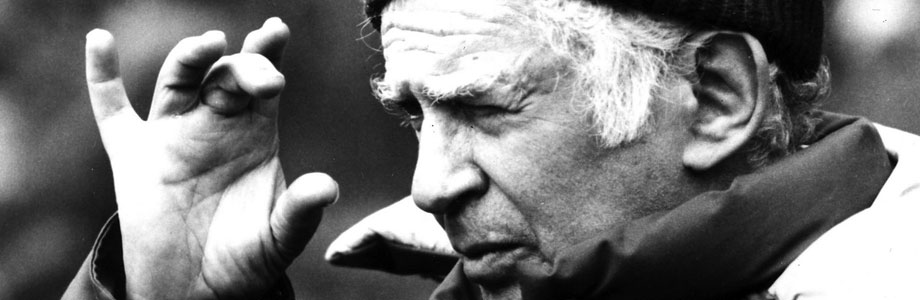
W. o’ W.: Norman Mailer

“Over the years, I’ve found one rule. It is the only one I give on those occasions when I talk about writing. A simple rule. If you tell yourself you are going to be at your desk tomorrow, you are by that declaration asking your unconscious to prepare the material. You are, in effect, contracting to pick up such valuables at a given time. Count on me, you are saying to a few forces below: I will be there to write.”

Retro Schlock

Excerpts from “You Are Not A Gadget,” by Jaron Lanier:

 “Here is a claim I wish I weren’t making, and that I would prefer to be wrong about: popular music created in the industrialized world in the decade from the late 1990s to the late 2000s doesn’t have a distinct style—that is, one that would provide an identity for the young people who grew up with it. The process of the reinvention of life through music appears to have stopped… Where is the new music? Everything is retro, retro, retro.

 “We’re not just talking about surface features of the music, but the very idea of what music was all about, how it fit into life. Does it convey classiness and confidence, like Frank Sinatra, or help you drop out, like stoner rock? Is it for a dance floor or a dorm room?

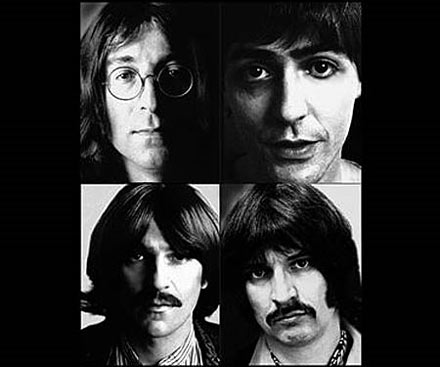
(not the Beatles)

(not Abba)

“There are creative, original musicians at work today, of course. (I hope that on my best days I am one of them.) There are undoubtedly musical marvels hidden around the world. But this is the first time since electrification that mainstream youth culture in the industrialized world has cloaked itself primarily in nostalgic styles.

“Some of my colleagues in the digital revolution argue that we should be more patient; certainly with enough time, culture will reinvent itself. But how patient should we be? I find that I am not willing to ignore a dark age.”