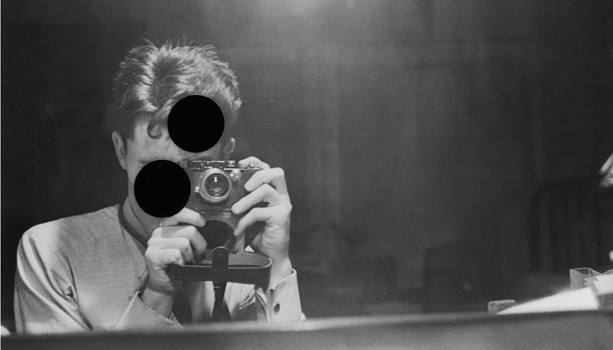
Watch a mesmerizing movie, made of prints from cancelled FSA negatives:
http://www.theparisreview.org/blog/2010/10/04/william-e-jones-punctured/
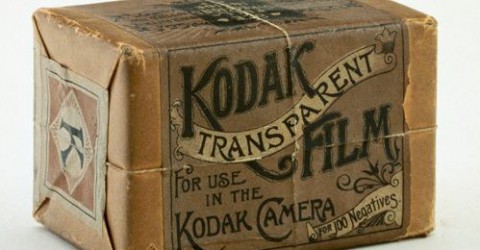
Watch a mesmerizing movie, made of prints from cancelled FSA negatives:
http://www.theparisreview.org/blog/2010/10/04/william-e-jones-punctured/
…but not in harm’s way:
http://lens.blogs.nytimes.com/2010/12/07/eyes-open-back-into-the-afghan-crucible/?hp
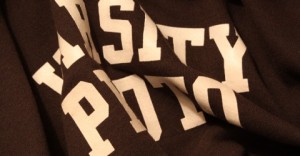
This is a notice that the updated hoodie post is two doors down.
I thought I had posted this over a year ago. Apparently, I was mistaken.
Voila.
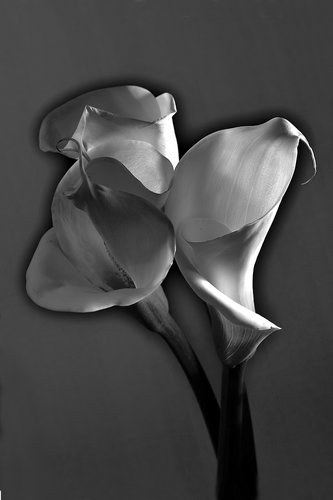 Solarization is a style of print exposure and development whose appearance is markedly different from “normal” photographic representation. Unlike such strategies as negative prints or the use of camera lens filters, the resulting print is a unique distortion of the tonal scale that does not appear to conform to that of the original scene.
For a successfully solarized print, try a negative that would normally print well with a #2 or #1 filter (dense/over-developed/a contrasty scene), and a #5 filter. The printing procedure that follows is a series of steps that approaches repeatability (although the process is notoriously difficult to control).
Each piece of photographic paper receives two exposures and is developed twice. An acid stop bath would inhibit the second development, so set up an extra tray of plain water for a rinse in between the developments.
(Does this help?)
Use full sheets of paper to make test “grids” rather than strips. Make exposures for, say, three-second increments at f 8. Develop, then rinse thoroughly for up to a minute; drain, squeegee and/or blot in some combination in order to remove all the water from the emulsion. (At this point some images may not show much at all for some of the exposures. Don’t worry: this may work in your favor when the process is finished.) Return the paper to the enlarger. (It is practical to place a sheet of contact printing glass on top of the easel to keep the damp paper from the easel and baseboard.) Make a second series of exposures without the negative (but still with the #5 filter) perpendicular to the first, for maybe two seconds each at f 16, then develop, stop and fix the paper normally.
Examine the grid of to find a combination of exposures you think will work for the image. Unlike traditional representational printing, there may be a wide spectrum of interesting choices.
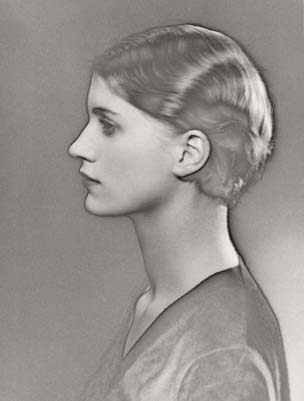
For many more details, see: http://unblinkingeye.com/Articles/Solarization/solarization.html
Note to selves: let’s try adding more potassium bromide to the developer and not rinsing in between developments.
Update: I did post before, after all: https://photodevoto.wordpress.com/2009/08/26/the-sabatier-effect/
To begin this post, here is Stef’s post wearing the coveted Ph.D. hoodie: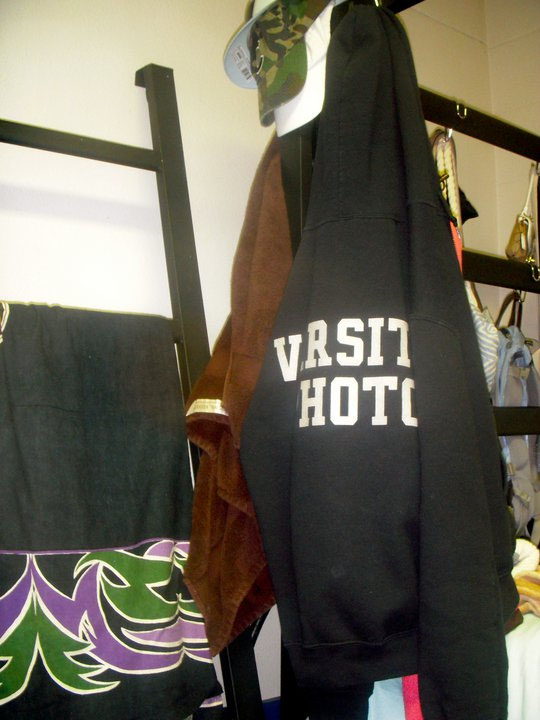
Jaime claims that hers proclaims/reveals/advertises her shoe size:

Kim’s consorts with the effete of da U.P.:
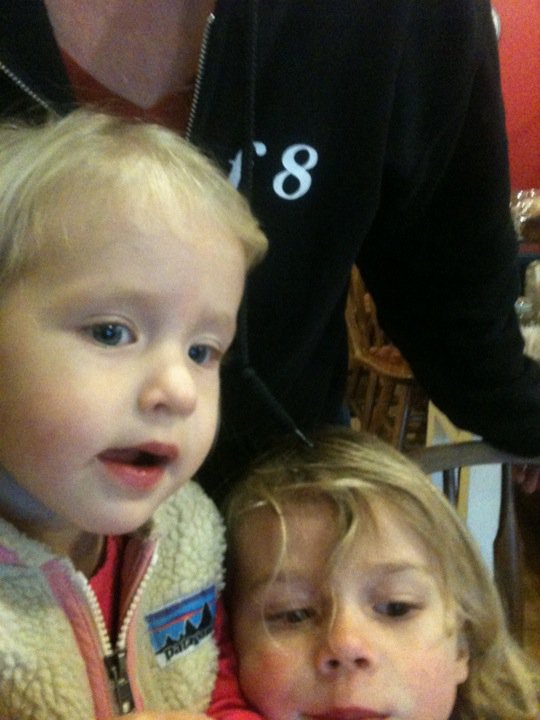
Sam and her growth look ab fab.

Erin is energized:

Keep ’em coming, and I’ll add ’em in!
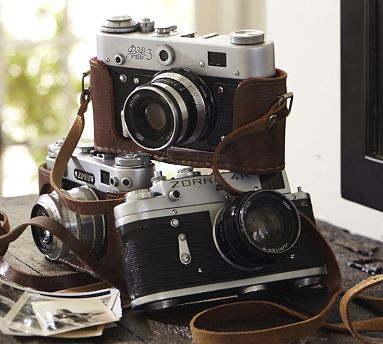
Feel free to pick your own perspective on the wrong-headedness of this marketing strategy.
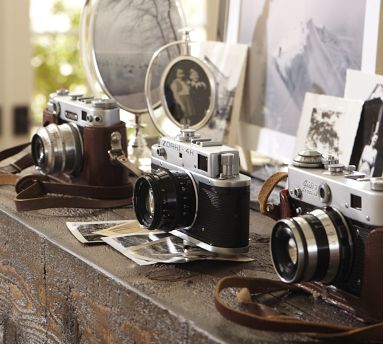
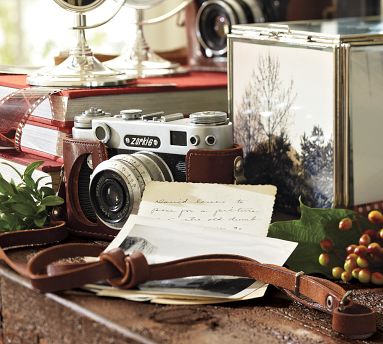
“With compact bodies and simple functionality, classic 35 mm cameras paved the way for both amateur photographers and professional photojournalists everywhere. The first was prototyped in Germany in 1913 and went into production as the Leica in 1924. Our collection of found cameras, crafted by a variety of mid-century German and Russian manufacturers, has become vintage icons, making them perfect for display. Each one is unique; let us choose for you.”
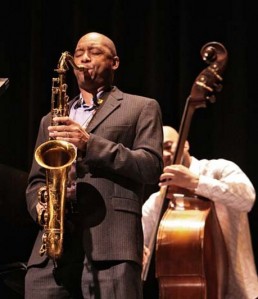
From “Meet Me at Jim & Andy’s: Jazz Musicians and Their World:”
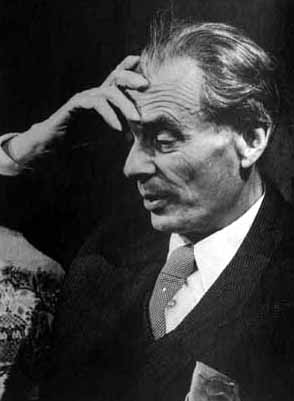
“Aldous Huxley said that art is created in a state of relaxed tension. You must be relaxed enough to let the dreams flow, alert enough to know what to do with them, grab them out of the incorporeal air as they rush by and turn them into something that others can perceive and be moved by… Making jazz is a very naked thing to do.
“That anyone can do anything at all but stand there in paralyzed amazement when the chord changes are going by, that musicians can function with minimal premeditation and great creativity within the materials of a song’s structure, is more remakable than even the most expert practitioners themselves seem to appreciate. It requires both tremendous knowledge, whether intuitive or acquired, and the physical reflexes of an athlete. Jazz is not only one of the most remarkable achievements in the history of music, it is one of the most striking achievements in the history of human thought.”
“The presumption of art’s essential ‘goodness’ is nothing more than a political fiction that we employ to solicit taxpayers’ money for public art education, and for the public housing of works of art that we love so well their existence is inseparable from the texture of the world in which we live. These are worthy and indispensable projects. No society with even half a heart would even think to ignore them. But the presumption of art’s essential ‘goodness’ is a conventional trope. It describes nothing. Art education is not redeeming for the vast majority of students, nor is art practice redeeming for the vast majority of artists. The ‘good’ works of art that reside in our museums reside there not because they are ‘good,’ but because we love them. The political fiction of art’s virtue means only this: the practice and exhibition of art has had beneficial public consequence in the past. It might in the future. So funding them is worth the bet. That’s the argument: art is good, sort of, in a vague, general way. Seducing oneself into believing in art’s intrinsic ‘goodness,’ however, is simply bad religion, no matter what the rewards. It is bad cult religion when professing one’s belief in art’s ‘goodness’ becomes a condition of membership in the art community.”
At our facility in the Wonderful World of Photography* we develop our film in Kodak’s XTOL, mostly. Kodak recommends a dilution of one part developer to three parts water for greatest sharpness and a slight boost in speed, to guard against underexposure.
Would you be willing to compute water temperature relative to developer concentrate temperature if the amounts were six ounces and two ounces? I don’t think so. I do it all the time, in my darkroom below the surface of the earth, by setting the metal container of working solution in a tray of hot water (cool water in summer) and stirring until the temperature reaches its goal. But we found that, if we dissolve what should make five liters in ten liters of water, it keeps just fine at that dilution for the length of time it needs to survive before being used up. (Most of us are not aware that the batch from which we work is already half-diluted.) Since it’s already 1:1, no rocket science is required to dilute once more, again 1:1, and arriving at a temperature for the water is easy to do in one’s head. Voila: 75 degrees Fahrenheit.
Kodak also recommends that a minimum of 100 ml be used for every 80 square inches of film. That’s roughly three ounces. Most of us get perfectly usable results in an eight-ounce tank, and that means that we’re relying on two ounces of XTOL, not three.
On occasion (in lieu of extreme developing times; for unique films; in efforts to compensate for major exposure errors) we recommend using the intermediate dilution directly from the available batch, in which cases we generally resort to the sliding scale for correct developing times in room temperature developer.
Here’s my suggestion, available only online: process your single roll of film in a two-reel tank, leaving the top “spacer” reel empty, thereby using at least (more, actually) 100 ml of stock solution developer. Use eight ounces of water and eight ounces of the cut XTOL, then splash out a half-ounce and use only 15-1/2 ozs. of solution in the tanks we have, in order to allow for air space so that the (gentle) agitation will work. It’s not a waste, nor is it false economy; many workers use twice that amount per roll (one roll in about a quart of working solution). When you do this, you need never say anything; simply give an exaggerated wink, and we’ll know what you’re up to.
* aka BHS
 Creative Camerawork