Useful Rules for “Writing”

Elmore Leonard produced 10 rules for writing (fiction), and the Guardian then asked many other writers for their personal guidelines. You could look it up. It’s a long article, and all of it is worth reading. Here are a few choice excerpts; substitute “photograph” for “write” wherever bracketed (and “study pictures” for “read”), and the entire enterprise translates fairly well.

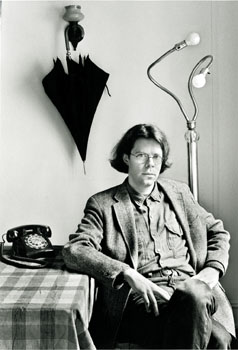
Geoff Dyer: “Keep a diary. The biggest regret of my writing life is that I have never kept a journal or a diary. Beware of clichés. There are clichés of response as well as expression. There are clichés of observation and of thought – even of conception.”

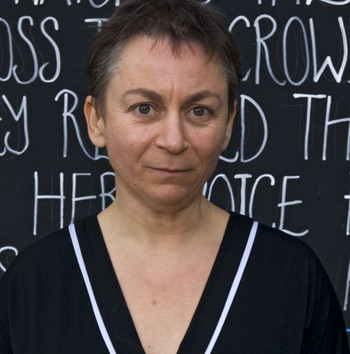
Anne Enright: “Only bad [writers] think that their work is really good.”

Richard Ford: “Marry somebody you love and who thinks you being a [writer] is a good idea. Don’t have children. Don’t have arguments with your wife in the morning, or late at night. Don’t drink and [write] at the same time. Don’t wish ill on your colleagues. Try to think of others’ good luck as encouragement to yourself. Don’t take any shit if you can ­possibly help it.”

Jonathan Franzen: “You see more sitting still than chasing after.”

David Hare: “Never complain of being misunderstood. You can choose to be understood, or you can choose not to.”

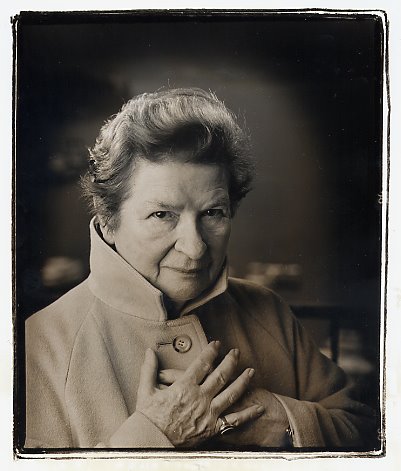
P.D. James: “[Read] widely and with discrimination. Bad [writing] is contagious.”

Michael Morpurgo: “The prerequisite for me is to keep my well of ideas full. This means living as full and varied a life as possible, to have my antennae out all the time.”

Andrew Motion: “Honour the miraculousness of the ordinary. Think big and stay particular.”

Helen Simpson: “The nearest I have to a rule is a Post-it on the wall in front of my desk saying “Faire et se taire” (Flaubert), which I translate for myself as ‘Shut up and get on with it.'”

Zadie Smith: “Protect the time and space in which you [write]. Keep everybody away from it, even the people who are most important to you.”

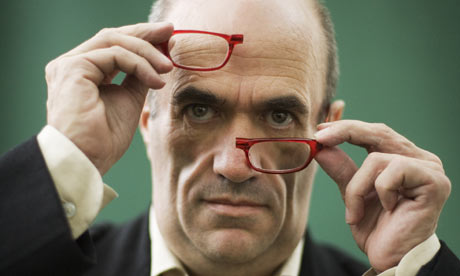
Colm Tóibín: “Get on with it. Stay in your mental pyjamas all day. Stop feeling sorry for yourself. No alcohol, sex or drugs while you are working.”

Jeanette Winterson: “Turn up for work. Discipline allows creative freedom. No discipline equals no freedom. Be ambitious for the work and not for the reward.”

Viv’s Viewfinder

…courtesy of Ms. D.:

MYOFT

Hah thkoo field trips have their advantages and disadvantages. Typically, an entire school day is consumed and transportation is provided. OTOH, that school day comes at the risk of falling behind in some other courses, and those trips are necessarily to destinations that can absorb our numbers; plus, some people simply do not want to be seen on a Big Yellow Safety Bus. What’s a ’tog to do?

How about customizing your own outing?

Consider a set of concerns:

Location: your yard/block; another city; Bhutan.

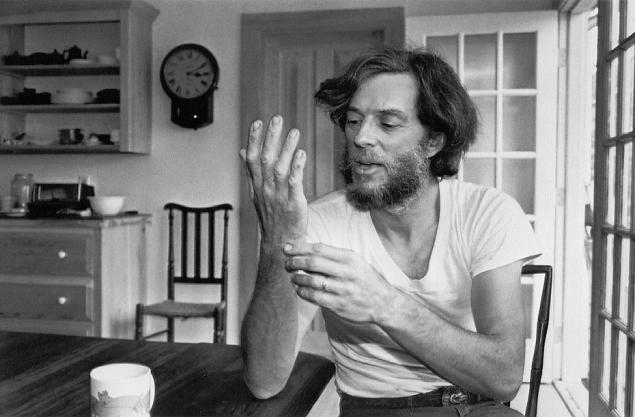
Companions, for which consider St. Walker Evans’s opinion (taken in context of the 1960s): “Work alone if you can. Girls are particularly distracting, and you want to concentrate; you have to. This is not anti-feminism; it is common sense. Companions you may be with, unless perfectly patient and slavish to your genius, are bored stiff with what you’re doing. This will make itself felt and ruin your concentrated, sustained purpose.”

Time (calendar & clock), variable by light/weather, especially if you’re working solo.

Film & developer combination, not variables for some of us but very critical for others.

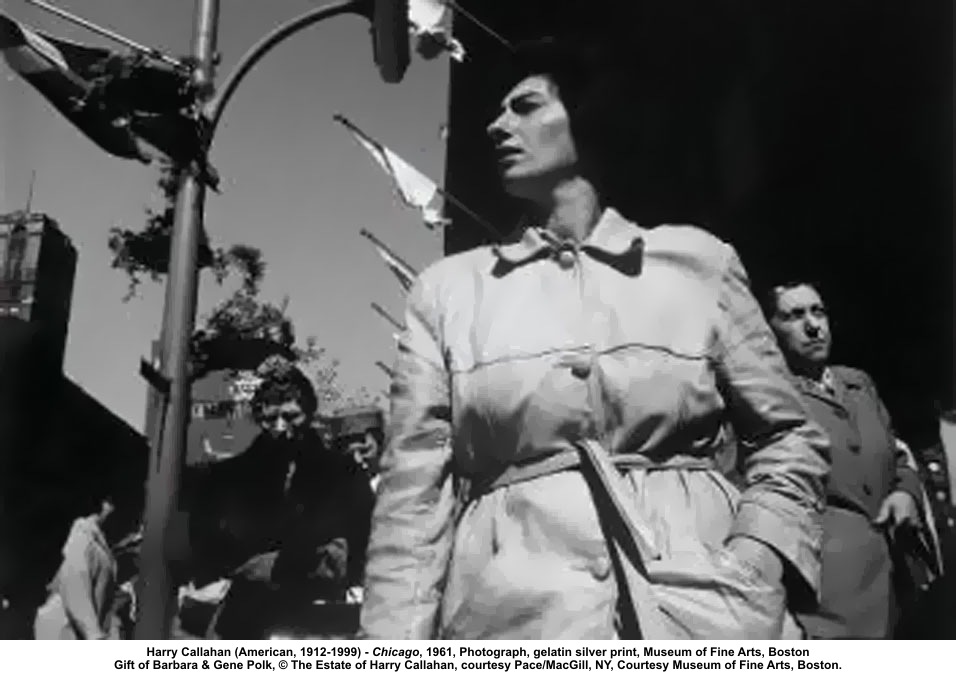
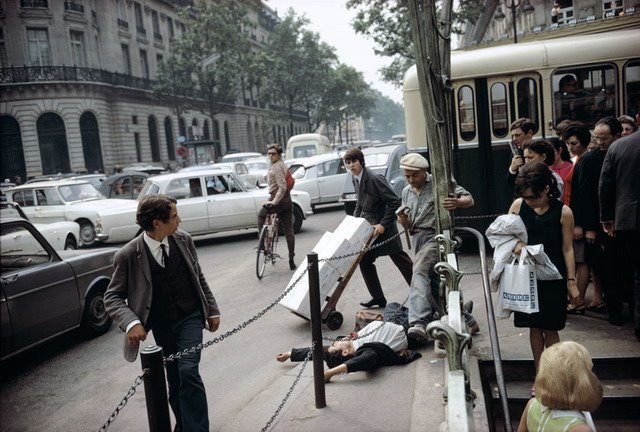
Goal(s): emulation of a recognized style (Winogrand, Callahan, Friedlander); nominal subject matter (bullfights @ midnight, fallen horses, lumpen menschen)

See what you can glean from http://2point8.whileseated.org/2005/09/06/rule-1/ (1 through 9, anyway)

Isolate your field trip from everything else. Have a photography to-do list with only one thing — shooting. Figure out how to eliminate other agenda items that get in the way. Suppose you had a to-do list with 10 things:
(1) Clean your room.
(2) Write a paper for Film Crit.
(3) Shoot for a project.
(4) Take a shower.
(5) Answer e-mail.
(6) Meet someone at Einstein’s.

…et cetera… it would be pretty easy to get everything done–except for (3). You would have been busy all day, but being busy is not the same thing as being productive.

Benson=Beacon

http://vimeo.com/20457518

What Day Is This?

Are we living a series of lies? A nearby town held a mini-festival of events on the 12th, claiming it was a St. Patrick’s Day event. Barrington Fun High School will be the site of a Mother’s Day celebration, but on this coming April 10. In recent years, Palatine has held their 4th of July parade on July 1st and on June 30. What’s going on? Is it related to the shaky nature of the vestige of a sense of place when one “goes to” a Web site? Can we attribute this slippage to having moved federal holidays to the nearest Monday regardless of the date being commemorated? Am I a coot, or do we try to get by with as little ceremony as possible (to all of which Mr. Lynn replies, “Well then, Happy Birthday!”)?

And when does a grading period end? At 2:35 on the last designated school day on the academic calendar? Or is it when I leave the building on that day? Or is it the first day back after a break? Or the last possible moment on the morning of posting grades? Or whenever you say it is? Or whenever I say it is?

Postscript: Daylight Savings Time is currently in effect for eight of twelve months each year. Q.E.D.

A Game Changer for Film

…or at least a game, anyway:

http://www.youtube.com/watch?v=rWU3-gA3ueo&feature=player_embedded

(You don’t have to wait until the day after March to watch this.)

George Santayana Weighs In

“Those who do not remember the past are condemned to repeat it.”
Only coincidentally, both these links happen to be to National Public Radio.

http://www.npr.org/blogs/krulwich/2011/02/04/133188723/tools-never-die-waddaya-mean-never

http://www.npr.org/blogs/therecord/2011/03/09/134391895/the-legacy-of-the-cd-innovation-that-ate-itself?ft=1&f=100

W. o’ W.: Robert Adams

Here is the preface to the (35th? 36th?) 2010 book of pictures from the cliche-free photographer:

“In common with many photographer, I began making pictures because I wanted to record what supports hope: the untranslatable mystery and beauty of the world. Along the way, however, the camera also caught evidence against hope, and I eventually concluded that this too belonged in pictures if they were to be truthful and thus useful.

The only people of whom I knew who had in some measure resolved the conflict were writers like Emily Dickinson and painters like Edward Hopper, individuals who searched the world so diligently that they occasionally caught glimpses of another. Theodore Roethke’s notebook entry was the victory I wanted: ‘I see what I believe.’

As much as I try to stay away from abstractions, I often find myself asking three questions, and I repeat them here as a point of entry into this book: What does our geography compel us to believe? What does it allow us to believe? And what obligations, if any, follow from our beliefs?”

We Review II

We went where we said we would go ( https://photodevoto.wordpress.com/2011/03/03/apft/), and as we did last year (https://photodevoto.wordpress.com/2010/04/15/we-review/), we wrote about it.

“Spending the day in the city exploring exhibits is a new experience to me, one that I greatly enjoyed. I think it is important to see photos in a museum rather than online or in a book because you are able to see the work as the artist wanted you to see it. The artist spent a large amount of time mounting their work and planning the exhibit. If you see their work in a museum, you are able to take in the whole effect. Also being right in front of it, you are able to notice more details and really appreciate the work.”

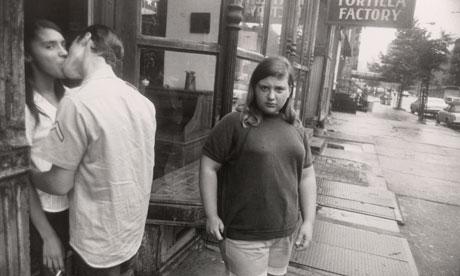
“I had heard a lot about Vivian Maier and what she did, but it was still awesome to see her work in person. I thought it was really cool to see her cameras and letters, one being from Central Camera. All of her work was fantastic and it was amazing to see someone who was self-taught with that much talent. I don’t know how much the people printing her work now edit her pictures, but they were done absolutely perfectly.

I absolutely loved the Odyssey exhibit at Columbia. It’s just amazing to think of how much time and work went into those themed photos. I don’t exactly know how they did it, but the pictures were all super interesting and felt really real. My favorite was the panorama (not the main one, the one to the left when you first walked in). I really liked all the placement of the people and how they used the smoke from the rockets. It created a really awesome alternate universe almost and I really liked it.”

“When at the Vivian Maier showcase, I saw the perspective that she took the photos in. The angle, lighting, subject matter, and frame can change the whole meaning of the photo. And when looking at it for a second time or even looking at it from a different angle, you can see something that you didn’t before or can change the meaning of the picture.”

“The benefit of seeing other photographers’ portfolios was that it gave me more examples of a complete body of work. Whereas I have several prints with a loose theme, seeing a group of pictures with a strong theme that connects them all together gave me a better idea of how to make my portfolio.”

“What I took out of the gallery at the [Harold Washington] Public Library was that what you take in from a photo changes as you look at it from different distances. Some of the photos in the set didn’t really excite me (they were all very well taken and very crisp); however, I didn’t really like them until a got a lot closer to the photo. After studying one picture for a while and realizing that there were kayakers in the water, I enjoyed the picture much more than when I stepped back and looked at the picture from a distance.”

“I thought the Apollo Prophesies exhibit at Columbia was very neat. My favorite photos were the ones on the far wall that looked vintage with the lighting the photographer chose and the tone of the paper that was warm rather than pure white.”

“I overall enjoyed looking at how different people’s perspectives are, and how some photos take a lot of planning, like the Apollo Prophesies, and how some take no planning at all, like Vivian Maier’s, and both turn out so well.”

“When I talked to other individuals on the field trip about a photograph I didn’t really enjoy, they were able to point out things I did not notice about it before; I was able to something in the photograph. Then I was able to like it.”

“I noticed about [Vivian Maier’s] pictures that she usually captures a sad or straight face over a smiling one. It made you think more about the people in the pictures other than just looking at a picture and just seeing people.”

“The benefit of seeing work is obvious, especially in the case of the wonderful Viv. For me personally, Vivian Maier was, to put it informally, the bomb. I have been inspired to try out some square-format film, as the compositions were intriguing. Also, the way both Vivian and the Gage Gallery guy captured the human experience was stunning. I want to be able to do what they have done – to capture the essence of a person in a photograph.

The past/present/future depiction took different forms for the various photographers we viewed. In the library exhibit, the juxtaposition was more tangible – photographs of the river throughout a period of years. In the Gage Gallery, I observed something different – the exploration of two different present realities. In one series, the photographer captured a person at home and at work. This demonstrated that even the present can be split, two nearly separate live lived simultaneously.”

“There is a clear connection between [a body of work’s individual] photographs, and seeing them collectively helped to determine their thought process. I was able to notice small details in prints and techniques used that would not have been apparent if viewed on a computer screen. The photographs in the Library were very exciting to see because we were just shooting in the city last week. I had been to most of these places but the photographs transferred the space into a unique and timeless piece of art. It made me want to continue exploring the city…”

“When I see work, it benefits me because I can modify my own technique. When I shoot, I can get repetitive and many pictures can turn out bring or unoriginal. By seeing what other photographers choose to do, I can apply that to my own technique and come up with something completely new.”

“It was cool how some of the pictures in all of the exhibits were so simple yet so complicated; I never realized how empty space can be so interesting.”

“No matter how much I learn through my own experience, I can always be taught more by the work of a professional. Analyzing the work of successful artists also gives me ideas for work of my own… For some, their own mind is all they need, but I find it to be an advantage to pull ideas from others’ work, and transform it into my own.”

The above insightful reflections are courtesy of Matt Wloch, Kendall Wallin, Annabel Perry, Nikki Nixon, Kristin Kuhn, Justine Kaszinski, Melissa Jones, Emma Haney, Alexa Hanaford, Joyce Gaffney, Mike Cygan, Lauren Captain, Christina Buerosse, Chanelle Biangardi, and Kristina Bastidas.

Stef Germanotta’s “Handlers” Seek Release

http://www.rollingstone.com/music/news/photographers-respond-to-lady-gagas-new-copyright-demands-20110307