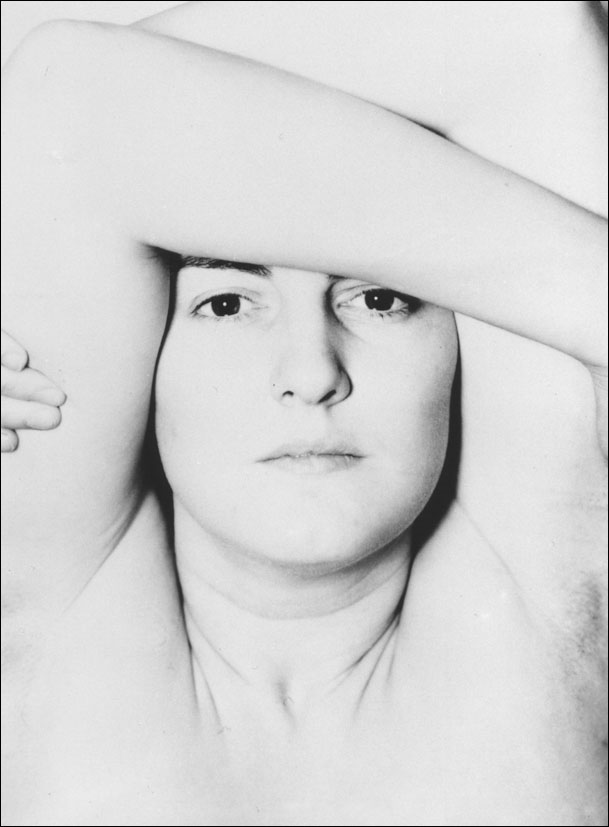
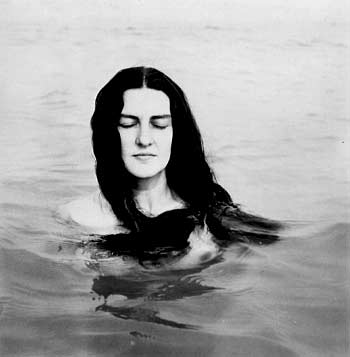
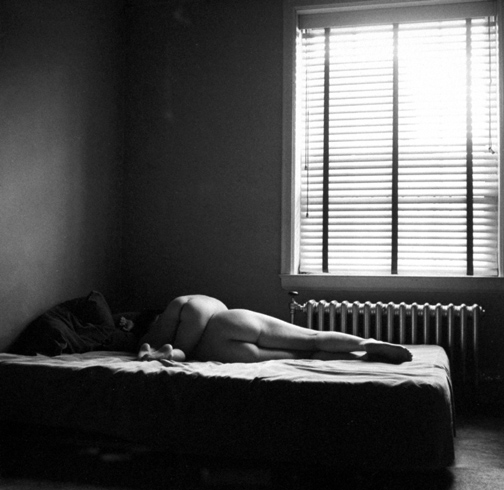
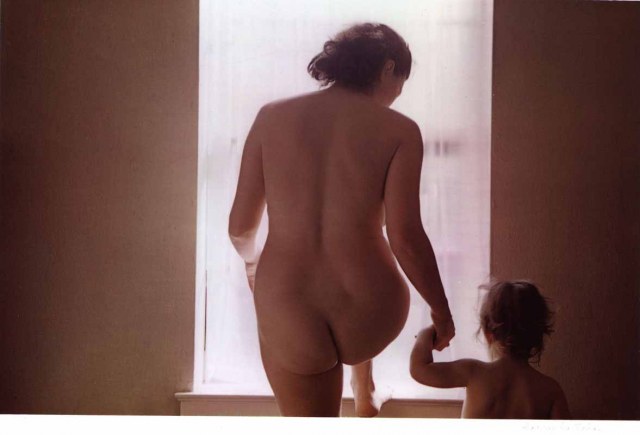
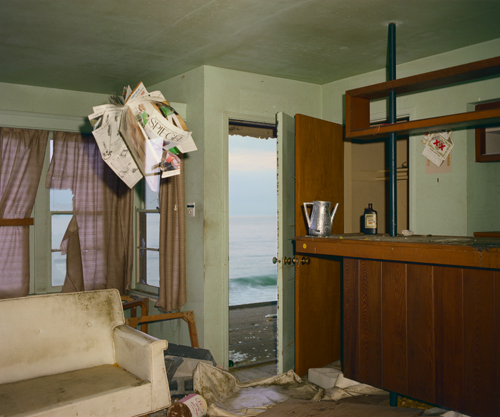
Fabricated To Be Photographed

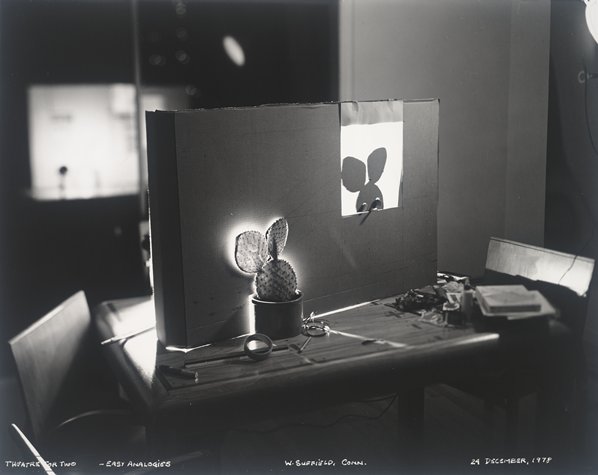
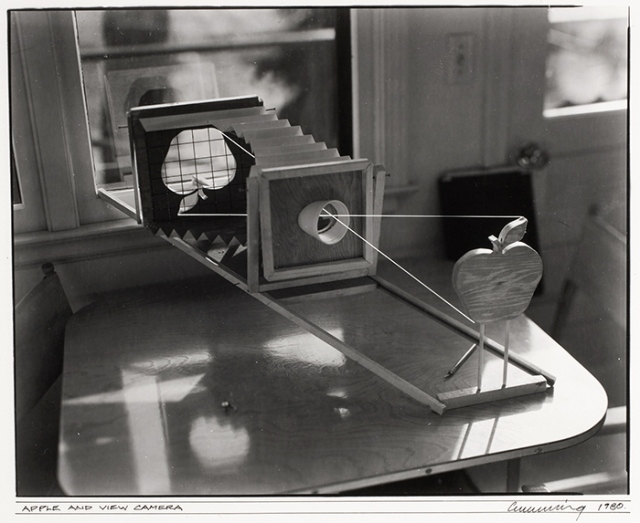
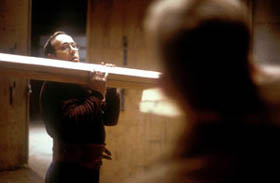
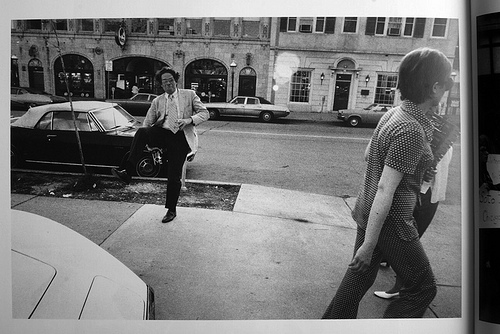
Robert Cumming made some engaging images which were included in an important exhibit in the 1970s “Fabricated to be Photographed.”

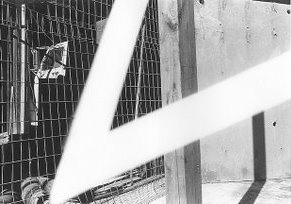
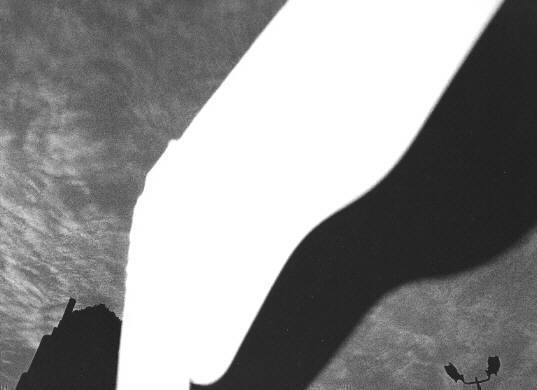
Mr. Metzker made a series called “Pictus Interruptus.”

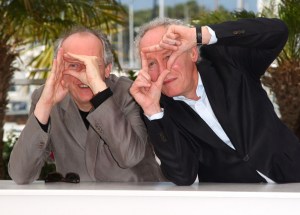
The Belgian directors/brothers Dardenne have potentially useful comments for our current business of constructing barriers in photographs.

“We like to plunge the viewer into the scene without having had any exposition, particularly, before the scene happens. We just like to throw them into it.”

“It’s not that we don’t want any psychology. It’s just that we feel that, when we give a psychological explanation, we’ve told everything. For instance, if we say, well, Samantha was not able to have a child or she’s wanted to have a child for a long time, we feel that we’re giving an explanation to the viewer who then, in turn, feels that he or she has understood everything.

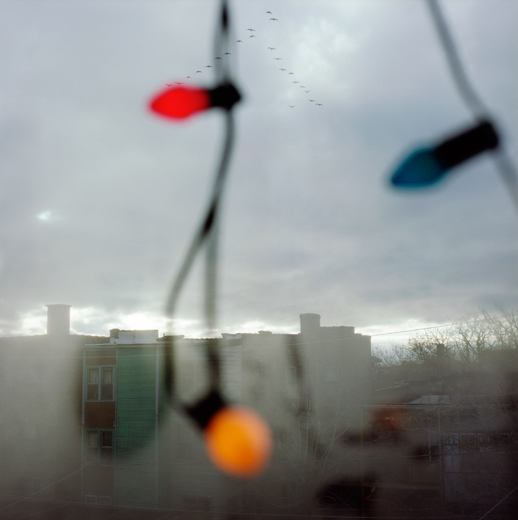
We try to place our camera in a way – position it so that there are obstacles, almost as if the reality that we’re filming is refusing that our camera find the right place. So since the camera is not in the right position, it’s almost like a documentary. We’d like to see the entire face, but we can’t quite.”

Hear the entire NPR story: http://www.npr.org/player/v2/mediaPlayer.html?action=1&t=1&islist=false&id=148774087&m=148774504

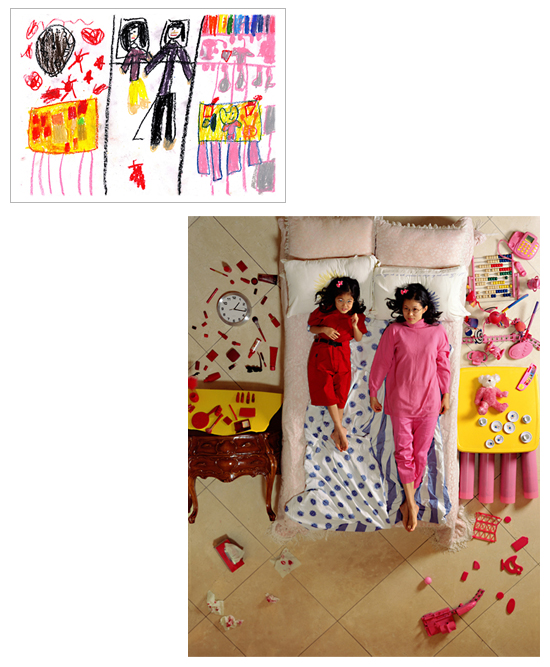
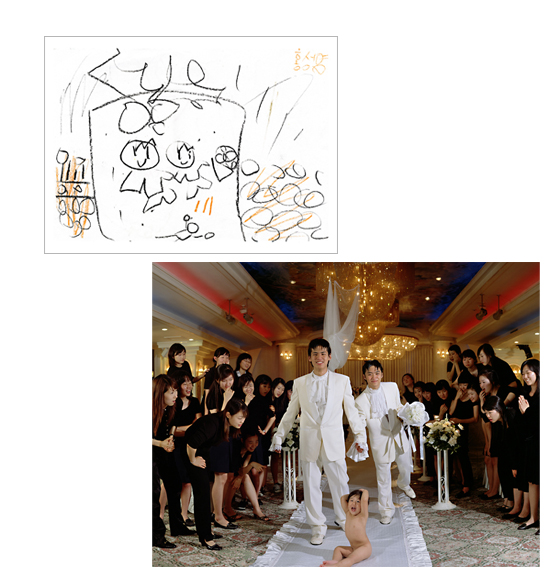
And finally (for now), look at some of the work of Yeondoo Jung.

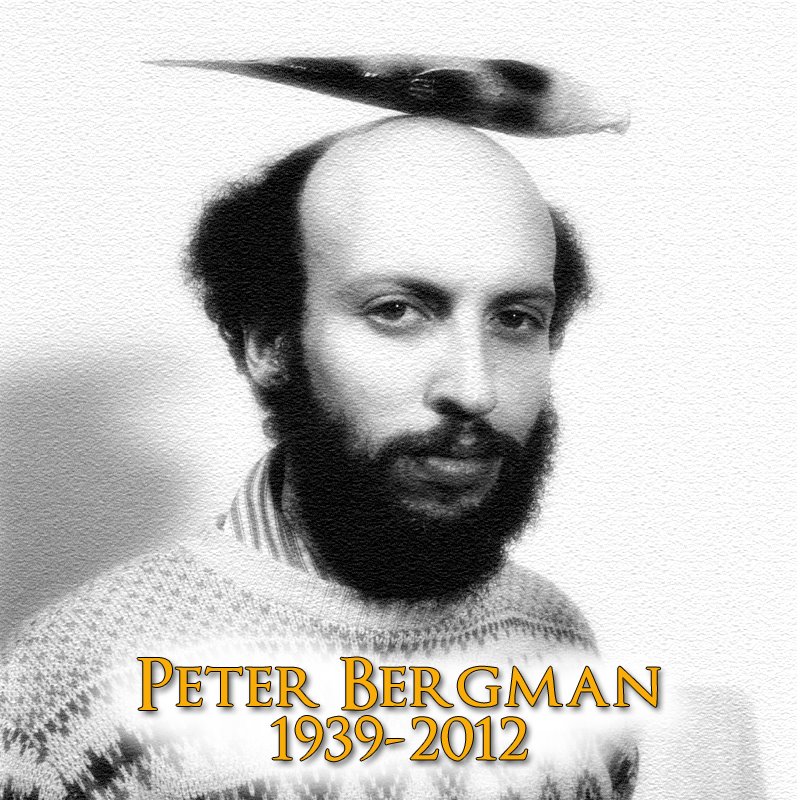
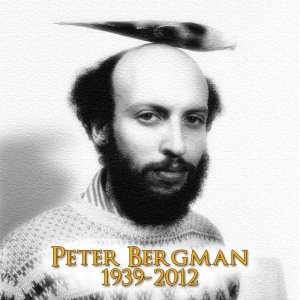
Peter Bergman

“We are sad to report the passing of Firesign Theatre founding member and Radio Free Oz host, Peter Bergman. He left us this morning due to complications from leukemia. We will post more information as it becomes available.”
As of this writing, it’s not on the website yet…

http://www.firesigntheatre.com/index.php

…so check f’book.

Update:

Dear Friends – Your thoughts and blessings will help us and Peter get through this passing. This was completely unexpected. I spoke to Peter on Tuesday morning when he told me he had leukemia – others knew before us, but he’d kept it quiet for 6 months. When I spoke with him he said he was tired and very low. He went into the hospital Tuesday night and died at 7am this morning. I just got off the phone with the LATimes obit writer. I told her that Peter changed the world – at least for all of us. Fortunately Judith and I are in LA and will see the family this evening. We love you all and promise to keep you laughing as long as we can, after the tears. David (Ossman)

Update:

Peter Bergman was born in Cleveland, Ohio, the day after Russia invaded Finland and the day before Winston Churchill (Peter’s hero) turned 65. Peter’s comic career began in the sixth grade, writing comic poems with his mother for library class – a penchant that developed into co-authoring the ninth grade humor column “The High Hatters,” and his own creation “Look and See With Peter B.” for his high school newspaper.

Peter’s audio career was launched in high school as an announcer on the school radio system, from which he was banished after his unauthorized announcement that the Chinese communists had taken over the school and that a “mandatory voluntary assembly was to take place immediately.” Russell Rupp, the school primciple, promptly relieved Peter of his announcing gig. Rupp was the inspiration for the Principle Poop character on “Don’t Crush That Dwarf”.

While attending high school, Peter formed his first recording group called “The Four Candidates,” turning out a comedy cut-up single titled “Attention Convention,” parodying the 1956 democratic convention. Released on Buddy records, it received air play in Cleveland and Pittsburgh.

At college, Peter was managing editor of the Yale comedy magazine. He wrote the lyrics for two musical collaborations with Austin Pendleton, both of which starred Phil Proctor. He graduated as a scholar of the house in economics, and played point guard for the liberal basketball league whose members have since lost their dribble but not their politics.

Peter spent two graduate years at Yale as a Carnegie teaching fellow in economics, and as the Eugene O’Neill playwriting fellow at the drama school. After a six-month stint as a grunt in the U.S. Army’s 349th general hospital unit, he went toBerlinon a Ford foundation fellowship where he joined Tom Stoppard, Derek Marlow and Piers Paul Read at the Literarisches Colloquium Berlin. There he wrote and directed his first film, “Flowers,” and connected with the Living Theatre – a major influence on his art.

Peter worked briefly in London with Spike Milligan and the BBC before returning to America in 1966. Back in theU.S., he secured a nightly radio show on Pacifica’s KPFK inLos Angeles: “Radio Free Oz,” around which the Firesign Theatre coalesced and gestated.

Peter coined the term “Love-In” in 1967, and threw the first such event in April of that same year inLos Angeles. That event ultimately drew a crowd of some 65,000 people, blocking freeways for miles. This so impressed Gary Usher, a Columbia Records staff producer, that he offered the Firesign Theatre their first record contract.

In the 1970’s, Peter diversified his comic career as the president of a film equipment company. He also helped produce a machine for viewing angio cardiograms and measuring the blockage of the arteries of the heart.

In the 80’s Peter turned to film and tape, producing the comic feature “J-Men Forever” with Phil Proctor, as well as producing television shows that featured various members of Firesign.

Starting in 1995, Peter began touring the country as a “high tech comedian”, delivering lectures and keynote speeches to computer oriented companies and conventions. He worked on publishing the web site for one of the candidates for Mayor of Los Angeles.

His latest venture, in association with David Ossman, started in the summer of 2010: the podcast revival of Radio Free OZ.

FINAL UPDATE

Go to this link to read what amount to a legacy comments page, and if much of it reads like gibberish to you, this entry might help: “I still will slip in a line from their album into conversation… to see if others know about them. It’s a bit like a shared secret.”

http://firesigntheatre.com/peterbergman/index.html

FINAL UPDATE ADDENDUM

For those of you who don’t know the work of FT, or if you do but haven’t seen their Jack Poet Volkswagen commercials, scroll down http://www.dangerousminds.net/comments/farewell_dear_friend_peter_bergman_1939_2012 and watch a half-dozen or so.

P.S. I think I need a big “5” sign.

The Law (well… some laws, somewhere)

This is not event-specific or timely or a reaction to anything, simply something of which to be aware.

http://thestreetphotographymanifesto.com/2011/12/08/street-photography-and-the-law/

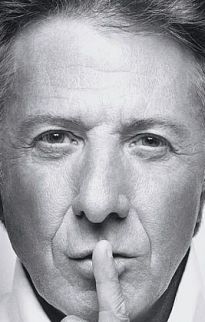
W. o’ W.: Dustin Hoffman

“It’s not intellectual. You’re mostly aware of what you don’t like. Henry Moore said something like that. You keep chipping away at what isn’t an elephant. And Miles Davis said: ‘Don’t play what’s there, play what’s not there’ — I’ve put it on my wall. We think the conscious is the determining factor, and actually it’s the least reliable instrument. The knowing is the infringement. You find what is exposed.”

Color Reversal Transparencies (aka “slides”)

Kodak has announced: “Due to a steady decrease in sales and customer usage, combined with highly complex product formulation and manufacturing processes, Kodak is discontinuing three Ektachrome (color reversal) films.” This means that, after 77 years, the Great Yellow Father is no longer in the business of making slides. ‘Tis a pity: slides can’t be beat for color saturation and sharpness. Fortunately, we still have excellent Fuji films with those qualities.

Me, I’m drownin’ in slides. Carousels, boxes, plastic sheets, even food storage bagsful. Kodachrome, Ektachrome, Agfachrome, and Fujichrome, pretty much all 35mm. I also curate (i.e. have) my grandfather’s Anscochrome, some of my in-laws’ stuff, a batch depicting office culture at United Air Lines’s EXO, work shot from printed sources for delectation in class, and endless dupes of a generation’s worth of AP work. Slides are part of the reason the missus insists that if I go first she’ll have the basement bulldozed, rather than make sense of its contents.

Richard Benson wrote: “The huge amateur market that consumed 35mm slides has always been a mystery to me. Why did all those people make all those pictures? The impulse must be connected to an effort to retain memories of times gone by. It is somewhat tragic, because as we use technological devices to aid our memories we inevitably reduce our capacity to remember. We see this demonstrated in the mnemonic wonders of oral traditions, which always suffer as writing is introduced to cultures. Color slides are even more mysterious because they are almost never looked at. At least with an album of prints we can take the book off the shelf, easily leaf through it a bit, and then put it away again. The slide requires a projector, a dark room, and almost invariably other people, who have been gathered together to participate in the viewing of someone else’s visual history. For me there is no more excruciating event than looking at the family slides.”

I have only respect for Mr. Benson, so I will gently address some of these points. It’s safe to assume that marketing is what fueled the 35mm transparency (and its business in projectors) popularity, yes? Oral traditions are no parallel to easily leafing, are they? If technological devices reduce one’s capacity to remember, it’s for some sort of trade-off, n’est-pas? Peut-etre the tragedie is on a nostalgic level, within a generation or so (I recall gnashing over the proliferation of soft-cover books). Oral traditions necessitate a gathering, a ritual; hello? And they need not be family slides. (Okay, there was that one time when Jack Niemet showed us hundreds of slides of composers’ birthplaces, pianos, deathbeds, and headstones, and I went to bed while he went to the loo, but hey, the exception proves the rule.) The sharpness in transparencies can’t be beat, and lord knows there are ways to convert the images to other, um, mediums.

Bonus Karma: Colleen Plumb’s “Animals Are Outside Today”

Bonus karma: credit for effort that is over and above and aside course requirements, often referred to as “extra credit.”

This came up only sporadically in class on Thursday and Friday, so here’s a reminder to get to the March 4 reception for the exhibition at the place called Brushwood, in Riverwoods. I suspect it’s a venue not unlike the Wauconda Ansel show. Travel east on Lake-Cook Road, past Milwaukee Avenue; turn left on Portwine to its end, left on Riverwoods to the Ryerson Conservation Area.

Ms. Plumb’s artist’s statement says, in part: “…Henry Beston stated regarding animals in his book, The Outermost House: ‘They are not brethren, they are not underlings; they are other nations, caught with ourselves in the net of life and time, fellow prisoners of the splendor and travail of the earth.’

“Contradictions define our relationships with animals. We love and admire them; we are entertained and fascinated by them; we take our children to watch and learn about them. Animals are embedded within core human history—evident in our stories, rituals and symbols. At the same time, we eat, wear and cage them with seeming indifference, consuming them, and their images, in countless ways.

“Our connection to animals today is often developed through assimilation and appropriation; we absorb them into our lives, yet we no longer know of their origin…  This series moves within these contradictions, always questioning if the notion of the sacred, and the primal connection to Nature that animals convey and inspire, will survive alongside our evolution.”

In this particular case, don’t read the Reader (nor do the wind, the sun, or the rain) so you won’t witness the indignity of the review’s senseless link to an article about a good restaurant’s serving of pigtails. I may have noticed this because I may be ADHD (“Look! A bird!”).

http://ryersonwoods.org/p/artExhibition.html

http://www.colleenplumb.com/


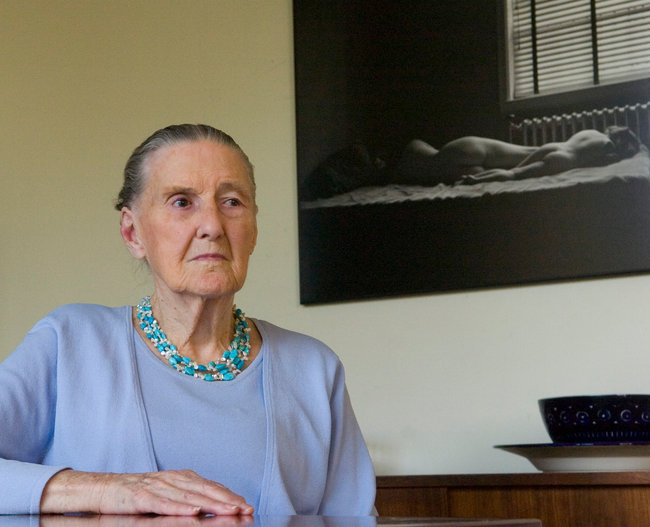
Eleanor Callahan, Muse 1916-2012

http://www.youtube.com/watch?v=xJeESWp9XgA

http://www.nytimes.com/2012/02/29/arts/design/eleanor-callahan-photographic-muse-for-harry-callahan-dies-at-95.html?_r=1&hpw

Make a Chain, and Don’t Break It

TT Patton, here in downtown Barrington, has offered to provide postage for letters and postcards mailed from their store during February (I’m late to the table) as part of the Month of Letters Challenge: http://ttpatton.com/2012/01/31/you-write-we-post-together-we-celebrate/ which takes place in the spirit of NaNoWriMo and the late lamented SoFoBoMo (look ’em up for yourself).

Jamie (she of BACT fame) proposed that she would shoot a certain number of negatives per week this semester–as a discipline, but also intuiting that it does a body good. Lenten discipline often prompts a negative stimulus (“I’m giving up… homework!”) but it works the same way. Jerry Seinfeld is known for “not breaking the chain”: http://lifehacker.com/281626/jerry-seinfelds-productivity-secret?tag=softwaremotivation

The point is to generate work on a more regular basis, not waiting for one’s Muse to strike.

http://prosedoctor.blogspot.com/2012/02/project-does-its-work-on-you.html

Long ago, I aspired to emulate Ken Josephson’s pattern of attending to photography one way or another on a daily basis. Why would it be otherwise? Mr. Steiglitz referred to weekend shooters in a derogatory tone in the era when the hand camera was first trendy (along with bicycles). The key in many domains is to attend to one’s endeavors consistently: piano practice, creative camerawork, poetry, cycling, omelet-making, bonsai, meditation… whatever. It’s not easy.

Keep Going Back

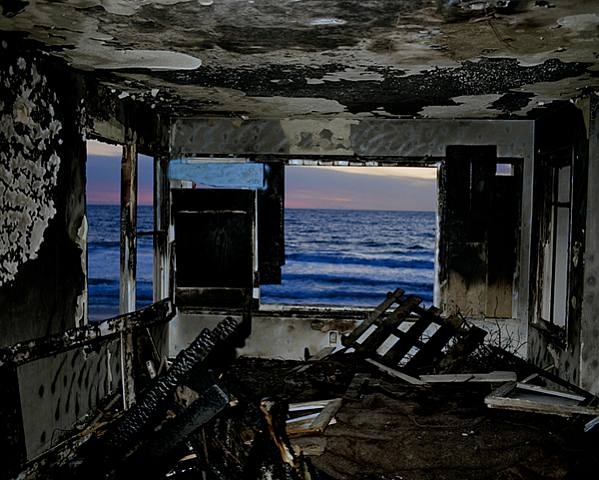
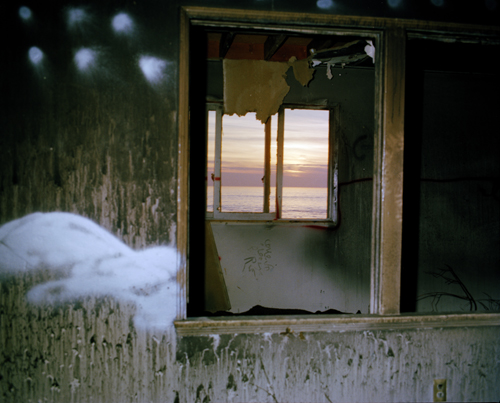
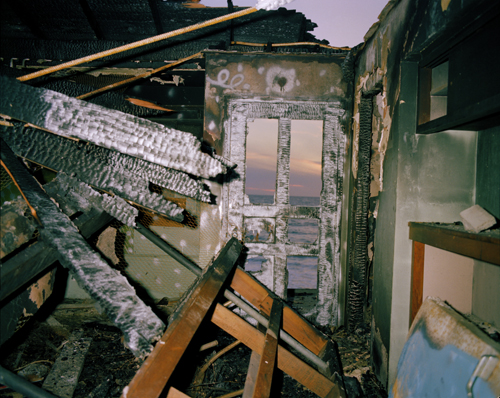
About his series Zuma, John Divola wrote:

These photographs are not meant to be documents of painting, or sculpture, or even of environmental works… No element is of greatest importance. I am most satisfied when the line between evidence of my actions and what is already there is not distinct. These photographs are the product of my involvement with an evolving situation. The house evolving in a primarily linear way toward its ultimate disintegration, the ocean and light evolving and changing in a cyclical and regenerative manner. These photographs are not so much about this process as they are remnants from it. My participation was not so much one of intellectual consideration as one of visceral involvement.

Here are excerpts from a dialog with Dinah Portner:

Q. Do you think of photography as a concrete way of dealing with ideas?

A. No, it’s not that they are ideas, per se. I see art as a dialogue about experiences and the way you experience things. And primarily, what I am dealing with is visual experience.

Q. So the dialogue is between you and the environment?

A. No, the dialogue is between me and whoever sees my pictures.

Q. How much does chance play a part in what you’re doing?

A. Well, a great part. And, as a matter of fact, the more I can get in there that is un-preconceived by myself and still make it work, the better I like it. The greater degree to which reality exerts itself and lesser degree to which I exert myself, the better as far as I’m concerned.

As far as I’m concerned, there is no separation between art and photography. Photography is a sub-category of a broader category which is art. Sculpture has a long history, but just because somebody was using sheet metal for nothing but repairing automobiles, until one point when somebody started to use sheet metal to make sculptures, doesn’t make too much difference.

Q. But, in a sense, photography has a completely different vision, because it is not object oriented as much and it becomes a window for something else.

A. Well, that’s one thing it is. It is an object. It is an illusionistic depth. And, I guess the number one realm in which photography seems to function is that it has a claimed authenticity. The light bounces off the subject and passes through the lens and burns the negative. And the light passes through the negative and makes the print. So the print is linked to the event by a chain of physical causalities. It’s like a piece of reality, rather than purely a document.

Dear Erin

A Photo Devoto alumna writes: “What do feel is the biggest problem facing photography today?”

Musicians work together; actors collaborate; writers interact (however tenuously); educators collaborate perforce, as do politicians. Of these professions, perhaps we’re most like writers, in that we don’t have many situations in which we can truly collaborate.

Mr. Andrews, of Oregon or Nevada or Oklahoma, puts it nicely: “Prints are currency. Jpegs are not. Most of us are sitting on a motherlode. Maybe we’re hoping to sell our photos or have them collected by someone or using them to prop up the kitchen table or who knows. Why not let them circulate? Give them away. Swap them. Mail them to strangers. Post them on street poles. Get them out into the world. Maybe they’ll meet a cruel end but some will wind up in caring hands, and at least every photo will have an opportunity. Chances are after you’re dead, some of these photos will still be out there. The more you give the better your odds. Not to mention it feels good.”

Kirk Tuck, at http://visualsciencelab.blogspot.com/2011/09/is-print-dead-was-analog-photography.html#more says: “We need to make and share more prints.  That’s where the rubber meets the contextual road.”