A One-Person, Self-Contained System

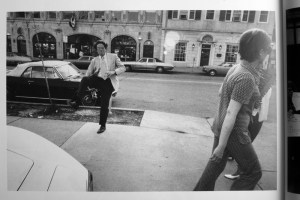
“When you are twenty years old and the photography instructor begins lecturing on form versus content, or that a photograph cannot tell a story, or that there are no rules of composition, or that things are changed when you photograph them, or that a photographic print is an interpretation of the world by a camera, or that he didn’t develop his film for months or years after he shot it; things can get philosophical and confusing pretty quickly… After seeing Garry shoot on the streets for the first time, I instantly realized that his print critique used the exact same technique as his shooting: confront, judge, capture and comment.) No one could size up a print in 1/500 like Garry.’

KONICA MINOLTA DIGITAL CAMERA

 http://www.ocgarzaphotography.com/documents/ClassTimewithGarryWinograndfinal3.pdf

Q. o’ th’ D.: A. O. Scott

…in this week’s Times Sunday Magazine.

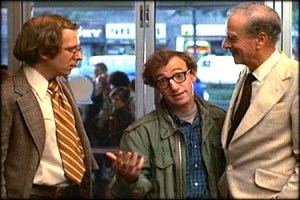
woody-allen-marshall-mcluhan

“The afterglow of your unique, youthful experiences — the kisses and cigarettes and cups of espresso that followed the movie, as much as the film itself — cast a harsh, flat light on the present, when you sit at home watching a DVD with a cup of herbal tea as your spouse dozes next to you on the couch. But don’t blame Hollywood for that!”

redbox-rentals-kiosks

Guess Who?

sp63

Your first answer is… wrong.


Dave Brubeck, 1920-2012

http://www.youtube.com/watch?v=FfLJN2ltEEI&feature=fvst

carel-l-de-vogel-jazzpianist-dave-brubeck-1957-1959

http://www.youtube.com/watch?v=2aHGMDf42lw

Dave_Brubeck_1972_(Heinrich_Klaffs_Collection_80)

http://www.youtube.com/watch?v=2htbaJFEAXQ

http://www.youtube.com/watch?v=4l1gI7qciqA

Time and Pictorialism

How are photographs supposed to look? Where might photojournalism fall on the spectrum between comfort and engagement?

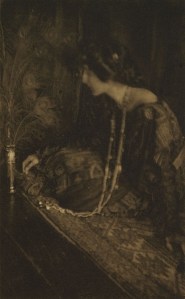
Gertrude%20Kasebier%20ur_1852%20zm_1934%20%20Droga%20do%20Rzymu1903%20guma%20

http://www.forbes.com/sites/jeffbercovici/2012/11/01/why-time-magazine-used-instagram-to-cover-hurricane-sandy/

demachy

http://www.prdaily.com/Main/Articles/13072.aspx

tumblr_lejdc3v6Sp1qbslwlo1_400

http://maristredfoxesprssa.blogspot.com/

Anne Brigman, The Bubble, 1909

What would George Santayana have to say about all this?

Or this: http://lightbox.time.com/2012/10/25/a-vibrant-past-colorizing-the-archives-of-history/#1

Sheesh.

It Was Nineteen Years Ago Today

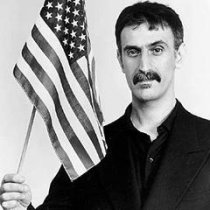
YoungFZ

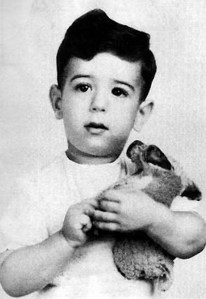
Francis V. Zappa, 1940-1993

 “What do you make of a society that is so primitive that it clings to the belief that certain words in its language are so powerful that they could corrupt you the moment you hear them?”

Patriot

Kindred Spirits

beachbuddy

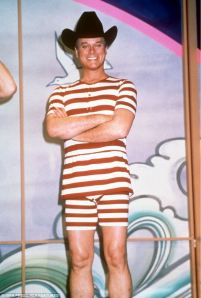
Larry Hagman was often asked for autographs by his fans but, unlike other stars, he would always ask the person to either sing him a song or tell him a joke in exchange of this signature. He explained that he was “getting something back” from the autograph seekers. (He eventually stopped the joke-telling custom because fans kept coming up with off-color jokes.

amanneamongcats


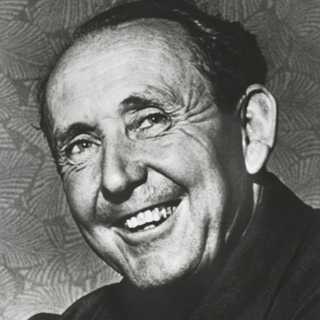
Shelly Manne’s definition of jazz musicians: “We never play anything the same way once.”

carriercarried


Bill Murray: “One of my habits is I don’t do exactly what you want me to do.”

“Gilda showed up and she’d already had cancer and gone into remission and then had it again, I guess. We hadn’t seen her in a long time. And she started doing, ‘I’ve got to go,’ and she was just going to leave… It felt like she was going to really leave forever. So we started carrying her around, in a way that we could only do with her. We just kept carrying her; we did it in teams… upside down, every which way — over your shoulder and under your arm, carrying her like luggage… We worked all aspects of it, but it started with just, ‘She’s leaving, I don’t know if you’ve said good-bye to her.’ And we said good-bye to the same people ten, twenty times, you know. And because these people were really funny, every person we’d drag her up to would just do like five minutes on her, with Gilda upside down in this sort of tortured position, which she absolutely loved. She was laughing so hard we could have lost her right then and there.”

Links Worth Exploring (Pack A Lunch First)

I’m not kidding: each time I came across one of these, I had to dig all the way back into them. Order out, lock the door, take the phone off the hook(!), whatever it takes.

Wayne Bremser http://bremser.tumblr.com/

Levi Wedel http://imagesfound.blogspot.com/

Ricardo Armas http://ricardoarmasphotography.blogspot.com/

 http://mpdrolet.tumblr.com/

Ron Slattery http://www.bighappyfunhouse.com/

http://calumet412.tumblr.com/

http://notcommonpeople.blogspot.com/

W. o’ W.: Roy Harris

“I was born into a family of farmers. Farmers don’t talk very much, the ones that I’ve known, anyhow. They sit around the table, have dinner, and very little is said. That doesn’t mean that they are not thinking, but they are thinking in other terms. They are not thinking in the conventional word terms. They are thinking in terms of the essence of things—what a tomato looks like, what is the texture of a peach, what a horse can do in terms of power, what the sun feels like, or what the quality of moonlight is. They are thinking in these terms, I think, more than they are in the terms of words and the social implications of words… I think that is a wonderful and fortunate beginning for a person who is going to become a composer. This is because music is not a word language but a time-space language… It’s a matter of subjective identification and transference.”

“I don’t think one really decides to be a composer; it sort of happens… I got into music, I suppose, because I was drawn into it, and I think probably this is the only real way to do it. I think life has to draw you into things. I don’t think you make decisions about things.”
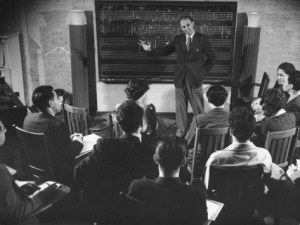
“The temper of the family has to be fairly even. If people are having tantrum fits, squalls, and all that sort of thing, then the creative work just goes down the drain because it doesn’t work. It requires a certain serenity and a certain kind of happiness… When I’m working very hard, I want somebody around who is very simple, very direct, very earthy, very matter of fact—like a peasant. But when I’ve finished work and I want to play, then I like somebody who is a sophisticate, who has been all over and knows many things, who is a fine conversationalist and is amusing, and who likes good food and all the arts, and all the fine values. I find that when I’m working very hard, my values are rather coarse in the sense that farmer’s would be—not coarse in a moral sense, but coarse-grained, rather. The people that I prefer to be with are people whom I can count on, people who are rather solid, not very full of subtleties. There is nothing that annoys me so much as subtlety when I’m profoundly interested in something else.”

http://www.youtube.com/watch?v=Zq67ZBdC558

Q. o’ th’ D.: Dave Hickey

…from an interview with Sarah Douglas.

SD: In a lecture in Michigan not too long ago, you talked about the problems inherent in art education—that it’s not something that can actually be taught. The conundrum of grading, for instance. I think you said that in your class one would earn an A for not turning anything in.

Dave Hickey: Well, I think artists should be proud and too cool for school. I told my students in my last class that I always had my TA grade their papers. They asked why I didn’t read their papers. I asked them how much they would enjoy teaching a swimming class where everybody drowned. So, I’m quitting teaching, too, and saving myself from that sort of desolation. Also, I’m too far away. I’m not competent to critique the work of young artists over whom I have so much leverage and experience. It’s like crop dusting with a 747. Bad for the crop and bad for the plane. This doesn’t mean I’m that much better, just that I’m ‘way older. What do you say about a painting or a story by a kid who hasn’t seen a million paintings or read a million books? Also, nobody cares if it’s good, anymore, and everybody hates it when something’s really great.