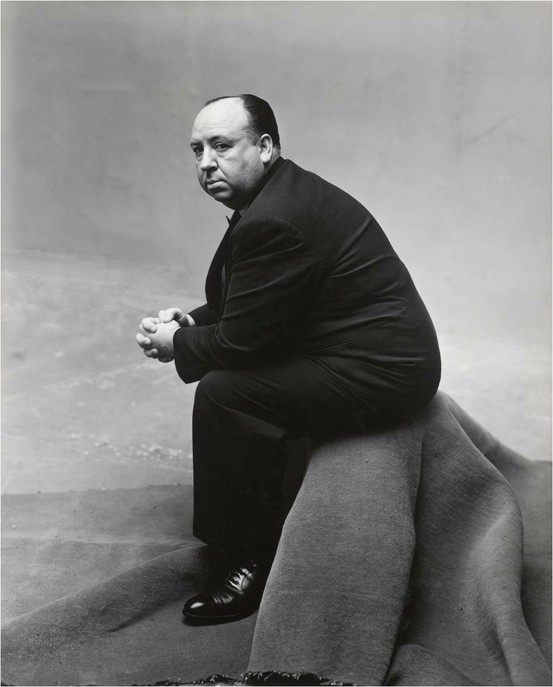
“A clear horizon… nuthin’ to worry about on your plate.”
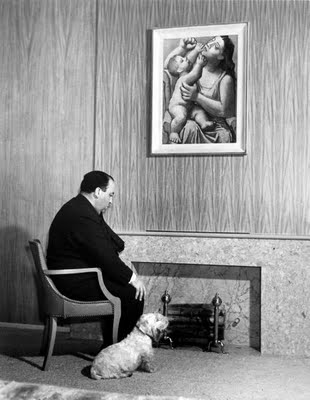
http://www.openculture.com/2012/03/hitchcock_on_happiness.html
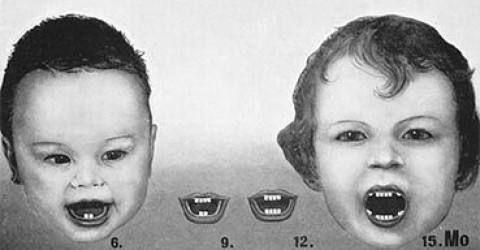
“A clear horizon… nuthin’ to worry about on your plate.”
http://www.openculture.com/2012/03/hitchcock_on_happiness.html
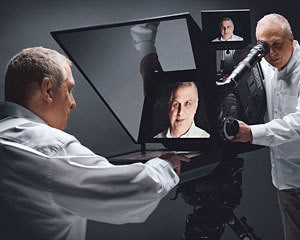 This summary of the main ideas in “Believing is Seeing (Observations on the Mysteries of Photography),” by Errol Morris, is as terse as the text is expansive. As a photographer who shares this world with the rest of us, you need to acquire this book and digest it.
Errol’s book made simple. (Some principles.)
All photographs are posed.
The intentions of the photographer are not recorded in a photographic image. (You can imagine that they are, but it’s pure speculation.)
Photographs are neither true nor false. (They have no truth-value.)
False beliefs adhere to photographs like flies to flypaper.
There is a causal connection between a photograph and what it is a photograph of. (Even photoshopped images.)
Uncovering a relationship between a photograph and reality is no easy matter.
Most people don’t care about this and prefer to speculate about what they believe about a photograph.
The more famous a photograph is, the more likely it is that people will claim it has been posed or faked.

“You are free and you risk something by taking a photograph. It’s not taking a snapshot of your sister. You risk because this is maybe not the way people think one should photograph. So you go out on a more different road. There is a risk involved in that. And I think if an artist doesn’t take risks, then it’s not worth it.”

 Listen and learn.
http://www.youtube.com/watch?v=zGt3-fxOvug
He may not realize it, but he’s describing… the darkroom!
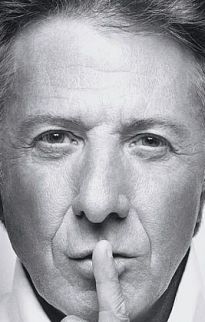 “It’s not intellectual. You’re mostly aware of what you don’t like. Henry Moore said something like that. You keep chipping away at what isn’t an elephant. And Miles Davis said: ‘Don’t play what’s there, play what’s not there’ — I’ve put it on my wall. We think the conscious is the determining factor, and actually it’s the least reliable instrument. The knowing is the infringement. You find what is exposed.”
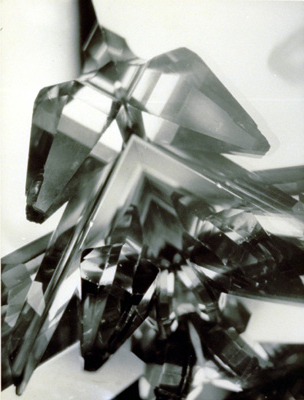
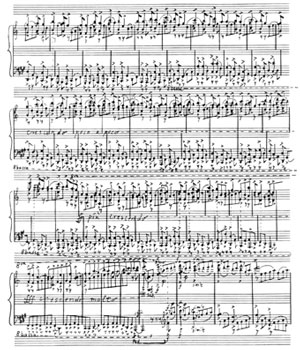
Ligeti wrote: I lay my ten fingers on the keyboard and imagine music. My fingers copy this mental image as I press the keys, but this copy is very inexact: a feedback emerges between ideas and tactile/motor execution. This feedback loop repeats itself many times, enriched by provisional sketches: a mill wheel turns between my inner ear, my fingers and the marks on the paper. The result sounds completely different from my intial conceptions: the anatomical reality of my hands and the configuration of the piano keyboard have transformed my imaginary constructs.
http://www.youtube.com/watch?v=JPa4XAhSYhE&safety_mode=true&persist_safety_mode=1&safe=active

Ligeti said: “The music from the ‘Sonata form’ tradition, the big symphonic enterprises: all of this belongs to the German tradition, which was the strongest tradition in the 19th century. But even then, Paris was a cultural capital. Of course, Debussy had undertaken a decisive revolution in the beginning of the 20th century. But jazz arrived (and, before it, ragtime, Scott Joplin) and imposed a combination of influences – it is not African, nor Irish nor French, not even American – it’s everything all together, the first musical expression to be multicultural. Shortly after there is a popular dimension in jazz, notably with Armstrong. I find this very interesting because it is spontaneously creative, distant to today’s commercial phenomenons that are designing popular culture. At the turn of the 30’s, jazz was a unique and spontaneous explosion, the most beautiful stylistic expression of the century. I don’t know if it is still possible that an art of this importance can continue to develop because marketing now instantly grabs new musical forms from the street.”
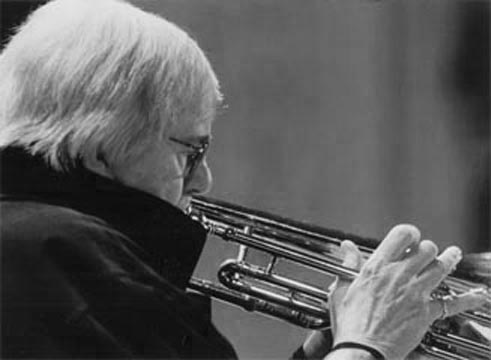
“If you give a soloist an open solo for thirty seconds, he plays like he’s coming from the piece that you wrote. Then he says, ‘What the hell was that piece I was playing from?’ And the next thirty seconds is, ‘Oh, I guess I’ll play what I learned last night.’ And bang! Minute Two is whoever he likes. Which is probably Coltrane.”
 Which of the following statements by Torbjorn Rodland apply to your current work?
The muteness of a photograph matters as much as its ability to speak.
The juxtaposition of photographs matters as much as the muteness of each.
All photography flattens. Objectification is inescapable.
Photography cannot secure the integrity of its subject any more than it can satisfy the need to touch or taste.
Good ideas are easily bungled.
Banal ideas can be rescued by personal investment and beautiful execution.
Lacking an appealing surface, a photograph should depict surfaces appealingly.
A photograph that refuses to market anything but its own complexities is perverse. Perversion is bliss.
A backlit object is a pregnant object.
To disregard symbols is to disregard a part of human perception.
Photography may employ tools and characteristics of reportage without being reportage.
The only photojournalistic images that remain interesting are the ones that produce or evoke myths.
A photographer in doubt will get better results than a photographer caught up in the freedom of irony.
The aestheticizing eye is a distant eye. The melancholic eye is a distant eye. The ironic eye is a distant eye.
One challenge in photography is to outdistance distance. Immersion is key.
Irony may be applied in homeopathic doses.
A lyrical photograph should be aware of its absurdity. Lyricism grows from awareness.
For the photographer, everyone and everything is a model, including the photograph itself.
The photography characterized by these sentences is informed by conceptual art.
The photography characterized by these sentences is not conceptual photography.
“The best part of us is not what we see, it’s what we feel. We are what we feel. We are not what we look at. We’re not our eyeballs, we’re our mind. People believe their eyeballs and they’re totally wrong. That’s why I consider most photographs extremely boring, just like Muzak, inoffensive, charming, another waterfall, another sunset. This time, colors have been added to protect the innocent. It’s just boring. But that whole arena of one’s experience, grief, loneliness, how do you photograph lust? I mean, how do you deal with these things? This is what you are, not what you see. It’s all sitting up here. I could do all my work sitting in my room. I don’t have to go anywhere.”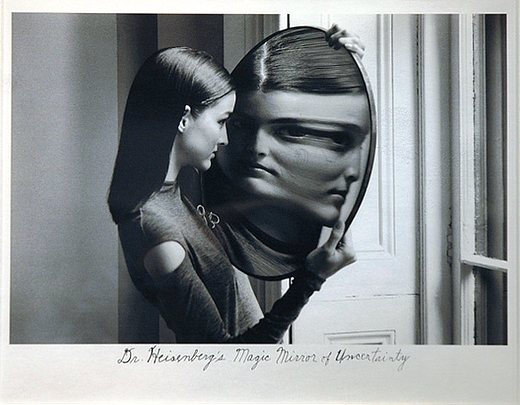
 Creative Camerawork