“One of the things that is at the root of our problems as a species is the ego.
“With the ego, then there’s fear.”
“One of the things that is at the root of our problems as a species is the ego.
“With the ego, then there’s fear.”
“A skillful photographer can photograph anything well.”
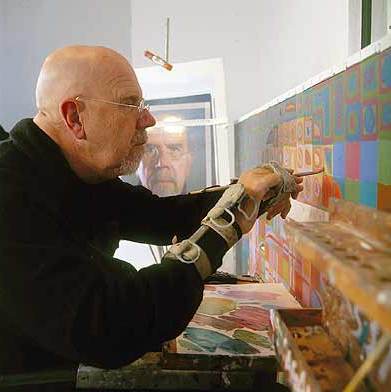
Chuck Close copes with his prosopagnosia (inability to recognize faces), and sits for an interview that cannot easily be reduced to a Words o’ Wisdom post, here:
Q. What qualities must an artist bring to her work regardless of the era, medium or technology?
“I would just say one word—openness. And you could also say awareness. That’s what I treasure in other people’s work—when they create something that makes you go, “Whoa, I never saw that.” In a way, what artists really do is extend your senses and your awareness of things. For me, the making of stuff—the creation of artworks—is not really to the point. The point is to experience things more intensely. I hear people commenting that culture is dying, but it’s not true. People are making lots of fantastic things. You don’t know about it, that’s all. It’s really hard to squash artists. They keep appearing and making things.”
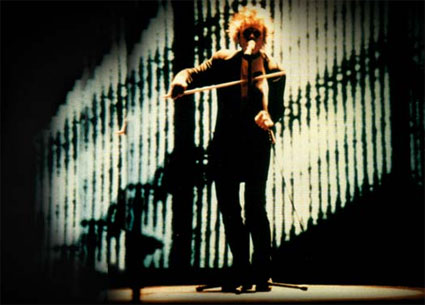
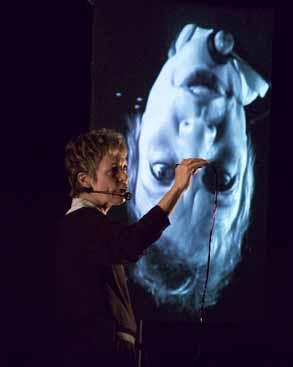
“I’m not on Facebook. I’m a miniaturist and a confessional writer, so it seems like it would be a natural form for me. I also like that the writing is meant to be conversational. But I like to work on things six different ways before I put them in a public situation, and the immediacy of the Web is not conducive to that. I also find it tyrannical. I’m not sure yet whether it encourages people to be more creative or to mold themselves more carefully to fit into the clean design of Facebook.”
http://www.smithsonianmag.com/arts-culture/Laurie-Anderson-on-the-Sounds-of-the-Future.html
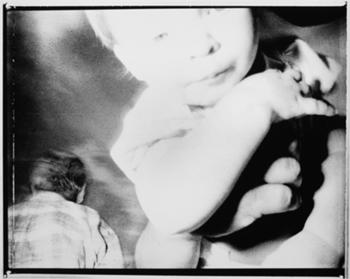
“Chance extends the boundaries of my imagination. I try to set up a framework to allow this to happen: I choose where I stand; I determine the tonalities; I select the forms; I look for the right light. Then I give chance a little room to perform for me.”
“We are artists
in order that our children can be educators
and our grandchildren presidents.”
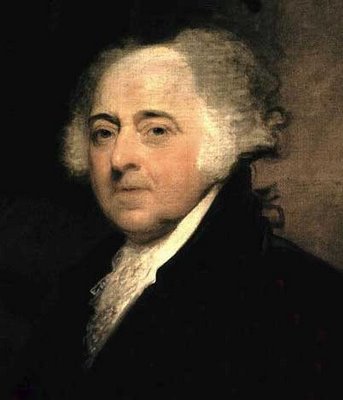
Discuss.
(Actually, it’s a paraphrase; I’ll get back to you on that.)
Mr. Bey, a professor of Photography at Columbia College in Chicago, spoke Yale (his alma mater) commencement ceremonies.
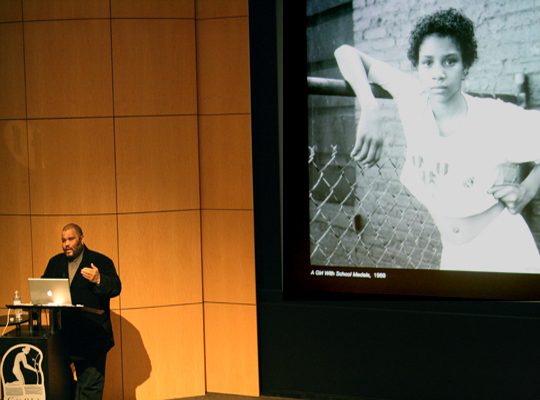
Photograph by Ashley Teplin
Here are some pertinent excerpts from his address:
“Making art has never been—as far as I know—the safest or easiest career choice. It’s one thing to do this when you are very young without any real responsibilities to shoulder and another make a serious commitment to this as a vocation rather than an avocation. So it should go without saying that making art is a real act of faith. And your faith is about to be seriously tested once you leave here. Now I have not come here today to make you any more nervous about your possible futures than you might already be. Rather I want to encourage you to believe that your work not only should continue, but that it is imperative and that it needs to exist in the world. You each need to continue to believe that your work matters and that through your work you have the ability to change and reshape the world one person or one viewer at a time and to continue to expand your own sense of who you are in the process.
“In the past we in the art community have sometimes paid a heavy price for ignoring [the] larger world and living inside of an insulated aesthetic bubble that excluded the larger social community… I am not asking you to be a social worker, but to consider what it means to be an artist in the fullest sense and how your presence in those communities can be part of a meaningful and necessary dialogue that can both enliven the civic conversation and provide opportunities for your work to embed itself in the social fabric… Contrary to what some might think, no one gets there–wherever “there” is–on their own. There is no lone genius who makes a solitary breakthrough without a supportive, and sometimes challenging, community of peers with whom to engage in an ongoing critical conversation. Each of you has that opportunity to encourage and to sustain each other; embrace it. There is room for more than one person at a time at the table of opportunity. Think about what you can do to build and sustain community with each other where you are. It is going to be an increasing necessity, one that you should welcome.”
“I guess I’m the only survivor of my age of the school of non-commercial and extremely self-virtuous young artists that I was when I was your age. We wouldn’t do anything we were asked to do, and we fought around it. Of course that kills most people. For some reason or other it didn’t kill me. And I feel that since I’ve progressed rather slowly, I still have a long career ahead of me.
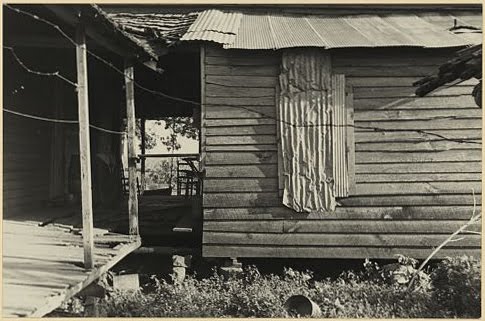
“Part of a photographer’s gift should be with people. You can do some wonderful work if you know how to make people understand what you’re doing and feel all right about it, and you can do terrible work if you put them on the defense, which they all are at the beginning. You’ve got to take them off their defensive attitude and make them participate.
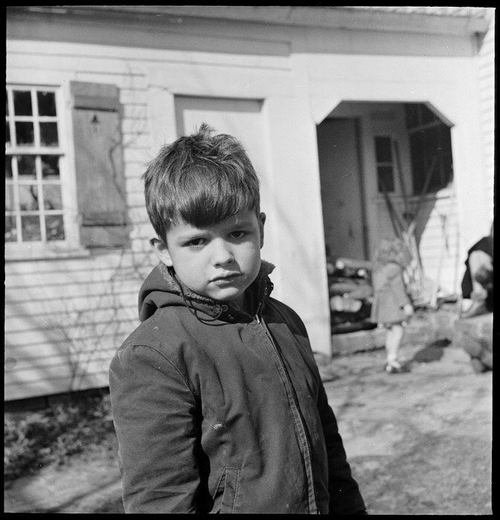
“If you’re going to start to do something you’re going to have setbacks bringing it to fruition. Any venture is a rocky road. Your education is, too.
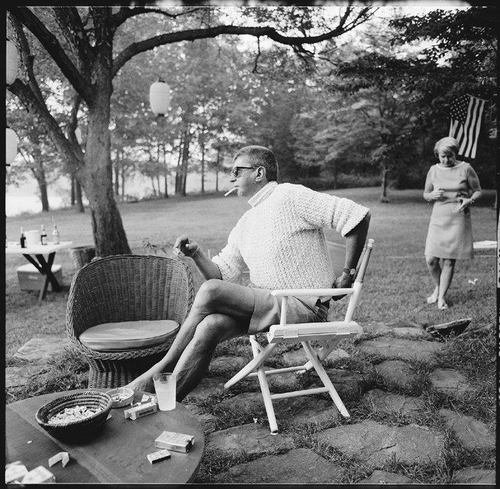
“I knew a whole lot of things—I can see now in retrospect—instinctively and unconsciously, and that goes along with a theory of mine: that almost all good artists are being worked through with forces that they’re not quite aware of. They are transmitters of sensitivities that they’re not aware of having, of forces that are in the air at the time. I’ve done a lot of things that I’m surprised at now which show a lot of knowledge that I didn’t have or knew I had. I can now learn something from my own pictures.
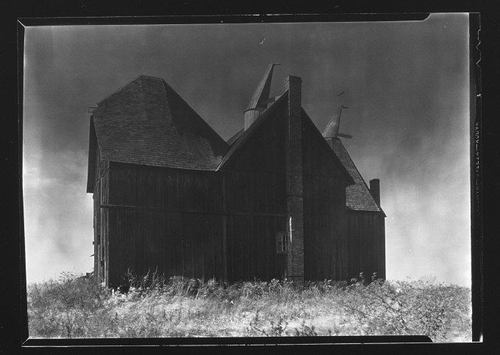
“Privilege, if you’re very strict, is an immoral and unjust thing to have, but if you’ve got it you didn’t choose to get it and you might as well use it… you know you’re under an obligation to repay what’s been put into you.
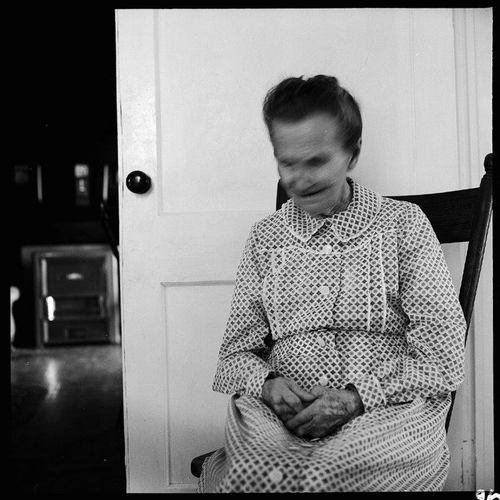
“When I first made photographs, they were too plain to be considered art and I wasn’t considered an artist. I didn’t get any attention at all. The people who looked at my work thought, well, that’s just a snapshot of the backyard. Privately I knew otherwise and through stubbornness stayed with it.
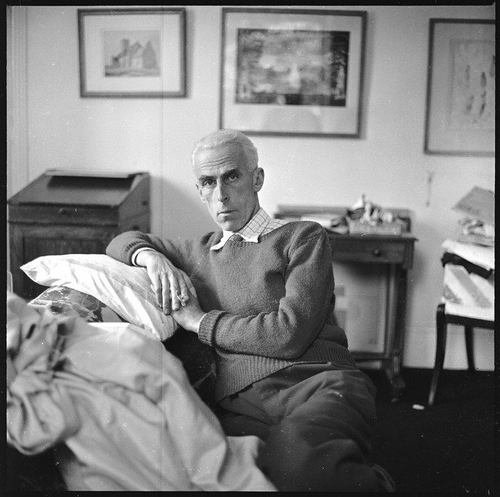
“When you take pictures some kind of change occurs. There’s something different between your photographs and if you went to that place and looked at it with the naked eye, and I was wondering—you must have reflected on this, just haven taken all those photographs—what effect your mind has when you make the conscious decision to push the button.

“I got a lot of my early momentum from disdain of accepted ideas of beauty, and that’s partly good, it’s partly original. It’s also partly destructive. I wasn’t a very nice young man. I was tearing down everything if possible. I only see that in retrospect. It was just in me, as there are certain curious things in you that you’ll wonder at, later on when you’re my age, but you won’t ever get to the bottom of.
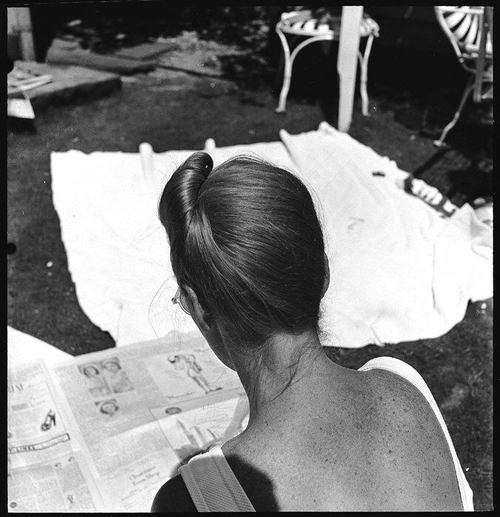
“I’m rather suspicious of hanging a picture in a gallery. I cut out remarkable pictures from the daily press all the time.
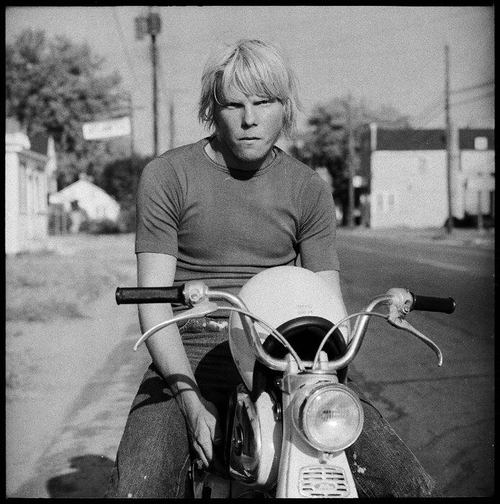
“I happen to be a gray man; I’m not a black-and-white man. I think gray is truer. You find that in other fields. E. M. Forster’s prose is gray and it’s marvelous.
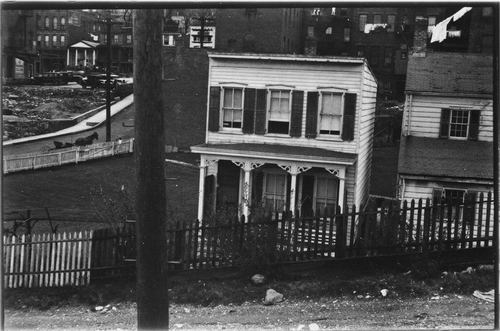
“Art can’t be taught, but it can be stimulated and a few barriers can be kicked down by a talented teacher, and an atmosphere can be created which is an opening into artistic action. But the thing itself is such a secret and so unapproachable.”
 Creative Camerawork
