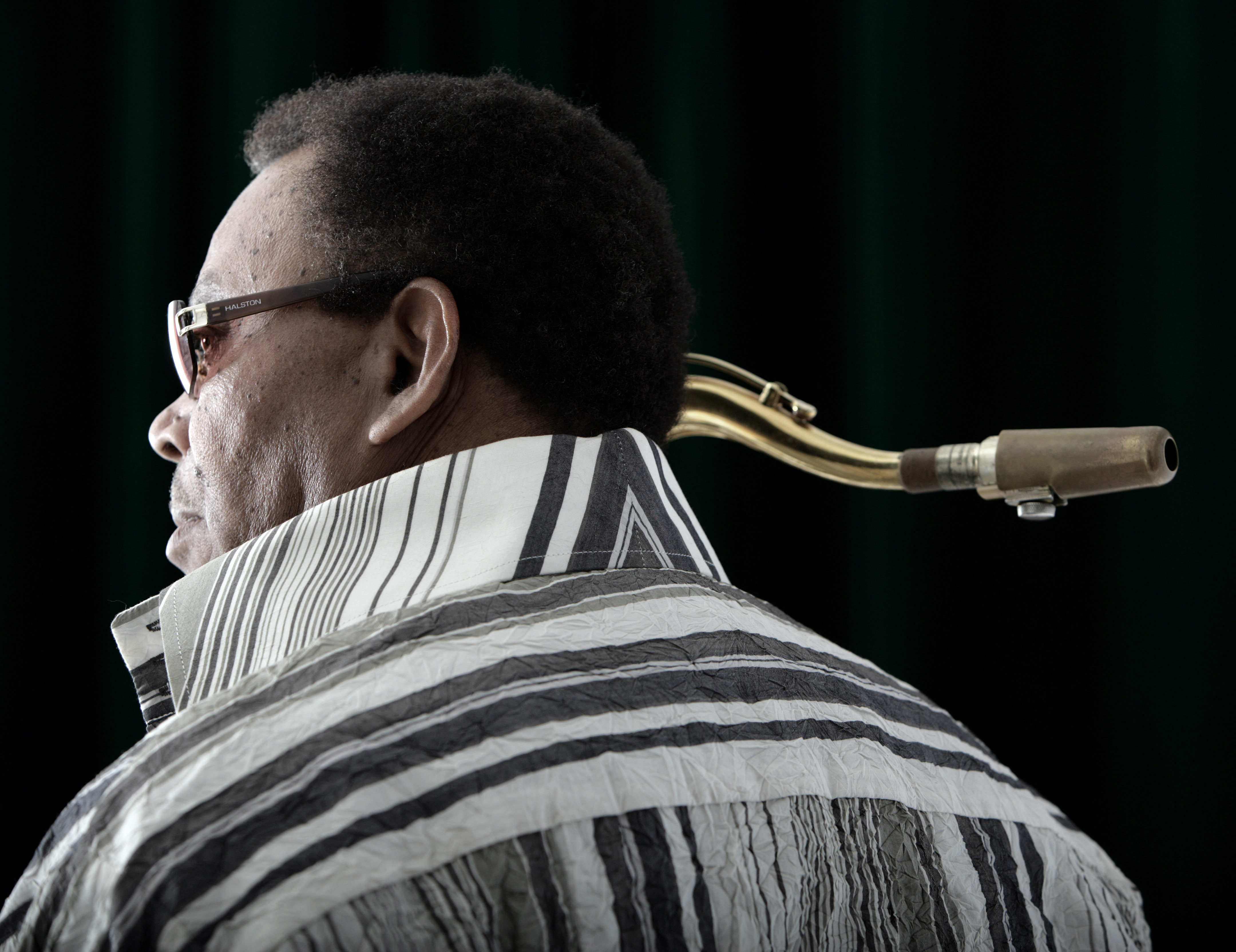
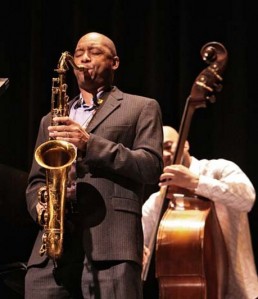
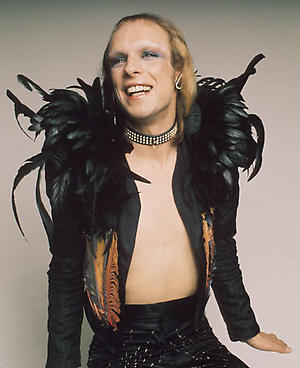
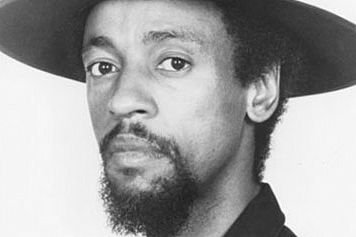
W. o’ W.: Odean Pope

“Every time I pick that horn up there’s always something that I discover I can do differently if I really seek.

“If you were on planet Earth for, like, 2 billion years, I feel as though there’s always something new that you can find to do. There’s no end.”

http://www.youtube.com/watch?v=O9lwR8gTktY&safety_mode=true&persist_safety_mode=1

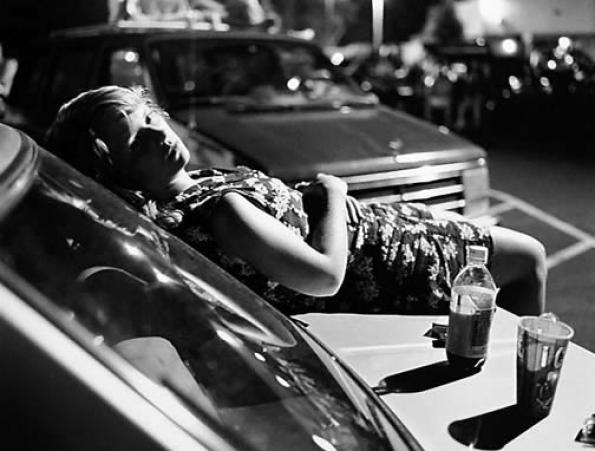
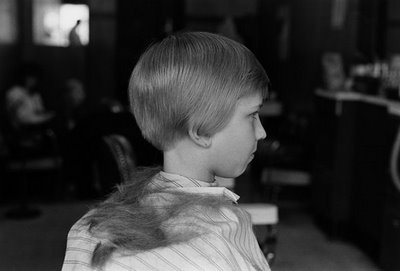
What Robert Frank Thinks

Ann Satterfield: What do you think talent is?

Robert Frank: What is talent? Luck! Talent is not enough. That’s what I think.

Satterfield: Is that all you have to say about it, that it’s luck? You said it’s important for artists to have. You mentioned some other things…

Frank: Talent is not enough in the sense that, if you really are an artist, you are obsessed completely. You are possessed by it. It’s not talent. It’s your life. I have met very few people who had that, very few.

Satterfield: So it’s a strong feeling of wanting to say something? Or, feeling very strongly about wanting to say something; or feeling very strongly about certain aspects of life?

Frank: It’s more in getting it out. Yes, in you is something that’s continuously coming up, coming out of your mouth, out of your ears. It comes out. It has to come out. Not because you just want to make a film. It’s a matter of being alive. I don’t think I’m that kind of person. As I said, I’ve met very few. It’s really a totally obsessive quality that can’t be stopped. So it’s different than talent. People with talent work in television.

Is the creative act of writing different from the creative act of photographing?

 “Photography is a foreign language that everybody thinks they know how to speak.” -Philip-Lorca Dicorcia

“What exactly is it that makes the work of a… photographer so much harder given that everybody else also takes photographs? Why do we never hear this kind of complaint from writers? After all, we are also all writers now, the only difference being that the changes in education that made this possible date back a bit further. But you never get to hear writers complaining about how hard it is to write a novel or a non-fiction book given that everybody else can write.”

http://conscientious.tumblr.com/post/1447220689/just-a-thought

W. o’ W.: Gene Lees

From “Meet Me at Jim & Andy’s: Jazz Musicians and Their World:”

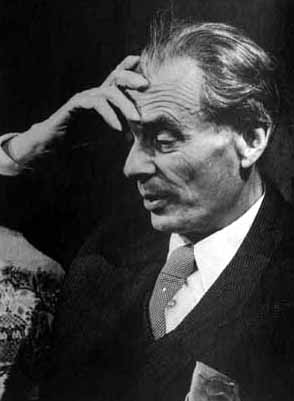
“Aldous Huxley said that art is created in a state of relaxed tension. You must be relaxed enough to let the dreams flow, alert enough to know what to do with them, grab them out of the incorporeal air as they rush by and turn them into something that others can perceive and be moved by… Making jazz is a very naked thing to do.

“That anyone can do anything at all but stand there in paralyzed amazement when the chord changes are going by, that musicians can function with minimal premeditation and great creativity within the materials of a song’s structure, is more remakable than even the most expert practitioners themselves seem to appreciate. It requires both tremendous knowledge, whether intuitive or acquired, and the physical reflexes of an athlete. Jazz is not only one of the most remarkable achievements in the history of music, it is one of the most striking achievements in the history of human thought.”

http://www.youtube.com/watch?v=CPEgesK0KKQ

W. o’ W.: Dave Hickey

“The presumption of art’s essential ‘goodness’ is nothing more than a political fiction that we employ to solicit taxpayers’ money for public art education, and for the public housing of works of art that we love so well their existence is inseparable from the texture of the world in which we live. These are worthy and indispensable projects. No society with even half a heart would even think to ignore them. But the presumption of art’s essential ‘goodness’ is a conventional trope. It describes nothing. Art education is not redeeming for the vast majority of students, nor is art practice redeeming for the vast majority of artists. The ‘good’ works of art that reside in our museums reside there not because they are ‘good,’ but because we love them. The political fiction of art’s virtue means only this: the practice and exhibition of art has had beneficial public consequence in the past. It might in the future. So funding them is worth the bet. That’s the argument: art is good, sort of, in a vague, general way. Seducing oneself into believing in art’s intrinsic ‘goodness,’ however, is simply bad religion, no matter what the rewards. It is bad cult religion when professing one’s belief in art’s ‘goodness’ becomes a condition of membership in the art community.”

W. o’ W.: Adonis (Ali Ahmad Said Esber)

“Poetry cannot change society. Poetry can only change the notion of relationships between things. Culture cannot change without a change in institutions.”

“Poetry that reaches all the people is essentially superficial. Real poetry requires effort because it requires the reader to become, like the poet, a creator. Reading is not reception. I suggest you change your relationship to poetry and art in general.”

W. o’ W.: Mark Steinmetz


“MoMA’s series on Atget and Lee Friedlander’s ‘Factory Valleys’ are wonderfully printed books which demonstrate how richly b/w can describe weather, season, light, and time of day. Perhaps it’s because color is withheld that you have to activate some sort of  poetic imagination in order to read the work. I can feel the effect of sun hitting skin more palpably in Tod Papageorge’s silvery Central Park pictures than in any color picture of someone basking in the sun. There is something excitingly difficult and complex and intellectual in Garry Winogrand’s ‘Public Relations’ (1977) and I’ve yet to see any similar situation in color as tough-minded. Winogrand doesn’t seem to be in a hurry to please anybody.”

“I want to show something of people’s inner lives. I think for portraiture you have to be completely certain that you are interested in photographing this or that person. You can’t be wishy-washy in your motivation. You just have to know that you want to photograph this person and it’s a kind of knowing that eradicates any asking of ‘why?’ My approach is fairly low-key. I don’t want to make waves. I’ll just ask something like ‘Can I photograph you as you are?’ Sometimes I’ll give a little direction like ‘look over that way’ but it’s never elaborate. Having an ability to focus and concentrate is necessary for making good portraits.”

You can read the entire interview whence this is excerpted at http://jmcolberg.com/weblog/extended/archives/a_conversation_with_mark_steinmetz/

W. o’ W.: Steve Albini

“For the same reason that having a radio didn’t mean that you wouldn’t also have a record collection, having the Internet available doesn’t mean that you won’t also have a record collection. The scale of things has changed dramatically. The one thing that has survived intact has been vinyl record sales. There are vinyl reissue labels and labels that now do better business with their vinyl releases than they do with CD releases. Obviously the primary mode of music is going to be electronic, but people still want to have permanent evidence of their appreciation of a band. Hi-fi shops are doing great business selling record players. I don’t see the vinyl record disappearing in my lifetime.”

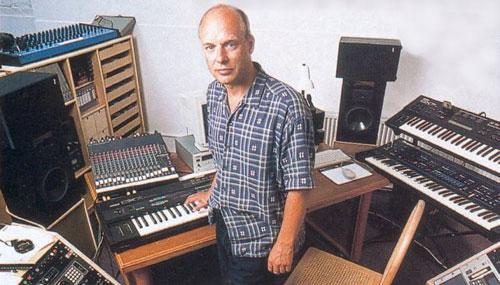
W. o’ W.: Brian Eno

“The trouble begins with a design philosophy that equates ‘more options’ with ‘greater freedom.’ Designers struggle endlessly with a problem that is almost nonexistent for users: ‘How do we pack the maximum number of options into the minimum space and price?’ In my experience, the instruments and tools that endure (because they are loved by their users) have limited options.

“When you use familiar tools, you draw upon a long cultural conversation – a whole shared history of usage – as your backdrop, as the canvas to juxtapose your work. The deeper and more widely shared the conversation, the more subtle its inflections can be. This is the revenge of traditional media. Even the ‘weaknesses’ or the limits of these tools become part of the vocabulary of culture. I’m thinking of such stuff as Marshall guitar amps and black-and-white film – what was once thought most undesirable about these tools became their cherished trademark.

“Although designers continue to dream of ‘transparency’ – technologies that just do their job without making their presence felt – both creators and audiences actually like technologies with ‘personality.’ A personality is something with which you can have a relationship. Which is why people return to pencils, violins, and the same three guitar chords.”

Read the entire piece here: http://www.wired.com/wired/archive/7.01/eno.html

W. o’ W.: Henry Threadgill

“I had a guy in my house the other day who was helping me work on my papers and stuff, organizing a whole bunch of stuff—I got so much stuff—and I had… a record of Miles in Chicago at the Plugged Nickel. He said, ‘Were you there?’ I said, ‘Of course, I was there. Where else would I have been?’ Younger players now, they don’t be at anything. They don’t be at anything! They say, ‘I can’t afford this; I can’t afford that.’ These people have 500 times more money than we ever had [Laughs]. It’s amazing. ‘Oh, I can’t afford this CD—I’ll just take it and replicate it, download it, take it and copy somebody’s copy of it. I can’t afford that. I can’t spend $55 to go see so and so.’ Why not? Who would you spend $55 to go see? You mean to say, if the Balinese company orchestra was here in front of you, or the kabuki theater was here in front of you, or Charlie Parker and strings were here in front of you, you wouldn’t spend $55? If Horowitz got up to play, if Monk got up, you wouldn’t spend $100? You’re a damn fool—that’s what you are. That’s like, here’s a guy wants to be a scientist, and it’s a $50 lecture to get in and it’s Einstein, and you’re not gonna pay $50? What are you, stupid? What’s wrong with you? What is it that you don’t understand here? Did you miss something about one and one is two? [Laughs] Shit, you better get yourself out there and sell some hot dogs or something to get the money, or you better climb through the window. You gotta be an idiot.
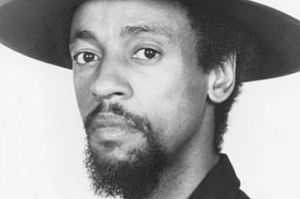

“This guy asked me, he said, ‘You made a night?’ ‘A night? What you talking about, a night?’ He asked me about Sonny Rollins, when Sonny Rollins was coming out of the street, and coming up and down into the club playing, and this kid said, ‘Did you hear about it?’ And I said, ‘No, I didn’t hear about it—I was there! What you mean ‘hear about it’?’ Coltrane concerts, he said, ‘You probably too young. ‘Too young?’ I said. ‘What, 16? I was there! What are you talking about? Till 4 o’clock in the morning.’ I went to see Rubenstein; I used to sit up under all the great conductors in Chicago. You can’t learn things about music looking at hillbilly music or somebody playing just jazz. You got to look at music… the world is too big.

  • Calendar

    • January 2026
      S M T W T F S
       123
      45678910
      11121314151617
      18192021222324
      25262728293031
  • Search