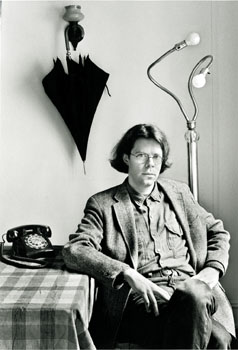
Advice from Wendell Berry

“How to Be a Poet” by Wendell Berry        (to remind myself)

I

Make a place to sit down.
Sit down. Be quiet.
You must depend upon
affection, reading, knowledge,
skill—more of each
than you have—inspiration,
work, growing older, patience,
for patience joins time
to eternity. Any readers
who like your poems,
doubt their judgment.

ii

Breathe with unconditional breath
the unconditioned air.
Shun electric wire.
Communicate slowly. Live
a three-dimensioned life;
stay away from screens.
Stay away from anything
that obscures the place it is in.
There are no unsacred places;
there are only sacred places
and desecrated places.

iii

Accept what comes from silence.
Make the best you can of it.
Of the little words that come
out of the silence, like prayers
prayed back to the one who prays,
make a poem that does not disturb
the silence from which it came.

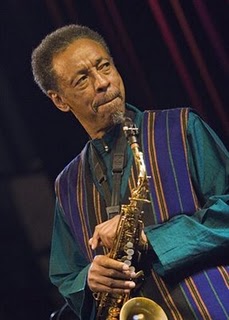
Mr. Threadgill on Continuity

“You know, you don’t play for one week, your wife or your girlfriend knows; two weeks and you know; three weeks and everybody knows.

“I have friends who can do both. I can’t do both. I have to do one at a time. I write, and then I go to my instruments. I can’t keep up with the instruments if the writing becomes too demanding.

“I figured out a long time ago that going back for me is always a mistake . I mean on every level: personal life, everything – going backward does not work for me, it’s destructive.  All of my mistakes have been made going backwards.”

These are excerpts from a huge interview by Ethan Iverson. Dig it all at http://dothemath.typepad.com/dtm/interview-with-henry-threadgill-1-.html

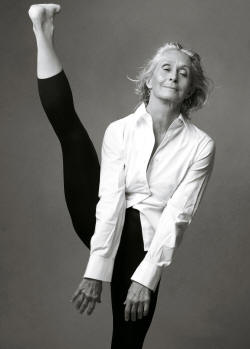
Twyla

I’ll say this once: acquire this book. It’s difficult to select a short & coherent portion to excerpt for our purposes here, but this’ll suffice:

“When I walk into the white room I am alone, but I am alone with my:

body

ambition

ideas

passions

needs

memories

goals

prejudices

distractions

fears.

The last two—distractions and fears—are the dangerous ones… Let me tell you my five big fears:

  1. People will laugh at me.
  2. Someone has done it before.
  3. I have nothing to say.
  4. I will upset someone I love.
  5. Once, executed, the idea will never be as good as it is in my mind.”

W. o’ W.: Ira Glass

Every PhotoDevoto/composermusician/writer/chef/dancer/architect/et alii should make a needlepoint sampler of this text.

“Nobody tells this to people who are beginners. I wish someone had told me. All of us who do creative work, we get into it because we have good taste. But there is this gap. For the first couple years you make stuff, it’s just not that good. It’s trying to be good, it has potential, but it’s not. But your taste, the thing that got you into the game, is still killer. And your taste is why your work disappoints you. A lot of people never get past this phase; they quit. Most people who do interesting, creative work went through years of this. We know our work doesn’t have this special thing that we want it to have. We all go through this. And if you are just starting out or you are still in this phase, you gotta know that it’s normal and the most important thing you can do is do a lot of work. Put yourself on a deadline so that every week you finish one piece. It’s only by going through a volume of work that you will close that gap, and your work will be as good as your ambitions. And I took longer to figure out how to do this than anyone I’ve ever met. It’s gonna take a while. It’s normal to take a while. You just gotta fight your way through.”

Source: http://artistmotherteacher.com/index.php/2011/05/nobody-tells-this-to-beginners/

Thanks, H.

W. o’ W.: Jean Renoir

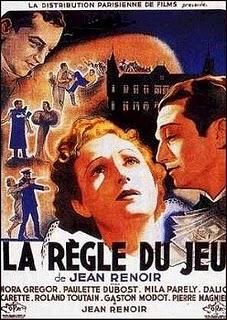
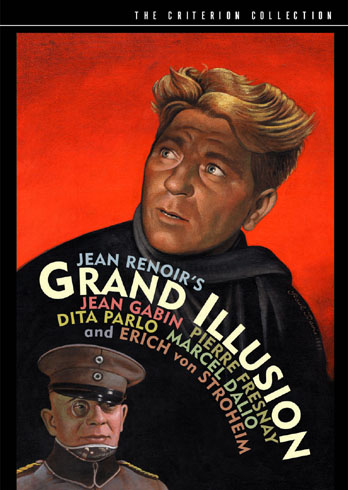
“To the question ‘Is cinema an art?’ my answer is, ‘What does it matter?’ You can make films or you can cultivate a garden. Both have as much claim to be called art as a poem by Verlaine or a painting by Delacroix. If your film or your garden is a good one it means that as a practitioner of cinema or gardening you are entitled to consider yourself an artist. The pastry-cook who makes a good cake is an artist. The ploughman with an old-fashioned plough creates a work of art when he ploughs a furrow. Art is not a calling in itself but the way in which one exercises a calling, and also the way in which one performs any human activity. I will give you my definition of art: art is ‘making’. The art of poetry is the art of making poetry. The art of love is the art of making love.”

Best Weblog Disclaimer Ever

“Please note: The work on this blog is not the original work. It is being shown out of context and denuded of content.

To see the work as it should be seen, buy the book, magazine, visit a gallery, go to the appropriate website or watch the film.

Do not mistake your computer experience for anything other than the little that it is.”

Thank you, Colin Pantall.

http://colinpantall.blogspot.com/

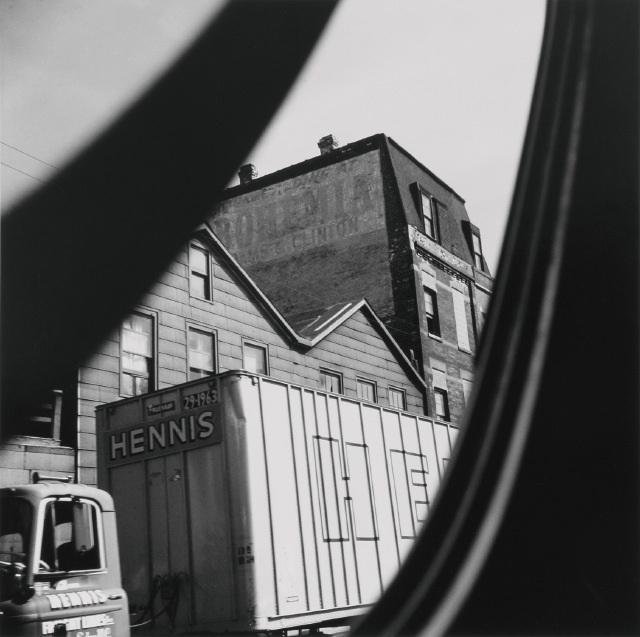
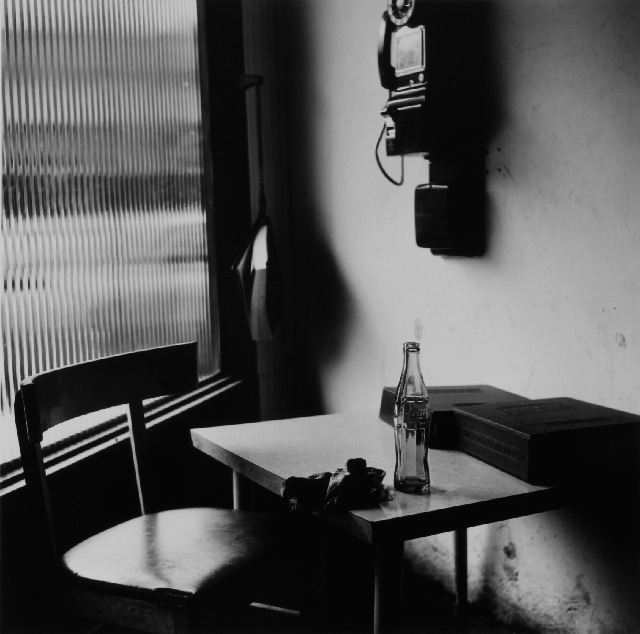
W. o’ W.: William Gedney

W. o’ W.: Rosanne Cash

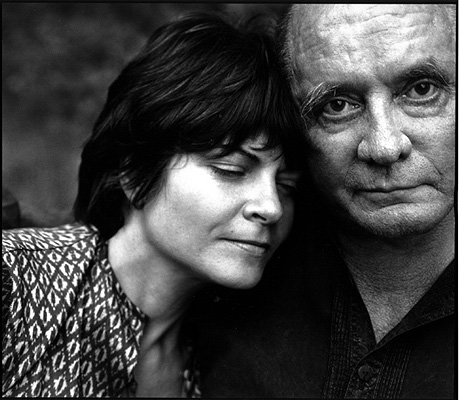
The College Board has no criteria for elements that are anything but effable. Ms. Cash’s father (Johnny Cash) told her “that your style is a function of your limitations more so than a function of your skills. Some things you can break down, and some things are ineffable. Some things are just part of that mystery where all creative energy comes from. It’s part of the soul. Music is an ever-moving blob of mercury.”

(From the NYT http://www.nytimes.com/2011/04/19/science/19brain.html?scp=6&sq=paul%20simon&st=cse).

W. o’ W.: Brian Miller

“People like Bruce Wrighton and Vivian Maier give me great hope that after I’m dead my work will be lauded during a couple of moments of boredom. Milton Rogovin declared, “The rich have their own photographers.” Photographs like these prove, beyond a doubt, that the rest of us just need to walk outside and start photographing. Something. Anything. Someone. Anybody. Just go and do it now. You will be lauded.”

Useful Rules for “Writing”

Elmore Leonard produced 10 rules for writing (fiction), and the Guardian then asked many other writers for their personal guidelines. You could look it up. It’s a long article, and all of it is worth reading. Here are a few choice excerpts; substitute “photograph” for “write” wherever bracketed (and “study pictures” for “read”), and the entire enterprise translates fairly well.

Geoff Dyer: “Keep a diary. The biggest regret of my writing life is that I have never kept a journal or a diary. Beware of clichés. There are clichés of response as well as expression. There are clichés of observation and of thought – even of conception.”

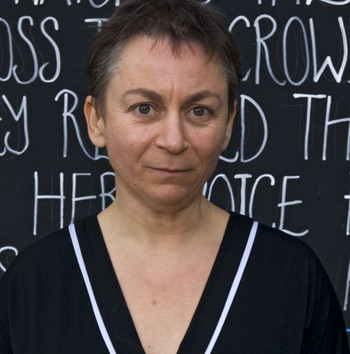
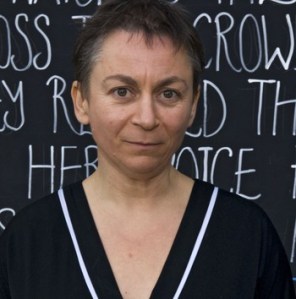
Anne Enright: “Only bad [writers] think that their work is really good.”
Richard Ford: “Marry somebody you love and who thinks you being a [writer] is a good idea. Don’t have children. Don’t have arguments with your wife in the morning, or late at night. Don’t drink and [write] at the same time. Don’t wish ill on your colleagues. Try to think of others’ good luck as encouragement to yourself. Don’t take any shit if you can ­possibly help it.”

Jonathan Franzen: “You see more sitting still than chasing after.”
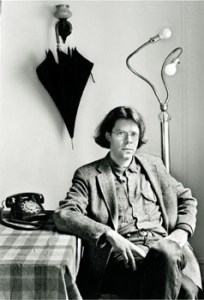
David Hare: “Never complain of being misunderstood. You can choose to be understood, or you can choose not to.”

P.D. James: “[Read] widely and with discrimination. Bad [writing] is contagious.”

Michael Morpurgo: “The prerequisite for me is to keep my well of ideas full. This means living as full and varied a life as possible, to have my antennae out all the time.”

Andrew Motion: “Honour the miraculousness of the ordinary. Think big and stay particular.”

Helen Simpson: “The nearest I have to a rule is a Post-it on the wall in front of my desk saying “Faire et se taire” (Flaubert), which I translate for myself as ‘Shut up and get on with it.'”

Zadie Smith: “Protect the time and space in which you [write]. Keep everybody away from it, even the people who are most important to you.”

Colm Tóibín: “Get on with it. Stay in your mental pyjamas all day. Stop feeling sorry for yourself. No alcohol, sex or drugs while you are working.”

Jeanette Winterson: “Turn up for work. Discipline allows creative freedom. No discipline equals no freedom. Be ambitious for the work and not for the reward.”