Until I begin a career on youtube, this will suffice as the clearest explanation of how to load roll film:
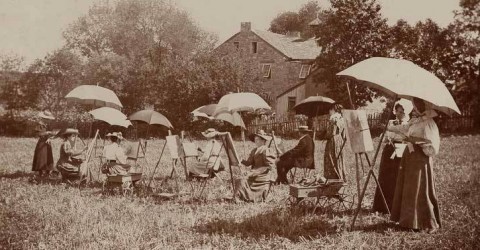

The Ann Arbor Area Crappy Camera Club
” The Ann Arbor Area Crappy Camera Club is a democratically based group of photographers who share some common interests. They are all using silver halide photography to make images. This means using film to express their various views of the world. The crappy camera moniker refers to cameras that to others may seem outmoded or obsolete. Devices such as old box cameras, toy cameras, Polaroid cameras, pinhole and zone plate cameras are a few examples.
“Many are into alternative processes such as cross-processing film, various printing methods like lith printing, salt printing and others which can be discovered and rediscovered. Some really enjoy using outdated film and paper just to see what whacked images they can get out of them. It’s always a surprise. These people get a thrill out of this kind of thing.”
A Manifesto
At this moment in history, the technical aspects of photography are receiving unprecedented attention. New cameras of amazing sophistication are breathlessly analyzed by photo magazines and websites. Photographers are draining their bank accounts attempting to keep up with equipment purchases.
But a few photographers are reacting against this conspicuous consumption and rampant technophilia.
The essence of photography – to place a particular frame around the world at a particular moment – remains unchanged. So some choose to pursue this act in the rawest possible way: by using the most obsolete, flawed, and low-tech cameras available. Most were created as economy snapshot cameras, some even as toys. Many are decades old. All share very limited controls, and optics of questionable quality; sometimes a mere pinhole.
The toy-camera aesthetic turns its back on sterile technical perfection. Instead it celebrates the
messy unpredictability and dreamlike imagery that only a truly rotten camera can provide.
“B” on cameras & film
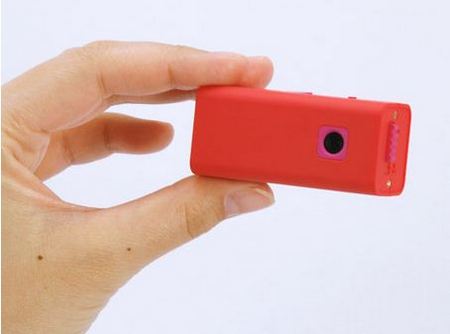
“…how do the tactile aspects of a camera affect the pictures you make with it? For me that is the big hump with digital. I hate the chintzy plastic feel of new cameras. They don’t engage me. I’d rather look through a viewfinder than at an LCD screen. I enjoy dealing with film, unwrapping it like a present, spooling it, and winding the advance with my thumb. Like records and bicycles, film cameras may be old fashioned yet they feel real and unmediated and good. The result of all this, for me at least, is that I make different photos with a film camera than I do with a digital one.”
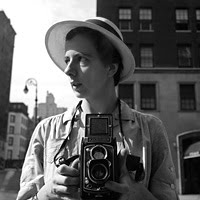
http://blakeandrews.blogspot.com/

Shopper’s alert. Repeat: alert.
From the Canadian distributor:
As a result of the unprecedented rise in the price of silver over the past year, the key raw material in Photographic film and paper, Harman Technology – Ilford and Kentmere branded products – have announced a significant price increase effective Feb. 1, 2011. The increase applies to all Silver Halide based products including Ilford and Kentmere black and white papers, films and Scientific products. Chemical and accessory items are not affected by this increase.
I believe it was Stieglitz who wrote (in reference to the growing popularity of hand cameras) “A word to the wise is sufficient.”
Distant Early Warning: New (No-Name) Paper from Ilford/Harman
An insider informs me that Ilford is working on producing a “Fine Art” paper, and it’s currently being tested by a handful of printers, which doesn’t include you or me. If the feedback is good, it may be made available sometime this spring; if not, further refinements may be necessary. The paper has no name yet (let’s call it “Emanon,” after John Lewis’s 1946 composition recorded by Dizzy Gillespie’s big band). It’s a finely textured, matt heavyweight art paper, 300 grams per square meter, not unlike good watercolor paper. It doesn’t look or feel like a typical silver gelatin paper; a slight curve and faint sheen are the only clues to the emulsion side. (You’ll pardon the lack of illustrations at this juncture.)
Exposure is a tad slower than Multigrade Warmtone (!), with a slightly warm emulsion on an off-white base. The surface texture accepts pencil (as did their Kentmere Art paper), and it dries reasonably flat. It responds well to sepia toning; however, there is little apparent response to direct selenium toner (a feature in common with Ilford Galerie graded paper). It sounds delightful for selected negatives, so start saving up now for your own first package.
Kodachrome
http://www.shorpy.com/image/tid/179
…and don’t forget Duane’s, in Kansas: 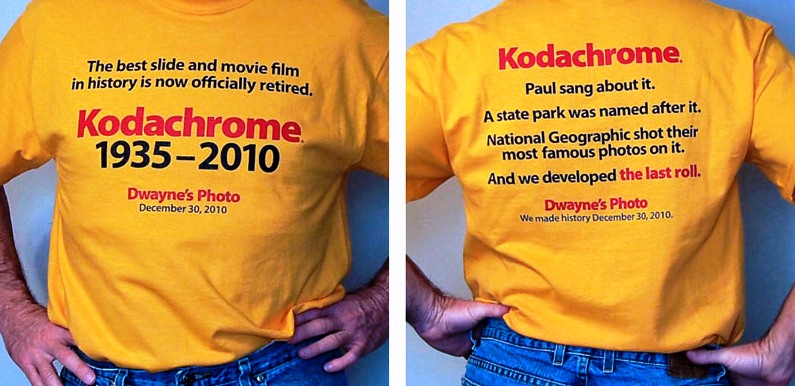
Despite that start date, the product was in development for a while before that: http://www.youtube.com/watch?v=J_RTnd3Smy8&feature=related
Photo Multi-Tasking
Here are a couple of uniquely customized cameras, each of which is capable of contemporaneous exposures.
Tokihiro Sato’s pinhole:
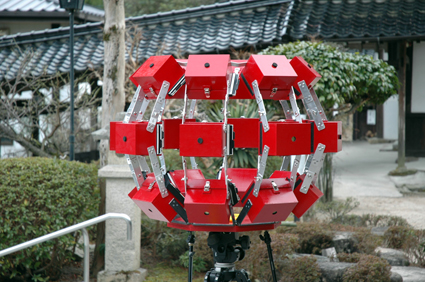
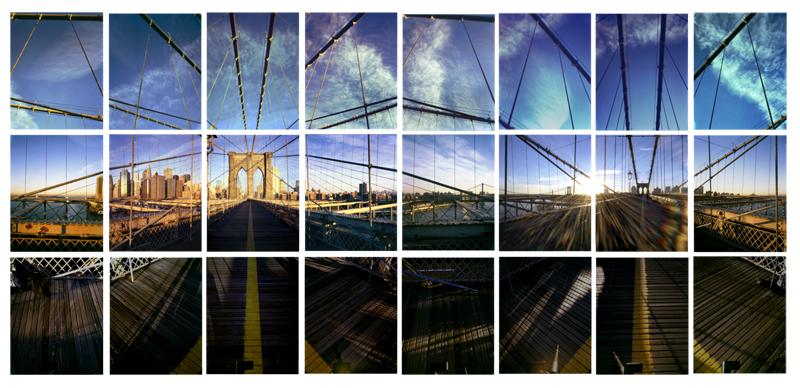
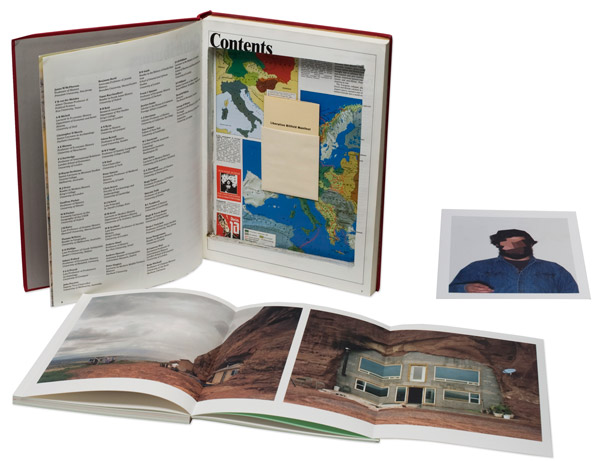
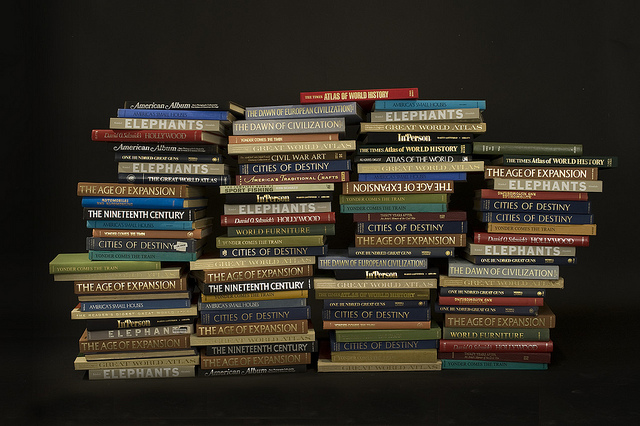
…and Eric Constantineau’s 11×14 collaging camera, named for Hannah Hoch (!):
http://www.flickr.com/photos/ericconstantineau/sets/72157623977433033/
Solarization
I thought I had posted this over a year ago. Apparently, I was mistaken.
Voila.
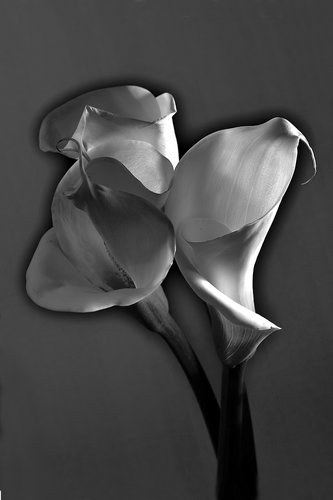 Solarization is a style of print exposure and development whose appearance is markedly different from “normal” photographic representation. Unlike such strategies as negative prints or the use of camera lens filters, the resulting print is a unique distortion of the tonal scale that does not appear to conform to that of the original scene.
For a successfully solarized print, try a negative that would normally print well with a #2 or #1 filter (dense/over-developed/a contrasty scene), and a #5 filter. The printing procedure that follows is a series of steps that approaches repeatability (although the process is notoriously difficult to control).
Each piece of photographic paper receives two exposures and is developed twice. An acid stop bath would inhibit the second development, so set up an extra tray of plain water for a rinse in between the developments.
(Does this help?)
Use full sheets of paper to make test “grids” rather than strips. Make exposures for, say, three-second increments at f 8. Develop, then rinse thoroughly for up to a minute; drain, squeegee and/or blot in some combination in order to remove all the water from the emulsion. (At this point some images may not show much at all for some of the exposures. Don’t worry: this may work in your favor when the process is finished.) Return the paper to the enlarger. (It is practical to place a sheet of contact printing glass on top of the easel to keep the damp paper from the easel and baseboard.) Make a second series of exposures without the negative (but still with the #5 filter) perpendicular to the first, for maybe two seconds each at f 16, then develop, stop and fix the paper normally.
Examine the grid of to find a combination of exposures you think will work for the image. Unlike traditional representational printing, there may be a wide spectrum of interesting choices.
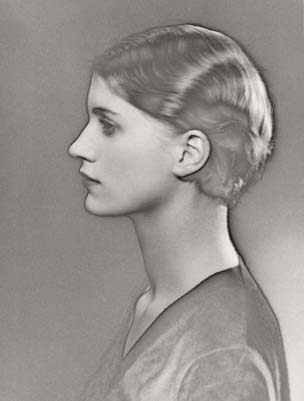
For many more details, see: http://unblinkingeye.com/Articles/Solarization/solarization.html
Note to selves: let’s try adding more potassium bromide to the developer and not rinsing in between developments.
Update: I did post before, after all: https://photodevoto.wordpress.com/2009/08/26/the-sabatier-effect/
 Creative Camerawork
