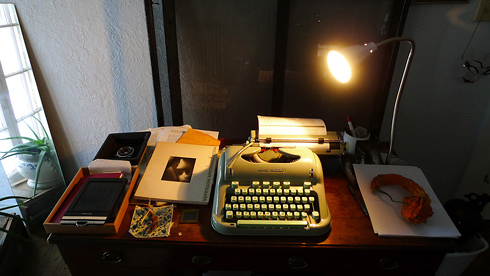
Is the creative act of writing different from the creative act of photographing?

 “Photography is a foreign language that everybody thinks they know how to speak.” -Philip-Lorca Dicorcia

“What exactly is it that makes the work of a… photographer so much harder given that everybody else also takes photographs? Why do we never hear this kind of complaint from writers? After all, we are also all writers now, the only difference being that the changes in education that made this possible date back a bit further. But you never get to hear writers complaining about how hard it is to write a novel or a non-fiction book given that everybody else can write.”

http://conscientious.tumblr.com/post/1447220689/just-a-thought

W. o’ W.: Gene Lees

From “Meet Me at Jim & Andy’s: Jazz Musicians and Their World:”

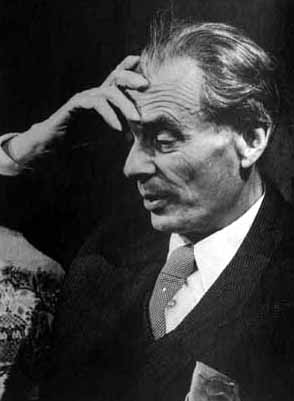
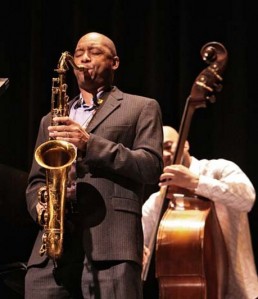
“Aldous Huxley said that art is created in a state of relaxed tension. You must be relaxed enough to let the dreams flow, alert enough to know what to do with them, grab them out of the incorporeal air as they rush by and turn them into something that others can perceive and be moved by… Making jazz is a very naked thing to do.

“That anyone can do anything at all but stand there in paralyzed amazement when the chord changes are going by, that musicians can function with minimal premeditation and great creativity within the materials of a song’s structure, is more remakable than even the most expert practitioners themselves seem to appreciate. It requires both tremendous knowledge, whether intuitive or acquired, and the physical reflexes of an athlete. Jazz is not only one of the most remarkable achievements in the history of music, it is one of the most striking achievements in the history of human thought.”

http://www.youtube.com/watch?v=CPEgesK0KKQ

The Documentary Style and Synesthesia

“Documentary: That’s a sophisticated and misleading word. And not really clear… The term should be documentary style… You see, a document has use, whereas art is really useless.” -Walker Evans
“Prose had to be invented, freed from its rhetorical (oratorical) and poetic origins. Imagine inventing a form of writing more effective when read silently than aloud. That is a real cultural achievement.” -J. Mayhew
“Whether he is an artist or not, the photographer is a joyous sensualist, for the simple reason that the eye traffics in feelings, not in thoughts.” -W. Evans

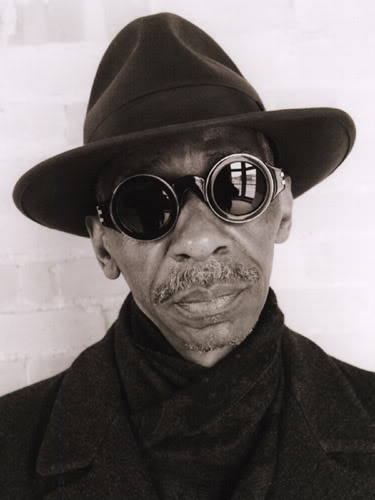
Hang a Roscoe Mitchell

Read this review of Mr. Mitchell’s CD, despite the fact that it cannot prepare you for the music (you gotta scroll down a bit): http://www.nytimes.com/2010/11/09/arts/music/09choice.html?scp=1&sq=roscoe&st=cse

…then watch this more recent collaboration with two other geniuses:

http://www.youtube.com/watch?v=GyuWJEkP780

American Parallels Galore

“Early baseball (i.e. U.S. rounders) was supposed to give batters more opportunities than in cricket, by reducing the role of the pitcher/bowler to that of “feeder.” Yet today’s baseball is a pitcher’s game, while modern cricket is the sport that really gives batters the major role. Baseball and cricket, then, came from very similar backgrounds. They looked a lot like each other, in baseball’s early days. But after 1850 the two games drifted apart, and each assumed its own character and identity. The major difference between early rounders and cricket in North America was that the bowler/pitcher had no role in getting the batter out; the batter could only be “run out” or “caught.” Gradually, the rules were also changed to give back the ‘feeder’ or ‘pitcher’ more of a role in getting batters out: they were allowed to pitch as they wished, not how the striker wanted him to (as in rounders). Cricket became a longer and more leisurely game as batters (batsmen) began to dominate the sport, and wanted more time to display their individual skills. Baseball, on the other hand, became shorter and more abbreviated. Pitchers assumed an active rather than passive role, then came to dominate the sport.”

“In the minds of most people, at the heart of jazz is the improvised solo.  Critical attention is almost invariably devoted to the analysis of solos by the great jazz musicians. Discussions of ensemble work are rare indeed in jazz literature.  So much is the improvised solo seen as the essence of the music that listeners feel cheated when they discover that a solo is not the sudden outpouring of an open heart but has been memorized and repeated night after night, or even written out and played from sheet music.

“Jazz, as American art music situated in modernity, minus the solo, ceases to exist in any form worthy of critical analysis.  The improvised solo is the essence of jazz.

“There are specific historical bases for a marked rise in individualism within America and subsequently within America’s music.  An analysis of the first recordings of jazz music indicates the absence of the solo.  The first quarter of the 20th century yielded only an ensemble form of early jazz.  (James Lincoln) Collier designates this as a function of European or white influence, ‘the Victorian nineteenth century was the great age of the massive ensemble… it was the time of the large marching band,’ and describes the occasional solo in music as ‘the spice in the stew,’ whereas ‘the meat and potatoes was the ensemble; the larger, the better.’

 “What changed?  Again, Collier has the answer:        

‘What happened, I think, was that by the middle of the decade, the new spirit of modernism, with its crying-up of freedom, emotionalism, and expressiveness, had escaped bohemian and artistic circles and was rushing into the mainstream.  The call was no longer for community, but for individualism.'”

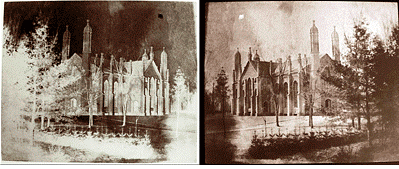
“On the face of it a one-step system, like Daguerre’s, would seem preferable to a two-step system, and there is no evidence to suggest that Talbot would have devised the negative-positive system if a one-step system had suggested itself first. The principle of (more or less) endless reproducibility later came to be thought of as central to the very meaning of photography, but it was not a central issue to the generation that invented photography. It was their grander and less utilitarian goal to capture a field of energy on a screen.

“Nevertheless, once Talbot had demonstrated his simple, brilliant idea, it was obvious to anyone that one negative could yield an infinite number of prints—or at least more than the world would conceivably want. The idea of publishing photographs, in books or as loose prints, followed soon behind.”  -“Photography Until Now”

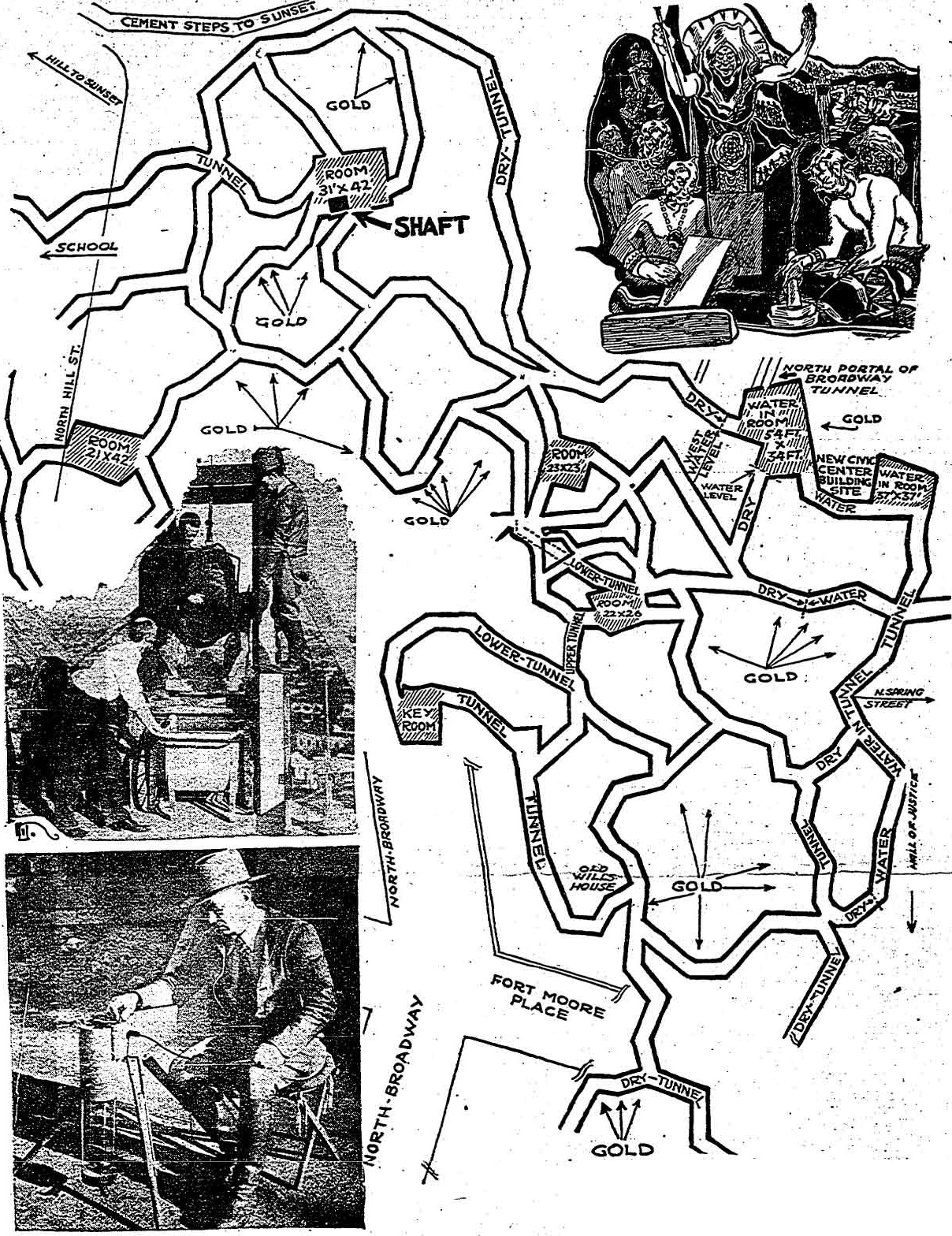
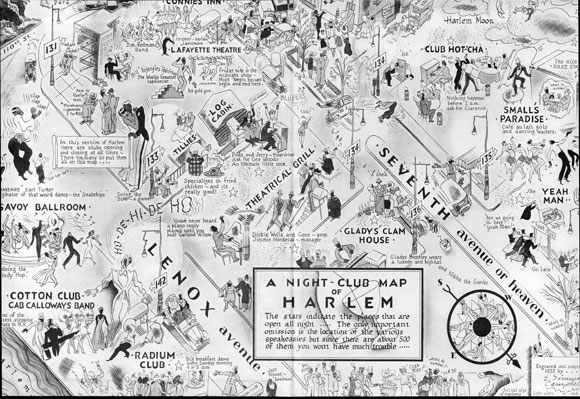
Really old maps are often the best maps

“Maps and paintings were like walled cities: the subject was contained and complete; the idea formed its own frame… the idea of the picture was likely to extend to the picture’s very edges. One might say that the picture was formed by the edges. One might say that the picture was formed by the edges. Medieval painting can be thought of as an art of assemblage, but the Renaissance painter could no longer freely dispose the component parts of his picture to form a perfect, self-enclosed system. He could, in principle, only change the relationship among the three elements that formed his picture-designing system: the vantage point, the imaginary window, and the (real or imagined) motif. His picture was now a segment of a continuum, part of a larger whole, and the fact gave new authority to the picture’s edges – the means by which the world was edited.” -John Szarkowski, “Photography Until Now”

http://www.telegraph.co.uk/news/worldnews/europe/spain/5978900/Worlds-oldest-map-Spanish-cave-has-landscape-from-14000-years-ago.html

W. o’ W.: Adonis (Ali Ahmad Said Esber)

“Poetry cannot change society. Poetry can only change the notion of relationships between things. Culture cannot change without a change in institutions.”

“Poetry that reaches all the people is essentially superficial. Real poetry requires effort because it requires the reader to become, like the poet, a creator. Reading is not reception. I suggest you change your relationship to poetry and art in general.”

W. o’ W.: Mark Steinmetz


“MoMA’s series on Atget and Lee Friedlander’s ‘Factory Valleys’ are wonderfully printed books which demonstrate how richly b/w can describe weather, season, light, and time of day. Perhaps it’s because color is withheld that you have to activate some sort of  poetic imagination in order to read the work. I can feel the effect of sun hitting skin more palpably in Tod Papageorge’s silvery Central Park pictures than in any color picture of someone basking in the sun. There is something excitingly difficult and complex and intellectual in Garry Winogrand’s ‘Public Relations’ (1977) and I’ve yet to see any similar situation in color as tough-minded. Winogrand doesn’t seem to be in a hurry to please anybody.”

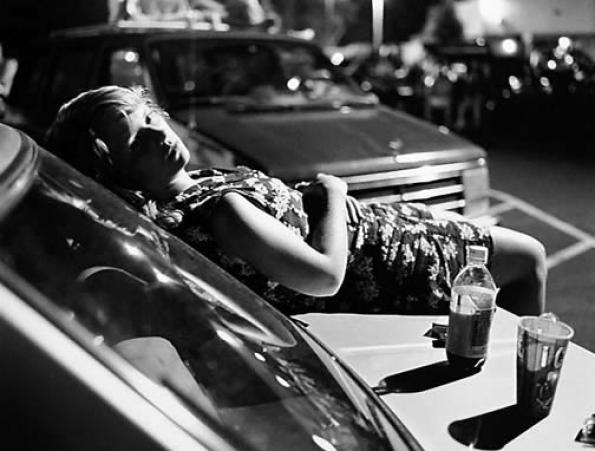
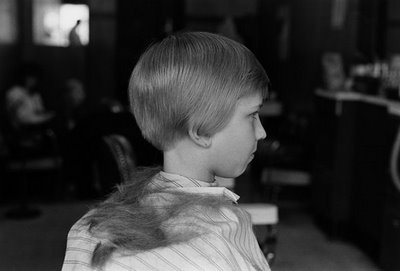
“I want to show something of people’s inner lives. I think for portraiture you have to be completely certain that you are interested in photographing this or that person. You can’t be wishy-washy in your motivation. You just have to know that you want to photograph this person and it’s a kind of knowing that eradicates any asking of ‘why?’ My approach is fairly low-key. I don’t want to make waves. I’ll just ask something like ‘Can I photograph you as you are?’ Sometimes I’ll give a little direction like ‘look over that way’ but it’s never elaborate. Having an ability to focus and concentrate is necessary for making good portraits.”

You can read the entire interview whence this is excerpted at http://jmcolberg.com/weblog/extended/archives/a_conversation_with_mark_steinmetz/

W. o’ W.: Steve Albini

“For the same reason that having a radio didn’t mean that you wouldn’t also have a record collection, having the Internet available doesn’t mean that you won’t also have a record collection. The scale of things has changed dramatically. The one thing that has survived intact has been vinyl record sales. There are vinyl reissue labels and labels that now do better business with their vinyl releases than they do with CD releases. Obviously the primary mode of music is going to be electronic, but people still want to have permanent evidence of their appreciation of a band. Hi-fi shops are doing great business selling record players. I don’t see the vinyl record disappearing in my lifetime.”

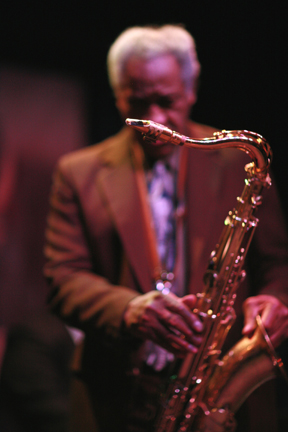
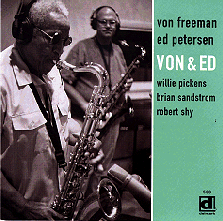
Earl Lavon Freeman is 88!

http://www.youtube.com/watch?v=Y1HAWuRo-2s

http://www.youtube.com/watch?v=mf0Ct5TDPLU

Listen: listen to Von.

  • Calendar

    • December 2025
      S M T W T F S
       123456
      78910111213
      14151617181920
      21222324252627
      28293031  
  • Search