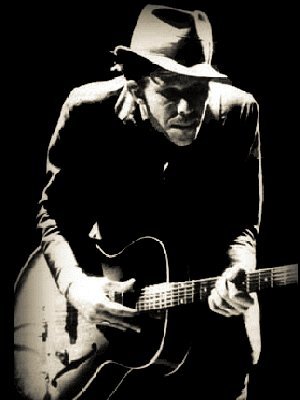
W. o’ W.: Tom Waits

“I want you to play like you’re seven years old at a recital.

I want you to play like your mom’s in the room.

I want you to play like you’re miles from home, and your legs are dangling from a boxcar.

Or play like your hair’s on fire.

Play like you have no pants on.”

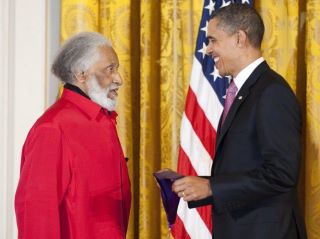
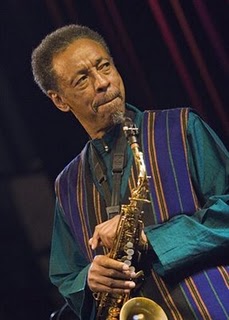
Theodore Walter Rollins, Octogenarian

Sonny Rollins did as a jazz musician what Harry Callahan did as a photographer: he created a sabbatical for himself (two, actually) to do some “woodshedding.” He has a lot to say about creative work that applies directly to all of us: http://video.pbs.org/video/2143734254

“I’m still payin’ dues, even though I’m in the high cotton.”

You have no idea…

…how tight the jazz scene is, especially the Chicago scene. We in the local fo-do community are often this way, but we can still learn from this.
 
Henry Johnson
Just heard about the passing of Chicago drummer, Gerryck King. He was personally responsible for introducing and recommending me to Joe Williams. When I met him, he could scat and play almost every Billy Cobham solo recorded at that time. We played a lot together in Chicago jazz clubs during the early 70’s. By the early 80’s, he had moved up to playing with the heavy hitters like Ray Brown, Gene Harris, and Joe Williams. Thank goodness that he’s played on some great jazz recordings and we’ll always be able to listen to him. Condolences to the King family. R.I.P. Gerryck. You were a bad cat, my friend.LikeUnlike ·
http://www.youtube.com/watch?v=PI4rA-Co-HQ

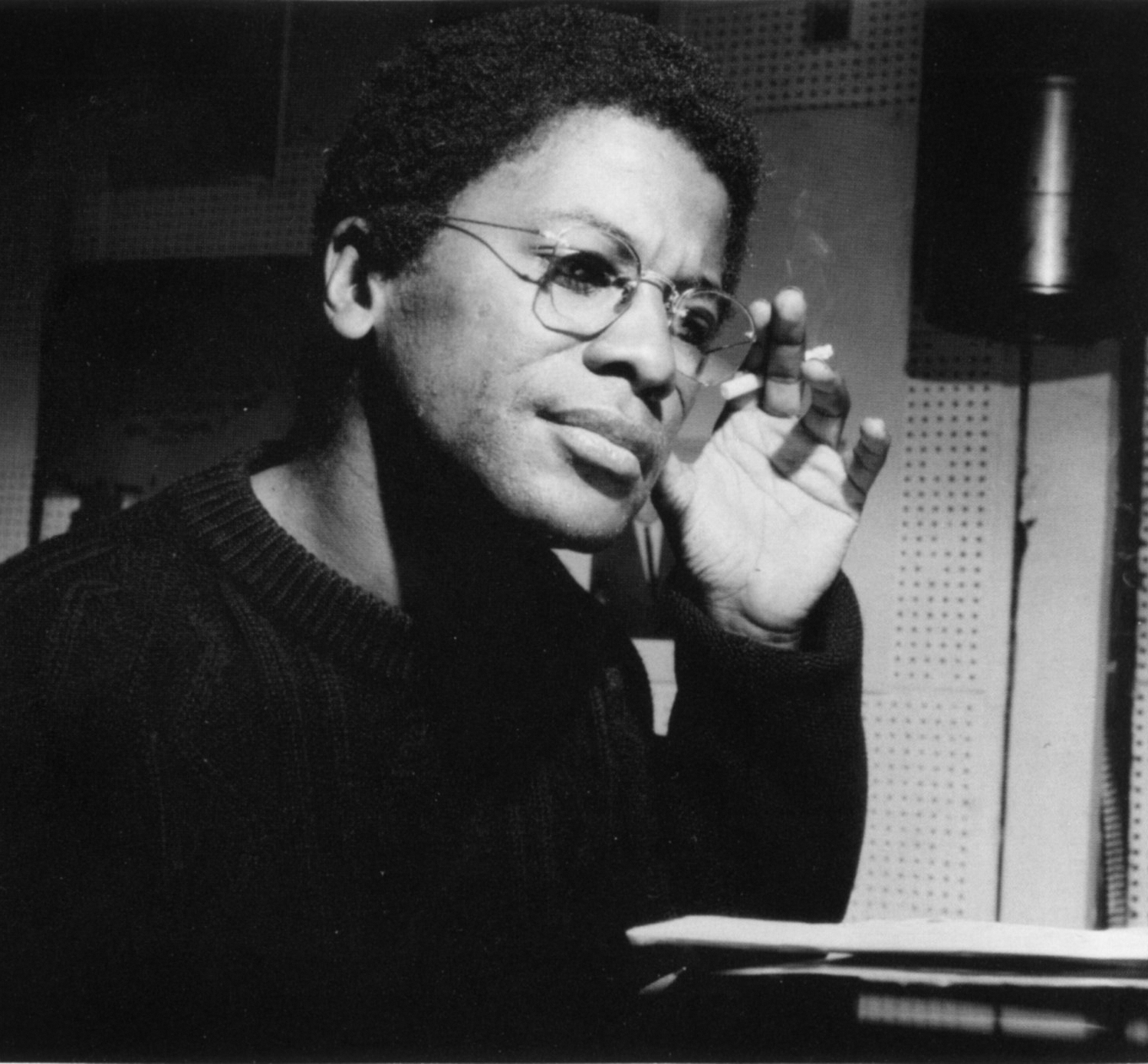
W. o’ W.: Andrew Hill


“It’s easy to fall back upon what you’ve done, but it’s harder just to continue playing.  To me it’s terrible to play without the passion of music.  It’s the passion that connects, not the academic correctness.  The passion brings out the magic, something that draws the audience into you.  It was inspirational to discover that things aren’t static… the spirit of jazz is supposed to be built upon playing something different every time you play.”

Open your… whatever… senses

http://www.youtube.com/watch?v=MtgOb7560zc

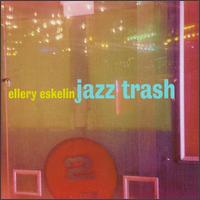
Ellery Eskelin writes:

Having recently listened to interviews with Joe Henderson and Gary Bartz about how they teach/taught, I’ve been emphasizing the aural approach in lessons more and more. Students have been learning Lester Young solos off the recordings strictly by ear, and memorizing them on their instrument with nothing written down. I’ve also been teaching them how to figure out the chords and harmonies to tunes this way as well.

It seems like such a simple thing, but “the ear” seems to be an undervalued asset in jazz education generally. Learning with the ears alone integrates every aspect of the music and music-making all at once, and serves for a more profound and much longer lasting impact. I can see lights flashing on in their minds as the beauties of these solos reveal themselves in a way that the student has never experienced before. And in speaking with them afterwards, I realize that their eyes are opened to the world in new ways as the ramifications of how this music was created begin to sink in. Hearing a developing musician come in and play these solos to me along with the recordings is such a beautiful experience that it lifts my spirits for days!

 http://www.youtube.com/watch?v=SZS9uveaX3g&feature=related

Jimmy Heath says:

“People listen to music in different ways. Most of the people in the world listen with their bodies, so the body’s got an ear. And then the heart’s got an ear. And the mind’s got an ear. A lot of people hear the whole complete thing. When you’re musically inclined, people listen scientifically: ‘Oh, what he did, he played a thirteenth, ninth, all that stuff.’ But some people just sit around, and the beat goes and they just start movin.’ They’re listenin’ with their body, and they don’t care what kind of chord you play. ‘What kind of chord? What’s a chord?’ They don’t even know what a chord is! And as a romantic person, I hear with my heart. Benny Powell used to say, ‘That music touched me where I live.’ I like that phrase. Inside his heart.”

Are there equivalents for eyes? Body/heart/mind seem more useful than melody/harmony/rhythm for analogies.

Advice from Wendell Berry

“How to Be a Poet” by Wendell Berry        (to remind myself)

I

Make a place to sit down.
Sit down. Be quiet.
You must depend upon
affection, reading, knowledge,
skill—more of each
than you have—inspiration,
work, growing older, patience,
for patience joins time
to eternity. Any readers
who like your poems,
doubt their judgment.

ii

Breathe with unconditional breath
the unconditioned air.
Shun electric wire.
Communicate slowly. Live
a three-dimensioned life;
stay away from screens.
Stay away from anything
that obscures the place it is in.
There are no unsacred places;
there are only sacred places
and desecrated places.

iii

Accept what comes from silence.
Make the best you can of it.
Of the little words that come
out of the silence, like prayers
prayed back to the one who prays,
make a poem that does not disturb
the silence from which it came.

Mr. Threadgill on Continuity

“You know, you don’t play for one week, your wife or your girlfriend knows; two weeks and you know; three weeks and everybody knows.

“I have friends who can do both. I can’t do both. I have to do one at a time. I write, and then I go to my instruments. I can’t keep up with the instruments if the writing becomes too demanding.

“I figured out a long time ago that going back for me is always a mistake . I mean on every level: personal life, everything – going backward does not work for me, it’s destructive.  All of my mistakes have been made going backwards.”

These are excerpts from a huge interview by Ethan Iverson. Dig it all at http://dothemath.typepad.com/dtm/interview-with-henry-threadgill-1-.html

W. o’ W.: Rosanne Cash

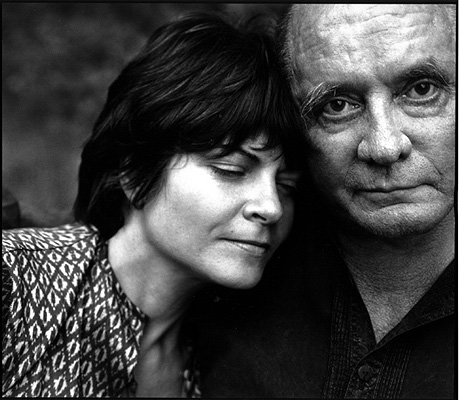
The College Board has no criteria for elements that are anything but effable. Ms. Cash’s father (Johnny Cash) told her “that your style is a function of your limitations more so than a function of your skills. Some things you can break down, and some things are ineffable. Some things are just part of that mystery where all creative energy comes from. It’s part of the soul. Music is an ever-moving blob of mercury.”

(From the NYT http://www.nytimes.com/2011/04/19/science/19brain.html?scp=6&sq=paul%20simon&st=cse).

Required Viewing at the ‘Tute

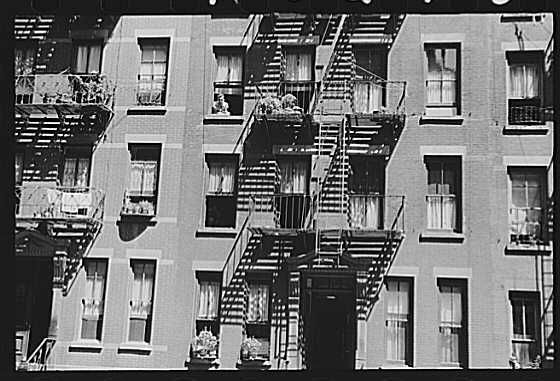
This should have come up a month or two ago. Get thee to the Art Institute to immerse yourself in aspects of the work of Berenice Abbott, Walker Evans, and Margaret Bourke-White. AND read BFHS alumnus Matt Kluk’s mini-essay/commentary.

http://blog.artic.edu/blog/2011/04/06/just-notes/

http://www.artic.edu/aic/exhibitions/exhibition/americanmodern

Useful Rules for “Writing”

Elmore Leonard produced 10 rules for writing (fiction), and the Guardian then asked many other writers for their personal guidelines. You could look it up. It’s a long article, and all of it is worth reading. Here are a few choice excerpts; substitute “photograph” for “write” wherever bracketed (and “study pictures” for “read”), and the entire enterprise translates fairly well.

Geoff Dyer: “Keep a diary. The biggest regret of my writing life is that I have never kept a journal or a diary. Beware of clichés. There are clichés of response as well as expression. There are clichés of observation and of thought – even of conception.”

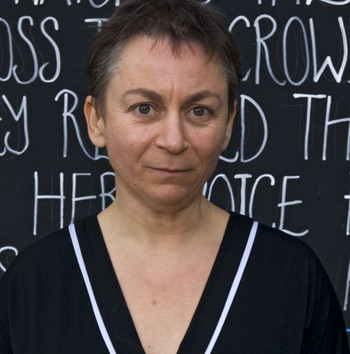
Anne Enright: “Only bad [writers] think that their work is really good.”
Richard Ford: “Marry somebody you love and who thinks you being a [writer] is a good idea. Don’t have children. Don’t have arguments with your wife in the morning, or late at night. Don’t drink and [write] at the same time. Don’t wish ill on your colleagues. Try to think of others’ good luck as encouragement to yourself. Don’t take any shit if you can ­possibly help it.”

Jonathan Franzen: “You see more sitting still than chasing after.”
David Hare: “Never complain of being misunderstood. You can choose to be understood, or you can choose not to.”

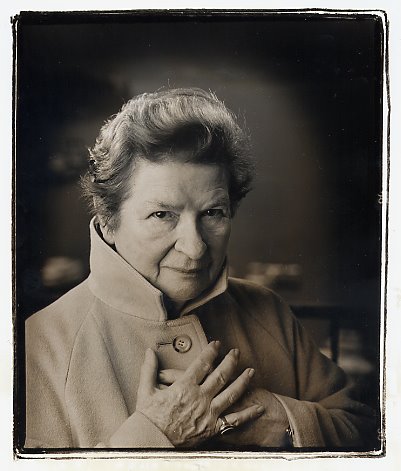
P.D. James: “[Read] widely and with discrimination. Bad [writing] is contagious.”

Michael Morpurgo: “The prerequisite for me is to keep my well of ideas full. This means living as full and varied a life as possible, to have my antennae out all the time.”

Andrew Motion: “Honour the miraculousness of the ordinary. Think big and stay particular.”

Helen Simpson: “The nearest I have to a rule is a Post-it on the wall in front of my desk saying “Faire et se taire” (Flaubert), which I translate for myself as ‘Shut up and get on with it.'”

Zadie Smith: “Protect the time and space in which you [write]. Keep everybody away from it, even the people who are most important to you.”

Colm Tóibín: “Get on with it. Stay in your mental pyjamas all day. Stop feeling sorry for yourself. No alcohol, sex or drugs while you are working.”

Jeanette Winterson: “Turn up for work. Discipline allows creative freedom. No discipline equals no freedom. Be ambitious for the work and not for the reward.”