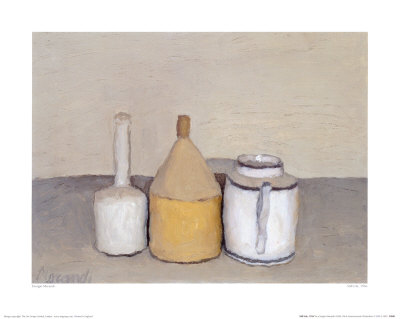
Yay Science, Yes… But Everything Ain’t Science


“Every softer discipline these days seems to feel inadequate unless it becomes harder, more quantifiable, more scientific, more precise. That, it seems, would confer some sort of missing legitimacy in our computerized, digitized, number-happy world. But does it really? Or is it actually undermining the very heart of each discipline that falls into the trap of data, numbers, statistics, and charts? Because here’s the truth: most of these disciplines aren’t quantifiable, scientific, or precise. They are messy and complicated. And when you try to straighten out the tangle, you may find that you lose far more than you gain.”

http://blogs.scientificamerican.com/literally-psyched/2012/08/10/humanities-arent-a-science-stop-treating-them-like-one/

Mr. Lewis’s Strategy

Where’d I get this (probably twenty years ago)?
 
 
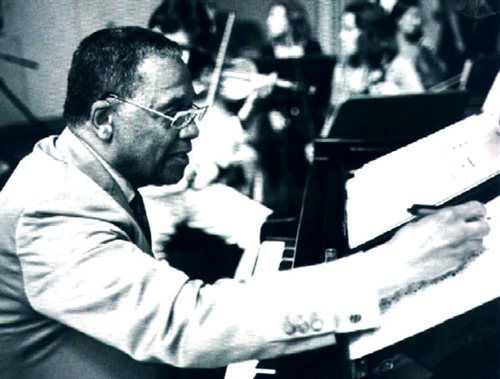
“I witnessed a unique dramatization of the best service a John Lewis can render one afternoon last summer, when he coached three local saxophonists through a reading of his winsome “Afternoon in Paris” at a free workshop held in Philadelphia’s Afro-American Historical and Cultural Museum. “You have to put yourself at the service of the melody,” Lewis kept insisting. “Your solos should expand the melody or contract it.” The young saxophonists initially approached Lewis’s melody as a succession of chord changes. To a man, they were haunted by Coltrane’s vigor but not possessed of his logic. (If Coltrane often sounded like he was clearing long rows of high hurdles, these Philadelphians—like most young Coltrane followers—sounded as though they were running in place.) but after an hour of tussling, they gave in to Lewis, and their solos gradually took on a lovely tone. Afterwards, they seemed visibly surprised that so simple and straightforward an approach to a melody could have put them in touch with such complexities of feeling, and the audience seemed to share their surprise. Only Lewis acted as though he knew it would work out that way all along. If every improviser were a Louis Armstrong or a Sonny Rollins, jazz would have no crying need for a John Lewis. But since few improvisers are blessed with Armstrong’s or Rollins’s intuitive sense of form, mediators like Lewis serve a crucial function.”

Start Here.

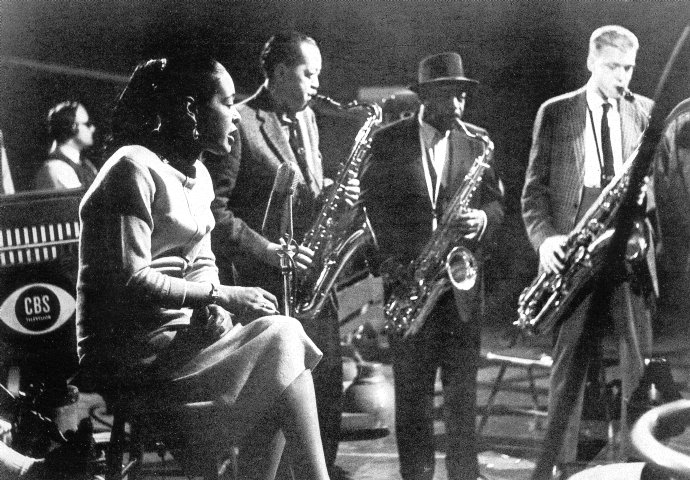
If you need a starting point with America’s music, this one is as good as any and better than many: http://www.youtube.com/watch?v=K1Ok2Gjf1T4&feature=share 

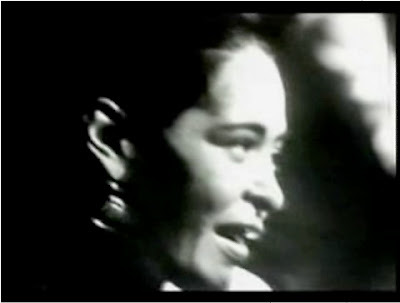
It features a veritable pantheon: Vic Dickenson, Danny Barker, Doc Cheatham, Freddie Green, Rex Stewart, Milt Hinton, Roy Eldridge, Count Basie, Coleman Hawkins, Thelonious Monk, Gerry Mulligan, Pee Wee Russell, Jimmy Rushing, Billie Holiday, Lester Young, Ben Webster… and the oh-so-telegenic Jo Jones.

 Watch it all the way through, in one sitting. Better video copies exist but the music is intact.

Same Old, But Olympian Proportions

Here’s the latest instance of a perennial problem:

http://www.telegraph.co.uk/culture/music/9382467/Is-the-London-2012-Olympics-exploiting-musicians.html

…and sardonic references to same:

http://www.youtube.com/watch?v=T0W59PDwFNM

Vive les differences

“In Germany the most important creative social status is given to the musician. In Italy it’s the painter. Who’s the most important creator in France? It’s the writer.”

“Books are living things. They need to be respected, to be loved. We are giving them many lives.”

These quotes come from http://www.nytimes.com/2012/06/21/books/french-bookstores-are-still-prospering.html?_r=1, an article dealing with the state of bookstores in France versus electronic books’ portion of that market.
Who is/should be accorded “the most important creative social status” in the United States? Not that it need be only one, except for this little parlor game of perspective. Thirty years ago, Aaron Siskind commented in an aside somewhere that America no longer had a thriving high culture. I may have mentioned before that when American practicing artists were consulted on political matters for election-year articles, 1960 journalists went to the Robert Lowells, but by 1968 they were soliciting the opinions of the Jim Morrisons. This is a matter of public recognition factor.

Digression: Television talk shows originally operated with a more leisurely format (to the point, we’re told, of ending when the conversation was done, and that would even occasionally determine when it was time for the station to sign off), as opposed to the tight horse-race feeling parade of celebrity promotions we witness now. The spectrum of guests was wider as well: singers and authors who have no place in pop culture, such as Jan Peerce and Alexander King (look ’em up). Raconteurs, as well: the last time Buck Henry appeared with Letterman, he simply talked about his vacation, and he held the audience’s attention.
What holds your attention? We are all members of the populus, it’s true; what do you find is richer than pop culture?

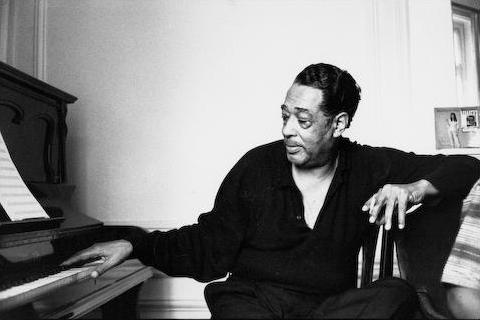
Edward. Kennedy. Ellington.

Duke would have been 114 today. No, wait: he is 114 today, because the music is alive.

http://www.youtube.com/watch?v=NhbAGKb7VCw&feature=share

http://www.youtube.com/watch?v=A4YdERiF0sA

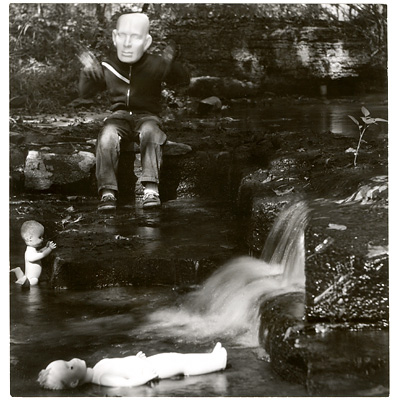
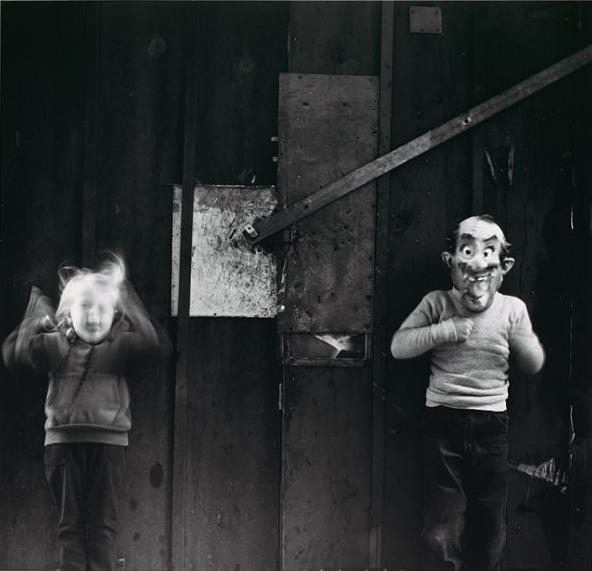
Woodman. And Meatyard.

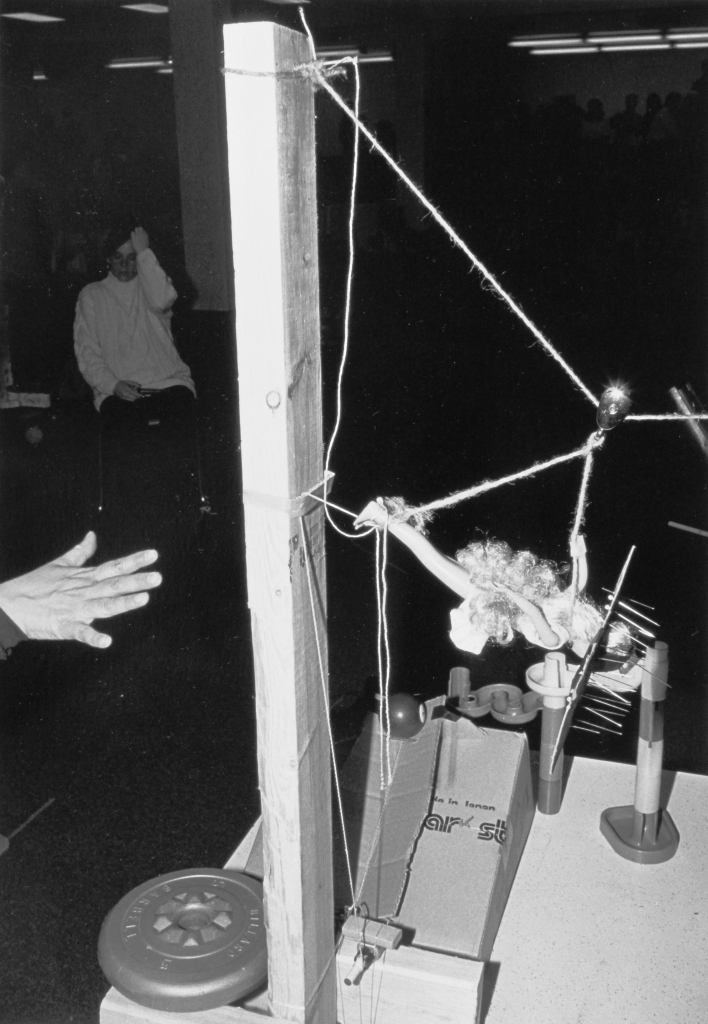
This week’s review of the Francesca Woodman exhibit in New York City (http://www.nytimes.com/2012/03/16/arts/design/francesca-woodman-at-guggenheim-museum.html?scp=1&sq=woodman&st=cse) is balanced and insightful, but something occurred to me which has never come up in my decades of paging through monographs, down in the dank darkroom: how much influence was there on Ms. Woodman from one Ralph Eugene Meatyard? Look at these jpegs of their images and see if you can guess, completely correctly, whose is whose. Oh, sure, one can easily point out the differences, but look at the similarities.

Anna Clyne

“My passion is collaborating with innovative and risk-taking musicians, film-makers, visual artists and, in particular, choreographers. Creating new works through a fluid artistic dialogue has consistently fuelled my art-form from new perspectives and has maintained a fresh and exciting creative environment. Inspired by visual images and physical movement, my intention is to create music that complements and interacts with other art-forms, and that impacts performers & audiences alike.”

http://youtu.be/V-3rT_b8nL0

Read Mr. Margasek’s report: http://www.chicagoreader.com/chicago/anna-clyne-mead-composer-residence-cso-muti-night-ferry/Content?oid=5587726

More: http://www.youtube.com/watch?v=JemXDJxzADk and http://www.youtube.com/watch?v=JGovFsr11Jw

Keep It Straight

(Insert illustration here [if I don’t]).

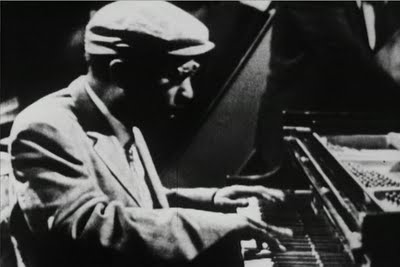
“The piano is a [mysogenistic aspersion]… you gotta get underneath her skirts to get to the truth.”

http://www.youtube.com/watch?v=JJRjEpjd9S4&feature=relmfu

We all know what a “bebop head” is, right?

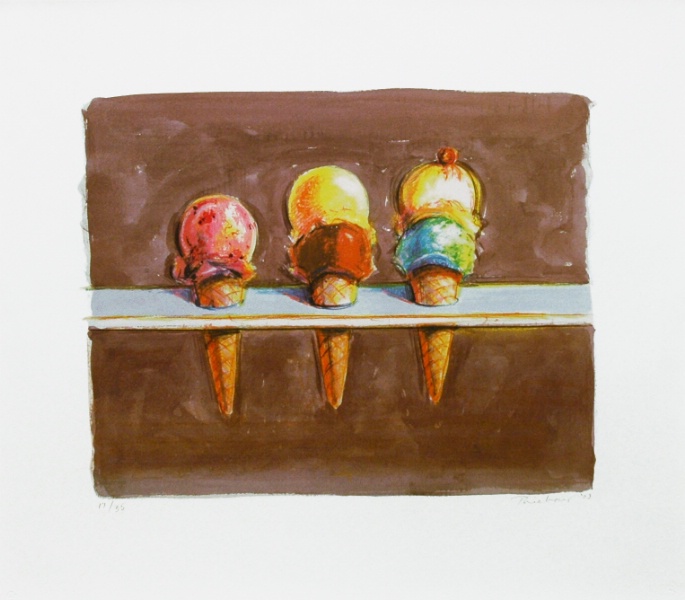
Wayne Thiebaud on Giorgio Morandi

Appropriately, Wayne Thiebaud is exhibiting at Museo Morandi in Bologna. Read the short interview with Thiebaud in this month’s ARTnews.

“There are such good lessons to learn from looking at his work… One of them, I think, is the wonder of intimacy and the love of long looking. Of staring but at the same time moving the eye, finding out what’s really there, and there are so many things that are subtle and may look like something at one moment but not the next.”

  • Calendar

    • December 2025
      S M T W T F S
       123456
      78910111213
      14151617181920
      21222324252627
      28293031  
  • Search