Au(rora) Cinema

As Anthony Lane wrote in the New Yorker last November: “There’s only one problem with home cinema: it doesn’t exist. As you pause your film to answer the door or fetch a Coke, the experience ceases to be cinema. Even the act of choosing when to watch means you are no longer at the movies. Choice–preferably an exhaustive menu of it–pretty much defines our status as consumers, and has long been an unquestioned tenet of the capitalist feast, but in fact carte blanche is no way to run a cultural life (or any kind of life, for that matter), and one thing that has nourished the theatrical experience, from the Athens of Aeschylus to the multiplex, is the element of compulsion. Someone else decides when the show will start; we may decide whether to attend, but, once we take our seats, we join the ride and surrender our will. The same goes for the folks around us, whom we do not know, and whom we resemble only in our private desire to know more of whar will unfold in public, on the stage or screen. We are strangers in communion, and, once the pact of the intimate and the populous is snapped, the charm is gone. Our revels now are ended.”

…and then: http://jasonpaulroberts.tumblr.com/tagged/Aurora-Shooting

…and: http://www.washingtonpost.com/national/after-colo-shooting-warner-bros-delays-gangster-squad-release-to-jan-11/2012/07/26/gJQAuyEUBX_story.html

Start Here.

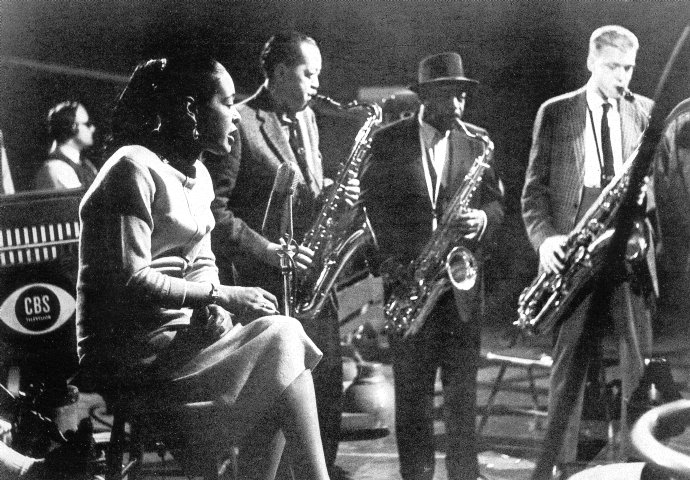
If you need a starting point with America’s music, this one is as good as any and better than many: http://www.youtube.com/watch?v=K1Ok2Gjf1T4&feature=share 

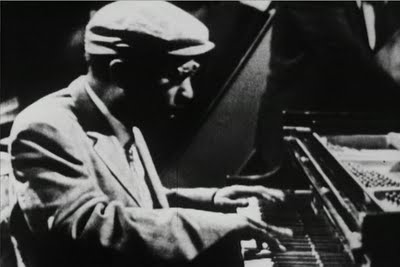
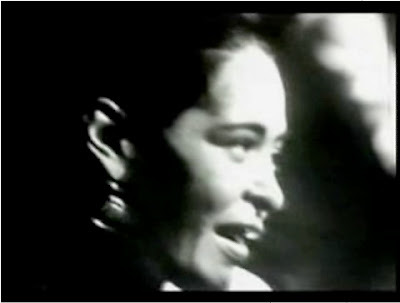
It features a veritable pantheon: Vic Dickenson, Danny Barker, Doc Cheatham, Freddie Green, Rex Stewart, Milt Hinton, Roy Eldridge, Count Basie, Coleman Hawkins, Thelonious Monk, Gerry Mulligan, Pee Wee Russell, Jimmy Rushing, Billie Holiday, Lester Young, Ben Webster… and the oh-so-telegenic Jo Jones.

 Watch it all the way through, in one sitting. Better video copies exist but the music is intact.

Vive les differences

“In Germany the most important creative social status is given to the musician. In Italy it’s the painter. Who’s the most important creator in France? It’s the writer.”

“Books are living things. They need to be respected, to be loved. We are giving them many lives.”

These quotes come from http://www.nytimes.com/2012/06/21/books/french-bookstores-are-still-prospering.html?_r=1, an article dealing with the state of bookstores in France versus electronic books’ portion of that market.

Who is/should be accorded “the most important creative social status” in the United States? Not that it need be only one, except for this little parlor game of perspective. Thirty years ago, Aaron Siskind commented in an aside somewhere that America no longer had a thriving high culture. I may have mentioned before that when American practicing artists were consulted on political matters for election-year articles, 1960 journalists went to the Robert Lowells, but by 1968 they were soliciting the opinions of the Jim Morrisons. This is a matter of public recognition factor.

Digression: Television talk shows originally operated with a more leisurely format (to the point, we’re told, of ending when the conversation was done, and that would even occasionally determine when it was time for the station to sign off), as opposed to the tight horse-race feeling parade of celebrity promotions we witness now. The spectrum of guests was wider as well: singers and authors who have no place in pop culture, such as Jan Peerce and Alexander King (look ’em up). Raconteurs, as well: the last time Buck Henry appeared with Letterman, he simply talked about his vacation, and he held the audience’s attention.

What holds your attention? We are all members of the populus, it’s true; what do you find is richer than pop culture?

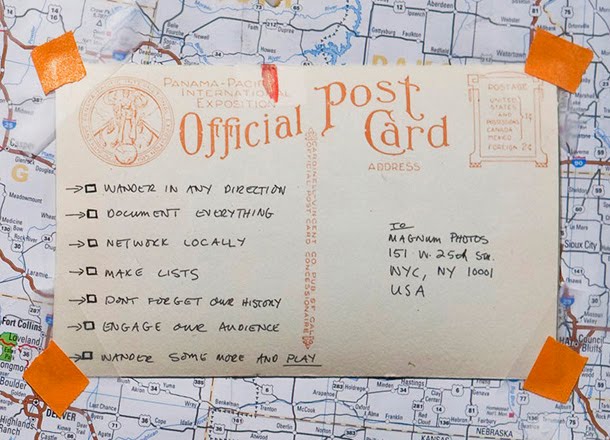
2012 Twitter = 1912 Postcard

Everybody knows that twitter is limited to 140 characters. The character limit was determined by Friedhelm Hillebrand, father of modern text messaging, who came up with 160 as the ideal number needed to convey… something. When the deciding committee looked at postcards and found most of the messages were around 150 characters, the 160-character limit was born (twitter keeps the extra 20 characters for usernames).

I like to think of twitter as the 21st-century postcard, in that small packages of information are sent easily. Astonishingly, some people among us would be unaware of the conventions of postcards in current conventional use (outside of advertising) were it not for PostSecret, because their purpose has been trumped by texting, but texting has no remnant, nor any sense of presentation.

I don’t collect old postcards, but their appeal is enormous. If I acquire older postcards–used or unused–I use ’em. Even better: make your own.

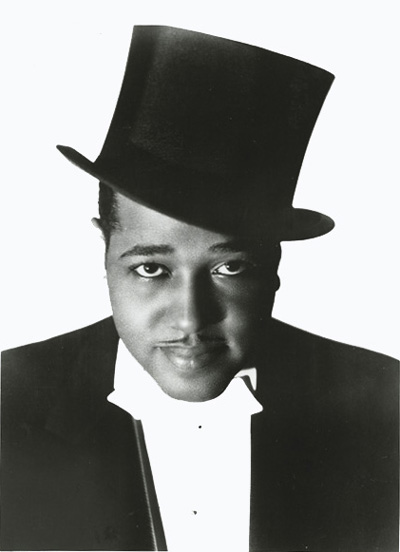
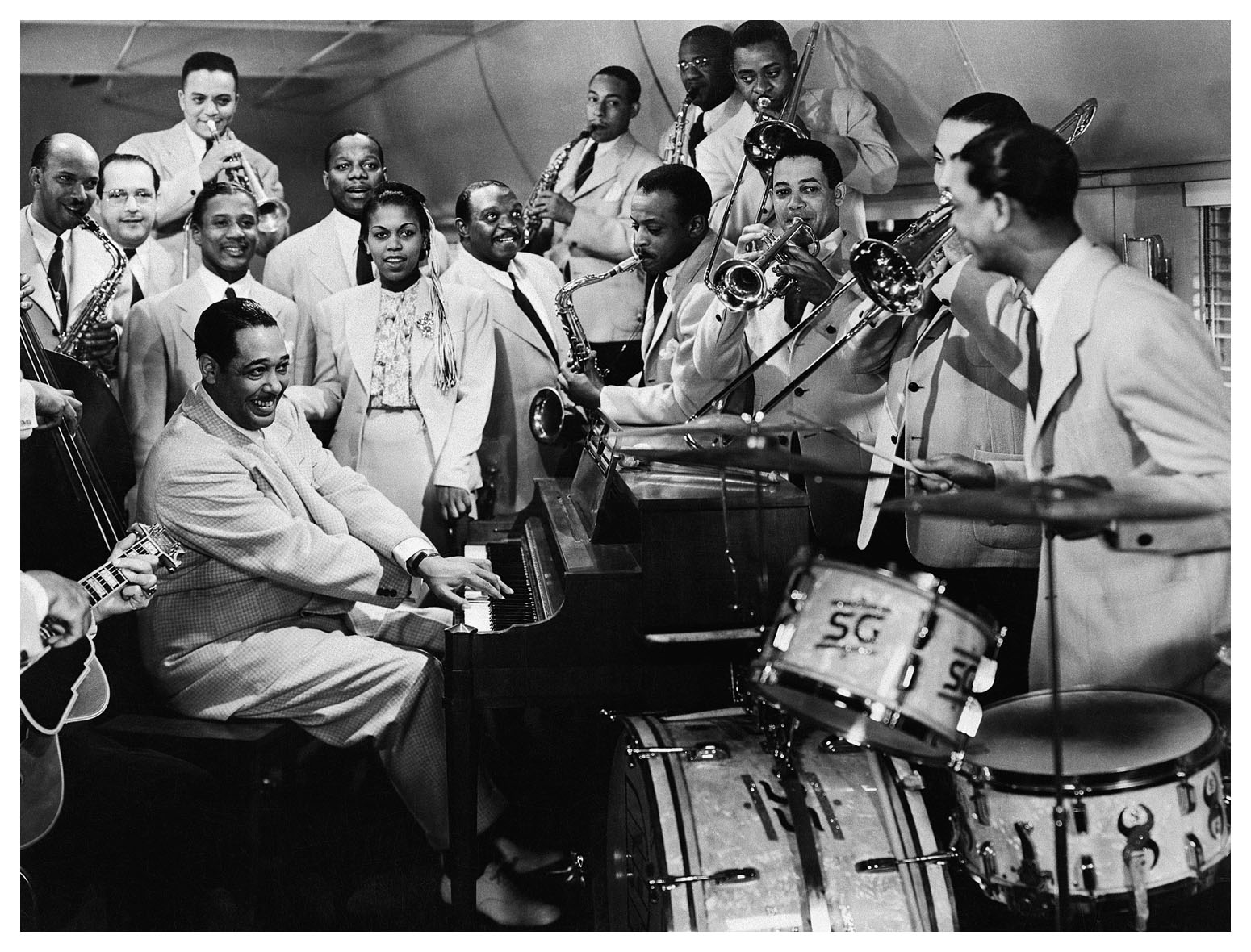
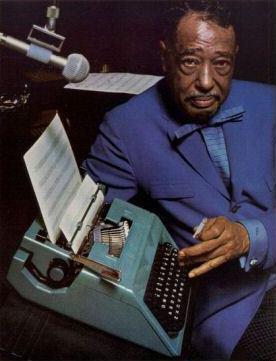
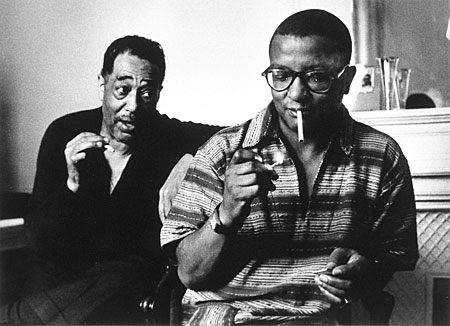
Deep Background on Duke Ellington

http://www.openculture.com/2010/04/record_making_with_duke_ellington_1937.html

http://www.youtube.com/watch?v=93W1Cgy9e9A

http://www.npr.org/blogs/ablogsupreme/2010/08/03/128960586/ellington-interviews-strayhorn

http://www.youtube.com/watch?v=A4YdERiF0sA

Color Reversal Transparencies (aka “slides”)

Kodak has announced: “Due to a steady decrease in sales and customer usage, combined with highly complex product formulation and manufacturing processes, Kodak is discontinuing three Ektachrome (color reversal) films.” This means that, after 77 years, the Great Yellow Father is no longer in the business of making slides. ‘Tis a pity: slides can’t be beat for color saturation and sharpness. Fortunately, we still have excellent Fuji films with those qualities.

Me, I’m drownin’ in slides. Carousels, boxes, plastic sheets, even food storage bagsful. Kodachrome, Ektachrome, Agfachrome, and Fujichrome, pretty much all 35mm. I also curate (i.e. have) my grandfather’s Anscochrome, some of my in-laws’ stuff, a batch depicting office culture at United Air Lines’s EXO, work shot from printed sources for delectation in class, and endless dupes of a generation’s worth of AP work. Slides are part of the reason the missus insists that if I go first she’ll have the basement bulldozed, rather than make sense of its contents.

Richard Benson wrote: “The huge amateur market that consumed 35mm slides has always been a mystery to me. Why did all those people make all those pictures? The impulse must be connected to an effort to retain memories of times gone by. It is somewhat tragic, because as we use technological devices to aid our memories we inevitably reduce our capacity to remember. We see this demonstrated in the mnemonic wonders of oral traditions, which always suffer as writing is introduced to cultures. Color slides are even more mysterious because they are almost never looked at. At least with an album of prints we can take the book off the shelf, easily leaf through it a bit, and then put it away again. The slide requires a projector, a dark room, and almost invariably other people, who have been gathered together to participate in the viewing of someone else’s visual history. For me there is no more excruciating event than looking at the family slides.”

I have only respect for Mr. Benson, so I will gently address some of these points. It’s safe to assume that marketing is what fueled the 35mm transparency (and its business in projectors) popularity, yes? Oral traditions are no parallel to easily leafing, are they? If technological devices reduce one’s capacity to remember, it’s for some sort of trade-off, n’est-pas? Peut-etre the tragedie is on a nostalgic level, within a generation or so (I recall gnashing over the proliferation of soft-cover books). Oral traditions necessitate a gathering, a ritual; hello? And they need not be family slides. (Okay, there was that one time when Jack Niemet showed us hundreds of slides of composers’ birthplaces, pianos, deathbeds, and headstones, and I went to bed while he went to the loo, but hey, the exception proves the rule.) The sharpness in transparencies can’t be beat, and lord knows there are ways to convert the images to other, um, mediums.

Anna Clyne

“My passion is collaborating with innovative and risk-taking musicians, film-makers, visual artists and, in particular, choreographers. Creating new works through a fluid artistic dialogue has consistently fuelled my art-form from new perspectives and has maintained a fresh and exciting creative environment. Inspired by visual images and physical movement, my intention is to create music that complements and interacts with other art-forms, and that impacts performers & audiences alike.”

http://youtu.be/V-3rT_b8nL0

Read Mr. Margasek’s report: http://www.chicagoreader.com/chicago/anna-clyne-mead-composer-residence-cso-muti-night-ferry/Content?oid=5587726

More: http://www.youtube.com/watch?v=JemXDJxzADk and http://www.youtube.com/watch?v=JGovFsr11Jw

Videos, videos, schmideos.

Errol Morris speculates incisively about truth, art, and propaganda: http://www.guardian.co.uk/commentisfree/video/2011/dec/26/errol-morris-photography-video

Joseph Herscher perpetuates a revered tradition and keeps it fresh: http://www.nytimes.com/2012/01/08/nyregion/brooklyns-joseph-herscher-and-his-rube-goldberg-machines.html?_r=1&hp

It’s the big Seven Seven for E. Aron!

http://www.youtube.com/watch?v=cPHiCCbcsHE

An end-of-the-year Top 15 (+21) List (as well as 20 or so “MIA”)

Surf this; find something that you can use: http://lpvmagazine.com/2011/12/top-photography-websites-of-2011/

…and surf these for what remains: http://blakeandrews.blogspot.com/2011/12/in-memoriam-photoblogs-2011_26.html

W. o’ W.: Richard Benson

“Traditional chemical photography is an extraordinarily flexible field, which, even as it disappears, has hardly been touched.”

  • Calendar

    • December 2025
      S M T W T F S
       123456
      78910111213
      14151617181920
      21222324252627
      28293031  
  • Search