The new Homeland Security warning system includes 18% gray.
“Annoying the TSA is not a crime,” the blog post states.

http://www.dhs.gov/files/programs/ntas.shtm
“Photography is not a crime.
You have the right to fly without ID, and to photograph, film, and record what happens.”
http://www.theregister.co.uk/2011/01/25/passenger_acquitted/

Distant Early Warning: New (No-Name) Paper from Ilford/Harman
An insider informs me that Ilford is working on producing a “Fine Art” paper, and it’s currently being tested by a handful of printers, which doesn’t include you or me. If the feedback is good, it may be made available sometime this spring; if not, further refinements may be necessary. The paper has no name yet (let’s call it “Emanon,” after John Lewis’s 1946 composition recorded by Dizzy Gillespie’s big band). It’s a finely textured, matt heavyweight art paper, 300 grams per square meter, not unlike good watercolor paper. It doesn’t look or feel like a typical silver gelatin paper; a slight curve and faint sheen are the only clues to the emulsion side. (You’ll pardon the lack of illustrations at this juncture.)
Exposure is a tad slower than Multigrade Warmtone (!), with a slightly warm emulsion on an off-white base. The surface texture accepts pencil (as did their Kentmere Art paper), and it dries reasonably flat. It responds well to sepia toning; however, there is little apparent response to direct selenium toner (a feature in common with Ilford Galerie graded paper). It sounds delightful for selected negatives, so start saving up now for your own first package.
What are you prepared to do?
…so saith Sean Connery’s character Jim Malone in “The Untouchables.”
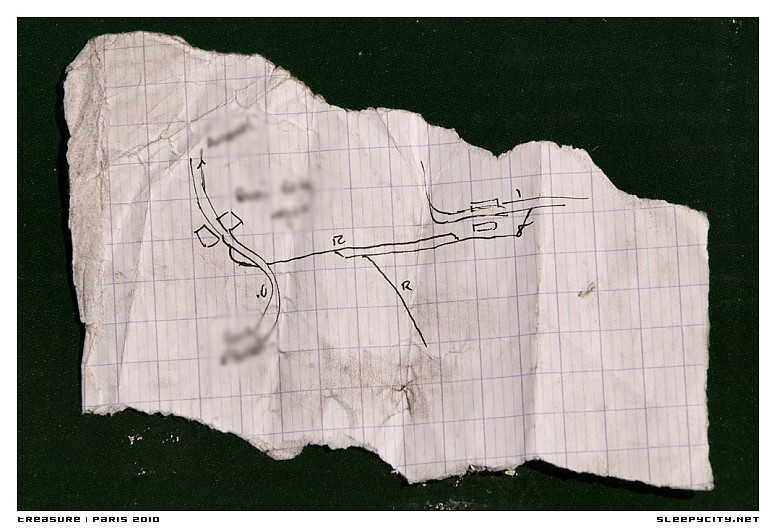
“Naturally the activities presented here are dangerous and concern varying degrees of legality but I’ll spare you the disclaimer and hypocrisy of “do as I say, not as I do” and offer a short list of situations I or my friends found ourselves in from which you can choose for yourself your own (in)actions.
- qx dropping his keys and having them land perfectly balanced on the third rail
- being 10 seconds from running headlong into a ghost train near Vavin
- sprinting out a raccord tunnel after a robot train started up automatically just as we reached it
- hiding on the floor of a layed up train near molitor waiting for the cleaners walking by to leave
- meeting workers in an old station and them being totally cool with us, then having a nap on the ground while waiting for the trains
- Being chased away from a tunnel into a yard by a single security guard yelling “bougez pas bougez pas!”. Yeah right!”
Read the whole dang thing:
http://www.sleepycity.net/posts/252/Demolition_of_the_Paris_Metro
“You get on you have to go to the end.”

Watch the WTTW report on Vivian Maier: http://vivianmaier.blogspot.com/
Board Policy

Electronic Communications/Social Networks
“Barrington Community Unit School District 220 recognizes that electronic communication may be a useful tool for employee/student/parent communication about instructional matters. In order to assure that electronic communications between employees and currently enrolled Barrington 220 students are appropriate and consistent within the goals and policies of the school district, and to protect the welfare of both employees and students, this policy applies to online communication with both students and parents. This policy does not apply to communication with alumni of the Barrington 220 School District.
“Employees may communicate with currently enrolled Barrington 220 students only about school-related matters and only through district-approved or district-hosted electronic accounts and applications, such as district e-mail addresses and the official district website within the “barrington220.org” domain. A district employee who wishes to utilize any technology (e.g. cell phones, including texting) for electronic communication other than those listed above to communicate with current Barrington 220 students should notify his/her building principal and obtain written or electronic consent from the student’s parent(s) before utilizing the technology.
“The school district recognizes that employees may maintain personal blogs or websites, and/or contribute posts to the blogs or websites or web pages of others and/or participate in social networking sites such as Facebook, MySpace, Twitter and LinkedIn. If so, employees may not use personal (as opposed to district-hosted) sites to communicate with currently enrolled Barrington 220 students via these means. Additionally, if linking from their classroom website to online resources outside the “barrington220.org” domain, employees should be careful to evaluate the instructional appropriateness of the content and images for use by students.
“Finally, employees who maintain personal blogs or websites, and/or contribute posts to the blogs or websites or web pages of others and/or participate in social networking sites such as Facebook, MySpace, Twitter and LinkedIn must abide at all times with all legal requirements, including compliance with student privacy laws. Employees may not, under any circumstances:
Disclose student record information including student work, photographs of students, names of students or any other personally identifiable information about students;
Engage in any communication or activity which violates the district’s anti-harassment policies; (7:180-Students-Preventing Bullying, Intimidation and Harassment), (5:20-Personnel – Workplace Harassment);
Engage in any communication or activity which violates the district’s Internet Acceptable Use policy;
Make or post discriminatory, confidential, threatening, libelous, disparaging, obscene or slanderous comments about the district, its employees, students or parents. Employees are personally liable for their own commentary.
“Violations of this policy are subject to disciplinary review, up to and including termination.”

The e-mail which broadcast the policy said, in part: “Although the policy is effective immediately, we know it will take some time to fully implement. Because we are aware some teachers, team coaches, and extracurricular club sponsors have systems in place for communicating electronically with students, appropriate communication through those vehicles may continue while we develop procedures and forms necessary to fully implement the policy. Examples of appropriate communication would be messages to alert team or club members of a canceled activity or a change in schedule as well as classroom websites created by teachers to provide students with assignment information and other learning resources.
“The new policy addresses electronic communication between staff and students, including use of cell phones (for texting or making calls), social networks (such as Facebook) and private websites, to protect both staff and students by clarifying appropriate boundaries for interaction outside the normal school day.
“Soon, we will communicate this information to parents, particularly at the high school and middle schools, to make them aware there will be a transition period and we expect to fully implement the policy at the beginning of the second semester.
“We appreciate your patience and understanding while we develop the procedures to implement this policy. In the interim, please use your judgment and discretion in the use of electronic communication vehicles such as texting, e-mail and websites as necessary to meet the needs of your students. The procedures and forms to secure parent permission and for communication between staff and students will be shared with you as soon as they are finalized, probably by the end of the first semester. At that point we will fully implement this policy.”
Good news: I met with the Communications Director of the district, we reviewed posts I thought might be questionable, and this blog passes muster. However, I was compelled remove current students from the f/book news feed, in order to prevent myself from clicking on “like” reflexively. Folks, if you’re currently enrolled, please do not send me messages via that format; rather, use the district e-mail address (jdionesotes@barrington220.org), however inconvenient it may seem. Thanks.
Hang a Roscoe Mitchell
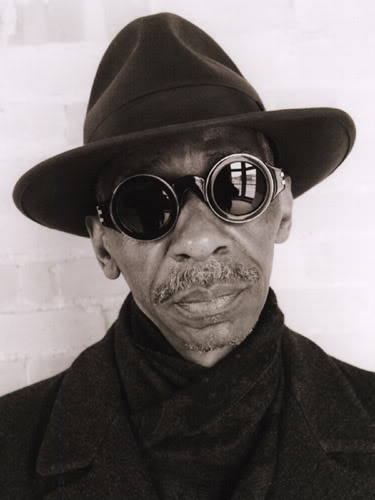
Read this review of Mr. Mitchell’s CD, despite the fact that it cannot prepare you for the music (you gotta scroll down a bit): http://www.nytimes.com/2010/11/09/arts/music/09choice.html?scp=1&sq=roscoe&st=cse
…then watch this more recent collaboration with two other geniuses:
NFAA
“Are you ready for the next phase in your artistic career? By applying to the YoungArts program you are eligible for:
- Exclusive Presidential Scholar in the Arts nominations
- $500,000 in total monetary awards
- $10,000 Gold Awards, $5,000 Silver awards
- All-expense paid trip to Miami for YoungArts Week in January 2011
- Master Classes with world-renowned artists
- $3 million in scholarship opportunities
- Lifetime of alumni networking
We are the only organization that encourages and recognizes artistic excellence in the literary, visual and performing arts, including dance, cinematic arts, jazz, music, photography, theater, visual arts, voice, and writing.
This year, the YoungArts staff will be holding a conference call on October 7 to answer pre-submitted questions about the the application process. To reserve a spot on this call, and to submit questions, please email conferencecall@youngarts.org with the subject line “Application Conference Call.” If you have immediate questions, please call YoungArts at 800.970.ARTS and the programs team will assist you.
Key Dates and Fees:
March 15-June 30, 2010: Early Registration fees apply / $25
July 1-October 15, 2010: Regular Registration fees apply / $35
October 15, 2010: Online Application closes (9 p.m. EST)
October 30, 2010: Audition/Portfolio Materials due (5 p.m. EST)”
Follow the link on the right, under Resources.
Subscribe & Link
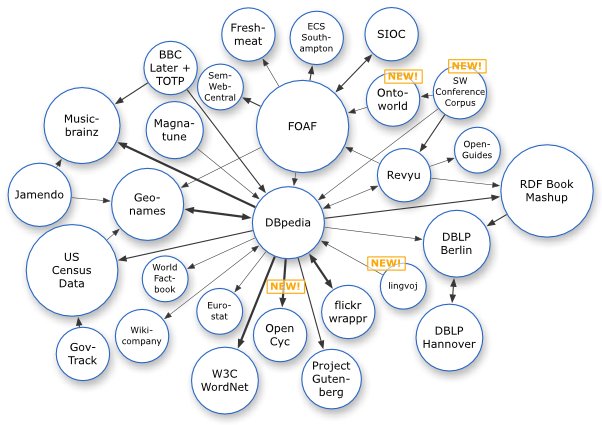
You can subscribe to this blawwg by clicking on “Subscribe,” above.
If you have a similar (or dissimalar) blog, especially if I have linked to you already, you may similarly link to this one, s.v.p.
Build an Effective Portfolio

Your portfolio should include at least 10-20 examples of your best and most recent work (usually completed within the last year). It is very important that you conduct research about the schools you are most interested in, and find out what is required within the portfolio.
Personal work and/or work outside the classroom assignments can strengthen the overall portfolio; this demonstrates personal motivation. You should assume complete ownership for the ideas and visual information in each piece. You should also try to use assignments and technical exercises as vehicles to express your own personal ideas, viewpoints, emotions, stylistic approaches and individual ways of working.
Here are suggestions regarding work that could be included in your portfolio.
Breadth: art based on life, objects and general surroundings (when working observationally, you should try to address personal concerns).
Portraiture. A common source for observational work is the self-portrait.
Objects (Still Life). You might locate items that hold some meaning or are visually interesting to use in the work.
The Figure is one of the most traditional subjects utilized throughout the history of art. Working with the human body as subject matter can add a better understanding of formal structure. You can sometimes use the body as a reference point for your ideas.
Landscape, working with both exteriors and interiors to explore depth and spatial relationships.
Personal Work / Thematic Concentration: work based on imagination, personal interests and ideas, and exploration into selected subjects.
The Sketchbook is one of your most important tools as an artist. A sketchbook is your diary/journal. It is not uncommon for a student to include some of their strongest from a sketchbook in an admissions portfolio.
Choice of Medium: some portfolios have a medium concentration (such as photography, graphic design, or digital animation) to emphasize one’s own personal interests.
The Series, or “Body of Work.” Working in a theme or in a series can help you find personal focus, add a sense of cohesiveness, and identify strengths or possible future topics.
Portfolio Context and Arrangement
Think about the portfolio as a written essay: each piece placed in your portfolio is a like sentence in that essay.
Or, think about the portfolio as a musical composition. This can be especially helpful if your work tends to be more expressive or abstract. Try to identify relationships through rhythm, pattern, tone, and color.
Or, think about your portfolio as a solo professional exhibition. Imagine how to arrange the “body” of work for display. What is the first piece you would like the viewer to see? What is the last? Do not just put all the best work in the beginning, or at the end; try to balance your entire portfolio. Attempt to start off strong and end strong.
Just because a school requires a maximum amount or 20 pieces doesn’t mean you might also consider the minimum amount of 10-15 pieces. You do not want to put in “filler” work – work that is unfinished, work that is older than two years, or work that does not relate to the bulk of your portfolio. Including work that you do not feel strongly about can sometimes weaken the overall presentation. You want to make the best impact that you can.
 Creative Camerawork