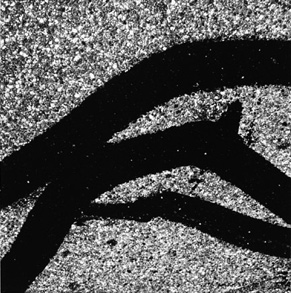
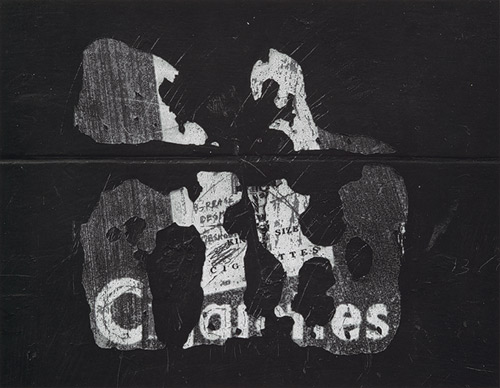
W. o’ W.: Bill Brandt

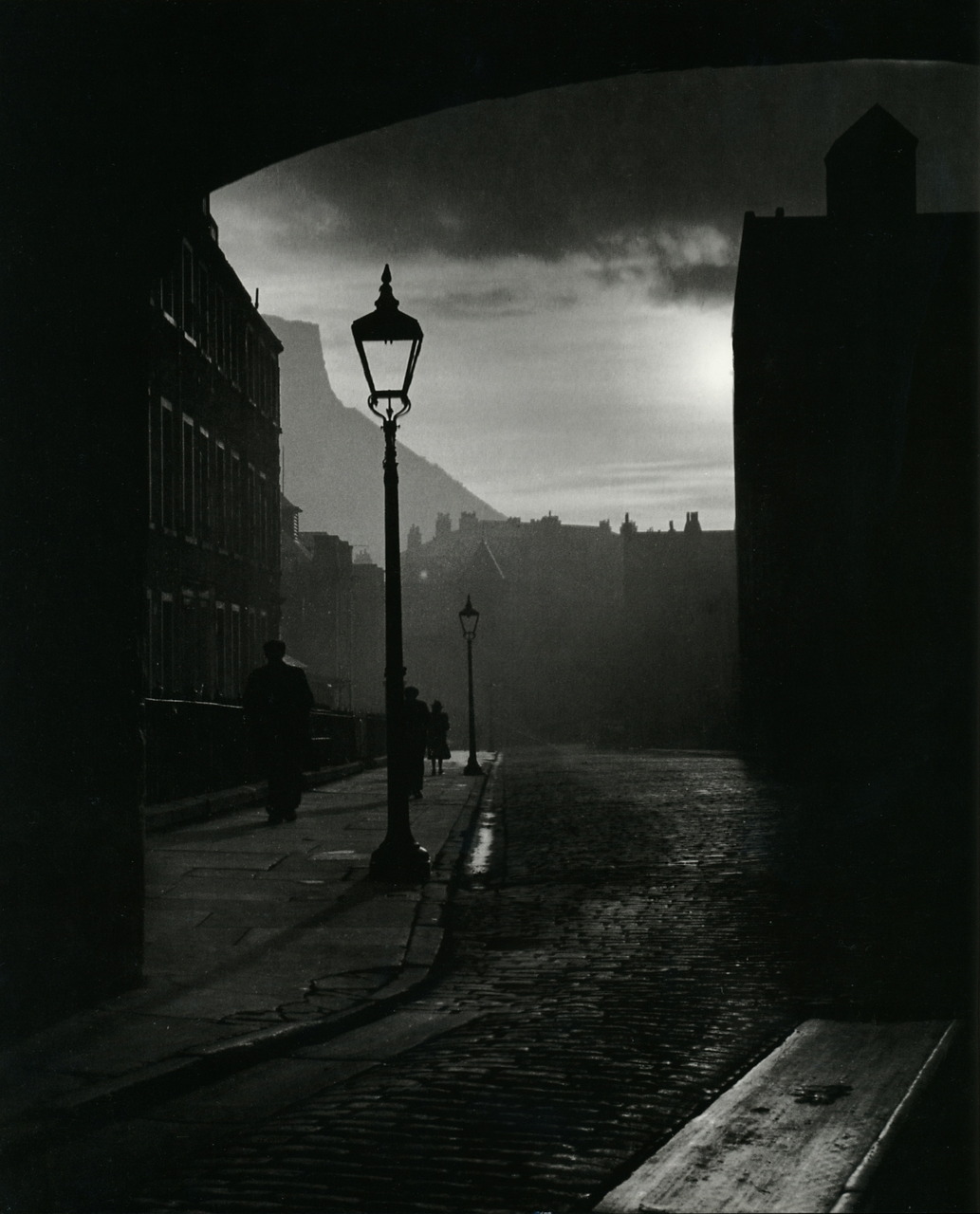
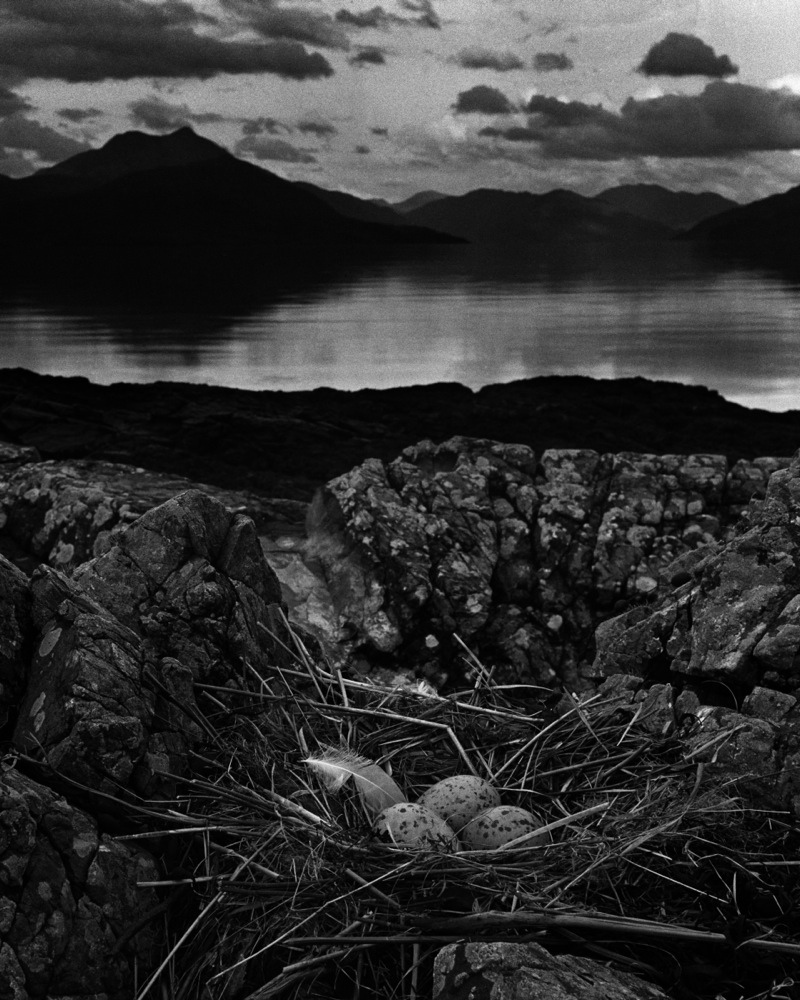
To be able to take pictures of a landscape I have to become obsessed with a particular scene. Sometimes I feel that I have been to a place long ago, and must try to recapture what I remember. When I have found a landscape which I want to photograph, I wait for the right season, the right weather, and right time of day or night, to get the picture which I know to be there.

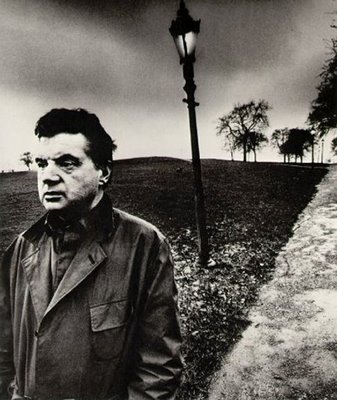
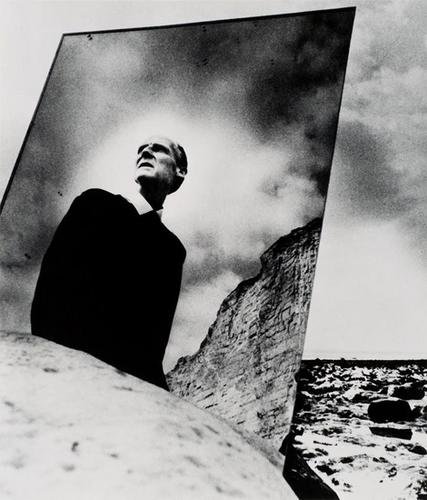
I always take portraits in my sitter’s own surroundings. I concentrate very much on the picture as a whole and leave the sitter rather to himself. I hardly talk and barely look at him. This often seems to make people forget what is going on and any affected or self-conscious expression usually disappears. I try to avoid the fleeting expression and vivacity of a snapshot. A composed expression seems to have a more profound likeness. I think a good portrait ought to tell something of the subject’s past and suggest something of his future.

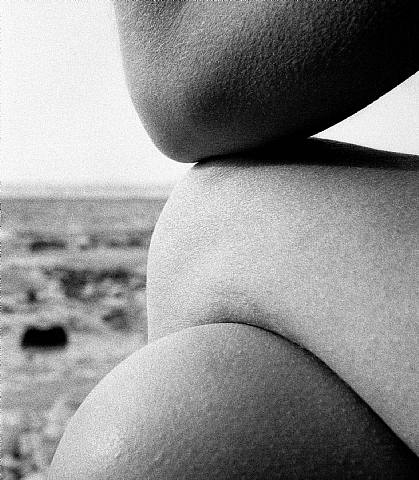
In 1926, Edward Weston wrote in his diary, “The camera sees more than the eye, so why not make use of it?” My new camera saw more and it saw differently. It created a great illusion of space, an unrealistically steep perspective, and it distorted.

When I began to photograph nudes, I let myself be guided by this camera, and instead of photographing what I saw, I photographed what the camera was seeing. I interfered very little, and the lens produced anatomical images and shapes which my eyes had never observed.

I felt that I understood what Orson Welles meant when he said “the camera is much more than a recording apparatus. It is a medium via which messages reach us from another world.”

I am not interested in rules and conventions … photography is not a sport. If I think a picture will look better brilliantly lit, I use lights, or even flash. It is the result that counts, no matter how it was achieved. I find the darkroom work most important, as I can finish the composition of a picture only under the enlarger. I do not understand why this is supposed to interfere with the truth. Photographers should follow their own judgment, and not the fads and dictates of others.

Photography is still a very new medium and everything is allowed and everything should be tried. And there are certainly no rules about the printing of a picture. Before 1951, I liked my prints dark and muddy. Now I prefer the very contrasting black-and-white effect. It looks crisper, more dramatic and very different from colour photographs.

It is essential for the photographer to know the effect of his lenses. The lens is his eye, and it makes or ruins his pictures. A feeling for composition is a great asset. I think it is very much a matter of instinct. It can perhaps be developed, but I doubt it can be learned. However, to achieve his best work, the young photographer must discover what really excites him visually. He must discover his own world.

Read the entire statement: http://www.billbrandt.com/Library/statementbybrand.html


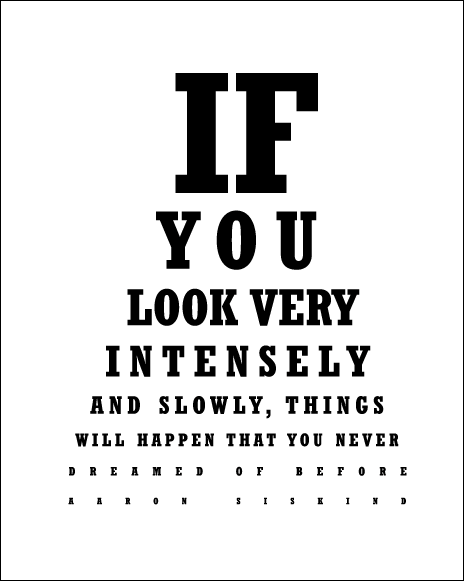
Open your… whatever… senses

http://www.youtube.com/watch?v=MtgOb7560zc

Ellery Eskelin writes:

Having recently listened to interviews with Joe Henderson and Gary Bartz about how they teach/taught, I’ve been emphasizing the aural approach in lessons more and more. Students have been learning Lester Young solos off the recordings strictly by ear, and memorizing them on their instrument with nothing written down. I’ve also been teaching them how to figure out the chords and harmonies to tunes this way as well.

It seems like such a simple thing, but “the ear” seems to be an undervalued asset in jazz education generally. Learning with the ears alone integrates every aspect of the music and music-making all at once, and serves for a more profound and much longer lasting impact. I can see lights flashing on in their minds as the beauties of these solos reveal themselves in a way that the student has never experienced before. And in speaking with them afterwards, I realize that their eyes are opened to the world in new ways as the ramifications of how this music was created begin to sink in. Hearing a developing musician come in and play these solos to me along with the recordings is such a beautiful experience that it lifts my spirits for days!

 http://www.youtube.com/watch?v=SZS9uveaX3g&feature=related

Jimmy Heath says:

“People listen to music in different ways. Most of the people in the world listen with their bodies, so the body’s got an ear. And then the heart’s got an ear. And the mind’s got an ear. A lot of people hear the whole complete thing. When you’re musically inclined, people listen scientifically: ‘Oh, what he did, he played a thirteenth, ninth, all that stuff.’ But some people just sit around, and the beat goes and they just start movin.’ They’re listenin’ with their body, and they don’t care what kind of chord you play. ‘What kind of chord? What’s a chord?’ They don’t even know what a chord is! And as a romantic person, I hear with my heart. Benny Powell used to say, ‘That music touched me where I live.’ I like that phrase. Inside his heart.”

Are there equivalents for eyes? Body/heart/mind seem more useful than melody/harmony/rhythm for analogies.

An artist’s statement, translated

This is flying all over the World Wide Intercom, so we’re chiming in. It’s good.

http://www.youtube.com/watch?v=3v8DbLWAXvU

W. o’ W.: Ralph Eugene Meatyard

“Painting is the tougher of the two mediums to use at first, but photography becomes the hardest after you have been at it.”

“I never will make an accidental photograph.”

Who’s your audience?

We are.

Not your parents, nor your siblings, nor your grandparents;

not your teachers, nor your dean or principal or counselor, nor your future college;

not your pastor, spiritual advisor, personal trainer;

not the government, nor some credit bureau, nor whoever is surveilling.

You, and we, are your audience: photographers.

W. o’ W.: Robert Adams

Here is the preface to the (35th? 36th?) 2010 book of pictures from the cliche-free photographer:

“In common with many photographer, I began making pictures because I wanted to record what supports hope: the untranslatable mystery and beauty of the world. Along the way, however, the camera also caught evidence against hope, and I eventually concluded that this too belonged in pictures if they were to be truthful and thus useful.

The only people of whom I knew who had in some measure resolved the conflict were writers like Emily Dickinson and painters like Edward Hopper, individuals who searched the world so diligently that they occasionally caught glimpses of another. Theodore Roethke’s notebook entry was the victory I wanted: ‘I see what I believe.’

As much as I try to stay away from abstractions, I often find myself asking three questions, and I repeat them here as a point of entry into this book: What does our geography compel us to believe? What does it allow us to believe? And what obligations, if any, follow from our beliefs?”

We Review II

We went where we said we would go ( https://photodevoto.wordpress.com/2011/03/03/apft/), and as we did last year (https://photodevoto.wordpress.com/2010/04/15/we-review/), we wrote about it.

“Spending the day in the city exploring exhibits is a new experience to me, one that I greatly enjoyed. I think it is important to see photos in a museum rather than online or in a book because you are able to see the work as the artist wanted you to see it. The artist spent a large amount of time mounting their work and planning the exhibit. If you see their work in a museum, you are able to take in the whole effect. Also being right in front of it, you are able to notice more details and really appreciate the work.”

“I had heard a lot about Vivian Maier and what she did, but it was still awesome to see her work in person. I thought it was really cool to see her cameras and letters, one being from Central Camera. All of her work was fantastic and it was amazing to see someone who was self-taught with that much talent. I don’t know how much the people printing her work now edit her pictures, but they were done absolutely perfectly.

I absolutely loved the Odyssey exhibit at Columbia. It’s just amazing to think of how much time and work went into those themed photos. I don’t exactly know how they did it, but the pictures were all super interesting and felt really real. My favorite was the panorama (not the main one, the one to the left when you first walked in). I really liked all the placement of the people and how they used the smoke from the rockets. It created a really awesome alternate universe almost and I really liked it.”

“When at the Vivian Maier showcase, I saw the perspective that she took the photos in. The angle, lighting, subject matter, and frame can change the whole meaning of the photo. And when looking at it for a second time or even looking at it from a different angle, you can see something that you didn’t before or can change the meaning of the picture.”

“The benefit of seeing other photographers’ portfolios was that it gave me more examples of a complete body of work. Whereas I have several prints with a loose theme, seeing a group of pictures with a strong theme that connects them all together gave me a better idea of how to make my portfolio.”

“What I took out of the gallery at the [Harold Washington] Public Library was that what you take in from a photo changes as you look at it from different distances. Some of the photos in the set didn’t really excite me (they were all very well taken and very crisp); however, I didn’t really like them until a got a lot closer to the photo. After studying one picture for a while and realizing that there were kayakers in the water, I enjoyed the picture much more than when I stepped back and looked at the picture from a distance.”

“I thought the Apollo Prophesies exhibit at Columbia was very neat. My favorite photos were the ones on the far wall that looked vintage with the lighting the photographer chose and the tone of the paper that was warm rather than pure white.”

“I overall enjoyed looking at how different people’s perspectives are, and how some photos take a lot of planning, like the Apollo Prophesies, and how some take no planning at all, like Vivian Maier’s, and both turn out so well.”

“When I talked to other individuals on the field trip about a photograph I didn’t really enjoy, they were able to point out things I did not notice about it before; I was able to something in the photograph. Then I was able to like it.”

“I noticed about [Vivian Maier’s] pictures that she usually captures a sad or straight face over a smiling one. It made you think more about the people in the pictures other than just looking at a picture and just seeing people.”

“The benefit of seeing work is obvious, especially in the case of the wonderful Viv. For me personally, Vivian Maier was, to put it informally, the bomb. I have been inspired to try out some square-format film, as the compositions were intriguing. Also, the way both Vivian and the Gage Gallery guy captured the human experience was stunning. I want to be able to do what they have done – to capture the essence of a person in a photograph.

The past/present/future depiction took different forms for the various photographers we viewed. In the library exhibit, the juxtaposition was more tangible – photographs of the river throughout a period of years. In the Gage Gallery, I observed something different – the exploration of two different present realities. In one series, the photographer captured a person at home and at work. This demonstrated that even the present can be split, two nearly separate live lived simultaneously.”

“There is a clear connection between [a body of work’s individual] photographs, and seeing them collectively helped to determine their thought process. I was able to notice small details in prints and techniques used that would not have been apparent if viewed on a computer screen. The photographs in the Library were very exciting to see because we were just shooting in the city last week. I had been to most of these places but the photographs transferred the space into a unique and timeless piece of art. It made me want to continue exploring the city…”

“When I see work, it benefits me because I can modify my own technique. When I shoot, I can get repetitive and many pictures can turn out bring or unoriginal. By seeing what other photographers choose to do, I can apply that to my own technique and come up with something completely new.”

“It was cool how some of the pictures in all of the exhibits were so simple yet so complicated; I never realized how empty space can be so interesting.”

“No matter how much I learn through my own experience, I can always be taught more by the work of a professional. Analyzing the work of successful artists also gives me ideas for work of my own… For some, their own mind is all they need, but I find it to be an advantage to pull ideas from others’ work, and transform it into my own.”

The above insightful reflections are courtesy of Matt Wloch, Kendall Wallin, Annabel Perry, Nikki Nixon, Kristin Kuhn, Justine Kaszinski, Melissa Jones, Emma Haney, Alexa Hanaford, Joyce Gaffney, Mike Cygan, Lauren Captain, Christina Buerosse, Chanelle Biangardi, and Kristina Bastidas.

From you, Aaron

“When I make a photograph, I want it to be an altogether new object, complete and self-contained, whose basic condition is order.”

“As the saying goes, we see in terms of our education. We look at the world and see what we have learned to believe is there. We have been conditioned to expect. And indeed it is socially useful that we agree on the function of objects. But, as photographers, we must learn to relax our beliefs. Move on objects with your eye straight on, to the left, around on the right. Watch them grow large as you approach, group and regroup as you shift your position. Relationships gradually emerge and sometimes assert themeselves with finality. And that’s your picture.”

Attention, AP Fo-Do: America needs more lerts.

Bring things to the final: at the least, paper and a pencil; a laptop & jump drive, max. Prepare whatever notes you wish, from which to work on your concentration commentary. Here are some examples:

http://apcentral.collegeboard.com/apc/members/exam/exam_questions/200762.html