W. o’ W.: Wynton

WyntonClapton

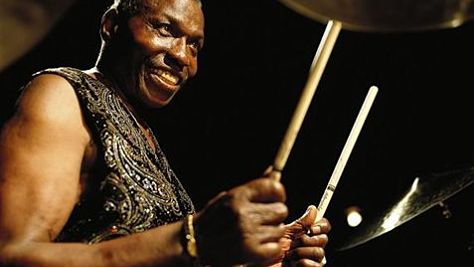
“I believe that there’s a lot of what I call root American music, and root American musics are all joined together. Those are the blues, gospel, the American popular song, what we call country and western, and bluegrass. Sometimes bluegrass and country western are lumped together, but the two are different. They come out of two kind of different feelings of the same tradition, so I feel that all of those root tributaries feed into jazz. You find jazz musicians collaborating with all musicians. Louis Armstrong inspired Hoagy Carmichael when he was a kid in Chicago, and he gave great readings of the American popular song. Willie Nelson made a great recording singing songs like “Stardust,” and “Stardust” is written by Hoagy Carmichael, who Louis Armstrong spent his birthday party [with at] the Shrine Auditorium in Los Angeles. So we could go on through the bloodlines. Eric Clapton comes from that whole kind of Anglo-Celtic relationship that all Afro-Americans have, that when people use to hear spirituals in the 19th century they’d say it sounded like Irish music to them. When August Wilson, who’s the preeminent Afro-American playwright, passed away, I played at his funeral. He requested that I play “Danny Boy” and that I learn the words. It’s all of these interesting relationships we all have. Our bloodlines are all tied into roots, but when the music becomes a product then all of the segregation and ignorance comes into it, because what it takes to make something is very different than what it takes to sell it. Many times you’re selling an image and other things that have absolutely nothing to do with what it took to make. That’s what I strive for with every collaboration I do; we meet each other on a very human level. We’re not coming together just to make products, we coming together just to make music.”

http://www.readthehorn.com/lifestyle/music/84716/a_conversation_with_wynton_marsalis
More of a Link Than an Actual Post

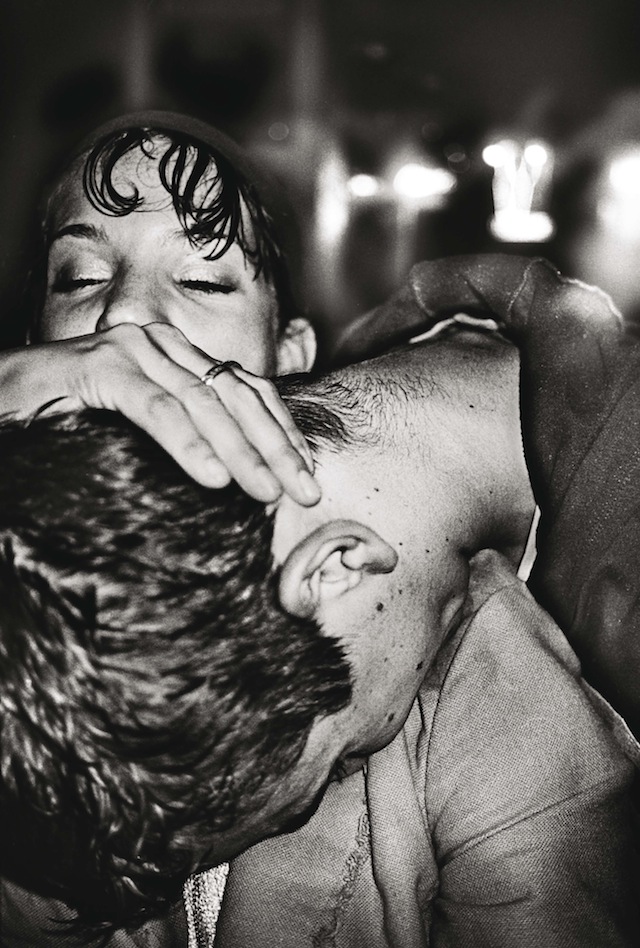
“You have to focus on what you are doing, not just as a photographer, but as a human being.”

gemini

http://erickimphotography.com/blog/2012/08/27/10-things-anders-petersen-can-teach-you-about-street-photography/

There is something for everyone in this text.

andersgemini

The following link is also in the text, but here it is anyway: http://vimeo.com/34125446

The Republic of Synesthesia

Fascinating stuff.

http://www.youtube.com/watch?v=u0T5p1ZmQ1M

elveen 2

W. o’ W.: William S. Burroughs

wsb

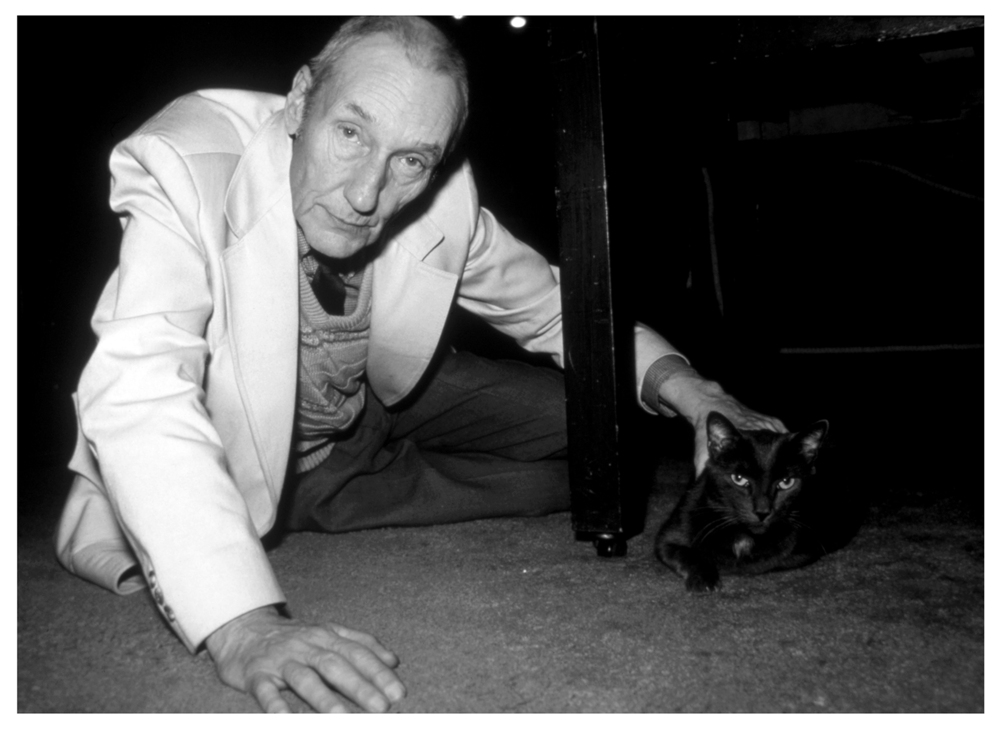
“The word ‘should’ should never arise.” http://www.youtube.com/watch?v=3TC6V6D8yUs

W. o’ W.: Harry Callahan

ben more.tif
 
“I do believe strongly in photography and hope by following it intuitively that when the photographs are looked at they will touch the spirit in people.”

W. o’ W.: Bob Thall, Part Two

Thall1996_274

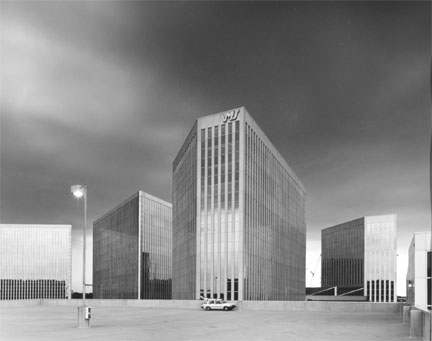
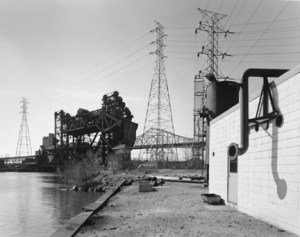
“Any attempt to describe a place is a complicated balancing act for a photographer. First are concerns of fairness, objectivity, and documentary completeness. If one goes too far in the direction of documentation, however, the project becomes an assemblage of new visual facts, the photographs mere illustrations in a catalog of items. Doing this type of work, one tries to create photographs that have integrity, beauty, and resonance as new objects, not just as records. Too much concern with form, though, risk losing the photograph’s connection with the real world. Furthermore, one wants to communicate personal insights. This type of photography, like all art, is most engaging as a statement of opinion, bias, and belief. On the other hand the photographer must be concerned that too much of his or her opinion does not cause the viewer to suspect that the photographs are unreliable, that the photographer has stacked the deck.

BobThall_X470UY258C

“These contradictory concerns, even the very terms “art” and “documentary,” can drive a photographer to distraction. Over many years, I’ve learned to fight this confusion and get down to productive work by thinking of my job in a simple, reductive way. I select a place and spend as much time as possible there, even years, walking and driving and looking for photographs. Initially it’s a haphazard way to come to know an area, but slowly the place reveals itself and I begin to understand what I find most interesting and important. I then try to make pictures, straightforward and factual–looking photographs that distill and exaggerate those aspects.”

Separated At Birth?

This

portrait of Alec Soth

…plus this…

ira-glass-los-angeles

equals this: http://vimeo.com/49527820

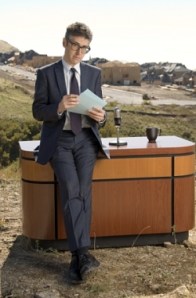
Alec Soth (“rhymes with both”) being serious, outdoors, with furniture.

W. o’ W.: Frederick Sommer

127-1061

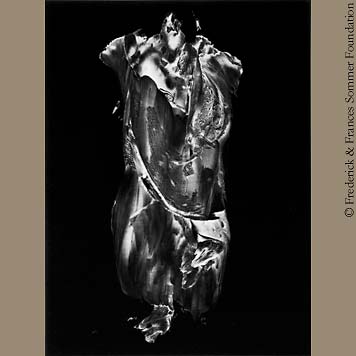
“Circulation of the blood is always circumnavigation of the world. We do not have it in our guts to misplace ourselves in such a way that we are uncomfortable where we go. This, from a photographer’s standpoint, is an important clue. I know now (and should have known earlier) that we are incapable of ever seeing anything new. Consequently, we would never photograph anything unless we have become attentive to it because we already have a part of it within ourselves. As we go around, whether we are painters or photographers, we are only paying attention to those things which already have occupied us, or, better still, are so much a part of us that we lean into the next situation finding that we are already there.”

W. o’ W.: Bob Thall

2001_86

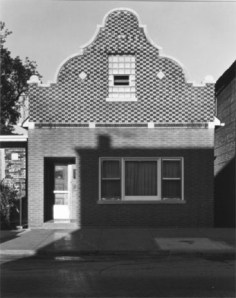
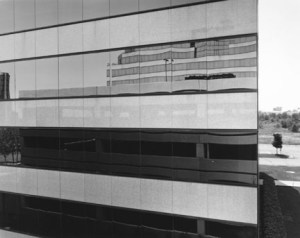
“Any attempt to describe a place is a complicated balancing act for a photographer. First are concerns of fairness, objectivity, and documentary completeness. If one goes too far in the direction of documentation, however, the project becomes an assemblage of new visual facts, the photographs mere illustrations in a catalog of items. Doing this type of work, one tries to create photographs that have integrity, beauty, and resonance as new objects, not just as records. Too much concern with form, though, risks losing the photograph’s connection with the real world. Furthermore, one wants to communicate personal insights. This type of photography, like all art, is most engaging as a statement of opinion, bias, and belief. On the other hand, the photographer must be concerned that too much of his or her opinion does not cause the viewer to suspect that the photographs are unreliable; that the photographer has stacked the deck.

2002_228

“These contradictory concerns, even the very terms ‘art’ and ‘documentary,’ can drive a photographer to distraction. Over many years, I’ve learned to fight this confusion and get down to productive work by thinking of my job in a simple, reductive way. I select a place and spend as much time as possible there–even years–walking and driving and looking for photographs. Initially, it’s a haphazard way to come to know an area, but slowly the place reveals itself and I begin to understand what I find most interesting and important. I then try to make pictures, straightforward and factual–looking photographs that distill and exaggerate those aspects.”

1995_21

W. o’ W.: Jerry Seinfeld

(From this coming weekend’s NYT magazine):

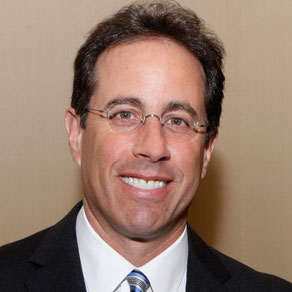
“If I don’t do a set in two weeks, I feel it. I read an article a few years ago that said when you practice a sport a lot, you literally become a broadband: the nerve pathway in your brain contains a lot more information. As soon as you stop practicing, the pathway begins shrinking back down. Reading that changed my life. I used to wonder, Why am I doing these sets, getting on a stage? Don’t I know how to do this already? The answer is no. You must keep doing it. The broadband starts to narrow the moment you stop.”

jerry-seinfeld-large